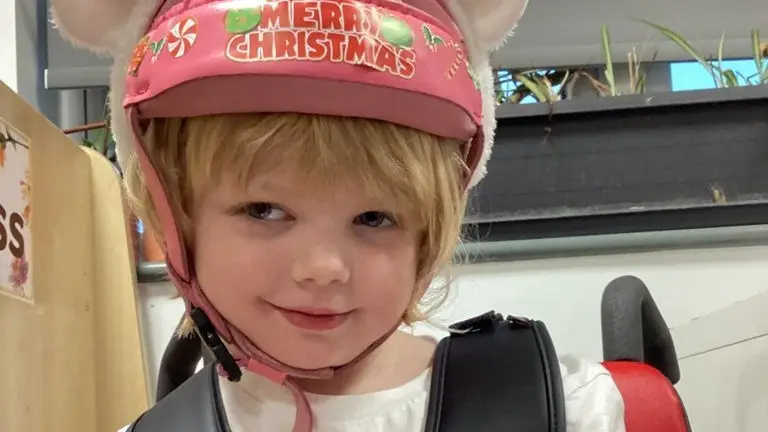
Girl, 5, is dying from childhood dementia as parents share early sign they missed

The parents of young girl who is suffering from a rare form of dementia, have opened up on what they missed in the early stages of her condition.
Holly Nayler faces up to almost 200 seizures per day, having suffered her first seizure just days before her third birthday.
The five-year-old now sadly holds the record of 187 in just one day, as parents James, 40, and Lauren, 32, were led to believe that her condition was an infection at first.
Sadly, after trying numerous medications, genetic testing results revealed that Holly had CLN2 Battens Disease, a degenerative condition which can shorten lifespan.
Advert
The disease affects less than 50 children in the UK while less than 2,000 children have been diagnosed worldwide, with the heartbreaking condition currently not having a cure.
Those diagnosed have a life expectancy between six and 12 years, with Holly eventually losing the ability to communicate, walk and eat or drink independently.
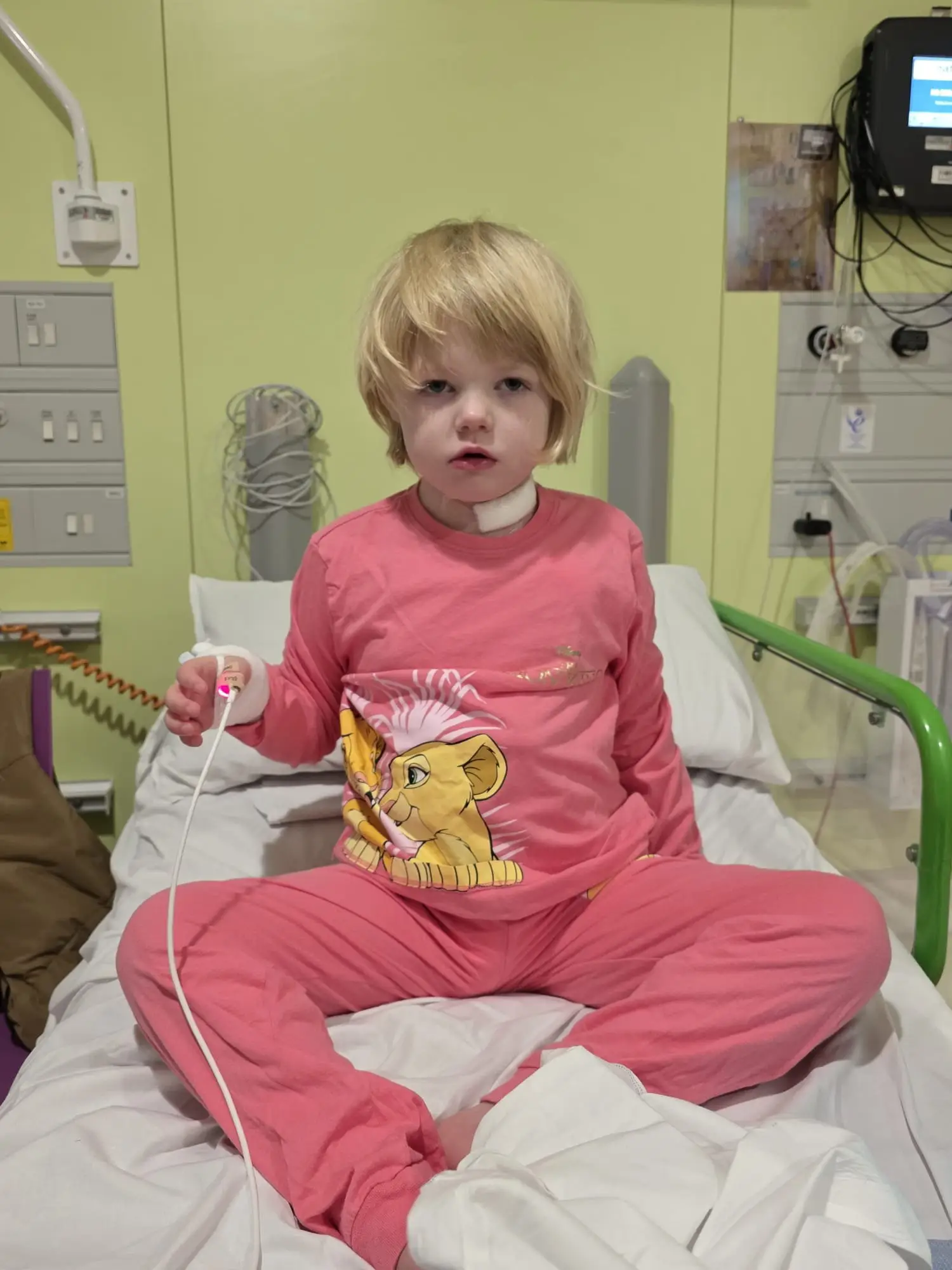
James, who's Holly's full-time carer, said that 'your world just stops' while being told the news, as he explained: “Having never heard of it or knowing anything about it, the immediate questions were is it life limiting, is it life shortening, what kind of impact does this have.
“The doctor said yes to both. He explained that ultimately, without treatment, life expectancy is between five and eight years old.”
Describing his daughter as a 'really cheeky, happy little girl', the Colchester-based dad said: "As much as the seizures and disease try to slow her down, if she wants to get somewhere she will drag us by the hand and get us there."
Eventually, Holly will lose her sight, speech, and mobility, with most untreated children requiring a feeding tube by six-years-old.
He recalled that she was 'developing well' and started walking early, as they only started to worry when the seizures started to happen.
"She had passed all her health checks and her GP appointments were all normal until she had the genetic testing," he recalled.
"They investigated an infection and then epilepsy but the epilepsy nurses were sure it was something more."
The family were told of her diagnosis of CLN2 Battens Disease, a type of childhood dementia, on March 26, 2024, as James recalled Holly being a 'very active' five-year-old, who enjoyed trips to the zoo.
She has a mental age of between 12 to 18 months, though she still goes to school five days a week but James says there are days where 'she's not coping well'.
"Some days her speech and communication is good and others the staff at the school will use picture flashcards," he pointed out.
The parents have chosen the treatment route for Holly and while it isn't a cure, it will slow down their daughter's loss of basic skills and allow her to live up to her late teens.
This includes a brain surgery to implant a port into the blood vessels, as Holly must visit Great Ormond Street Hospital (GOSH) every two weeks to receive a four-hour brain infusion.
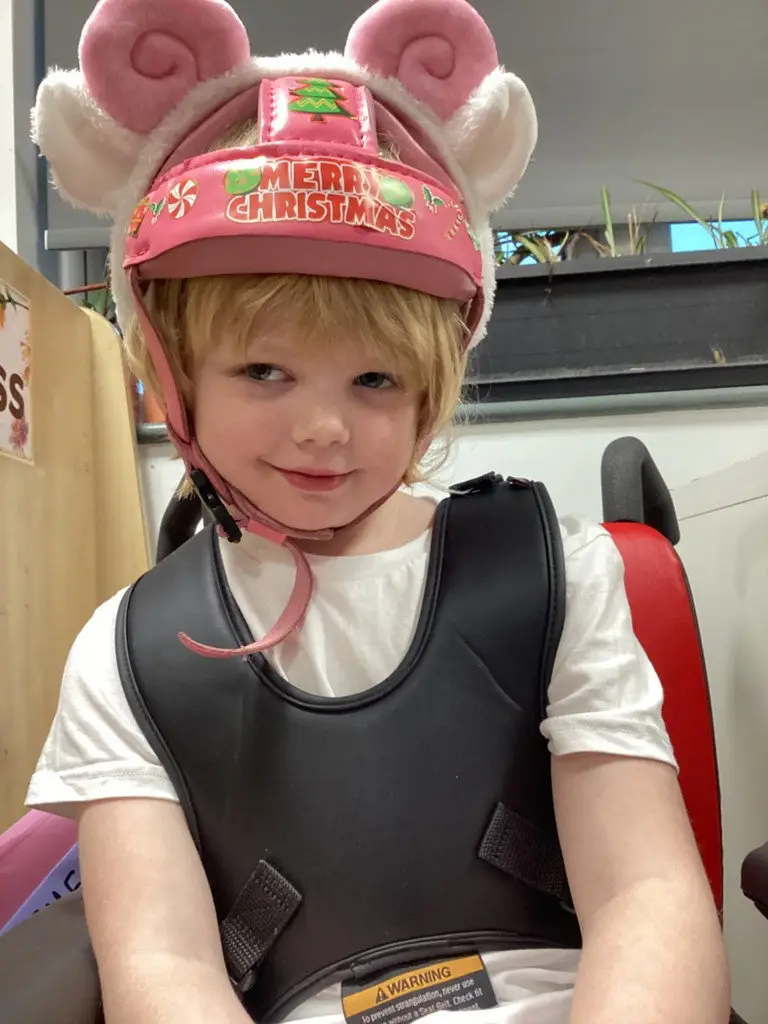
Known as ‘The Holly’ and ‘Holly the Dinosaur Princess’ at both Colchester Hospital and GOSH, she has been undergoing these treatments since April 2024.
The treatments are administered through the NHS with an access agreement between NICE (National Institute for Health and Care Excellence) and BioMarin, a drug company which created the Brineura enzyme replacement therapy treatment.
Clinical trials of this drug have been ongoing, with NICE set to evaluate if it could be recommended for children with the CLN2 gene.
Holly isn't the only child undergoing the treatment in the clinical trial, though NICE said in August 2024 that they wouldn't recommend Brineura for children once the initial agreement ends, backing its point up with the drug's annual price of £500,000 per child and limited evidence of long-term effectiveness.
This agreement is set to run until the end of June, as James claimed that for the majority of children the drug stopped seizures altogether, or at most just one per month.
James, who is also father to 18-month-old Poppy, has urged the government to secure the future security of the drug, saying: "These children deserve a life and they deserve a life which keeps as many of their skills and functions for as long as possible.
"This drug is the only one in the world that can do that."
The family have started a GoFundMe to raise money for travel costs to hospitals, as well as toys and treats for Holly - you can donate here.
 Joshua Nair