Toddler only person in world with rare condition after sign spotted in eyes

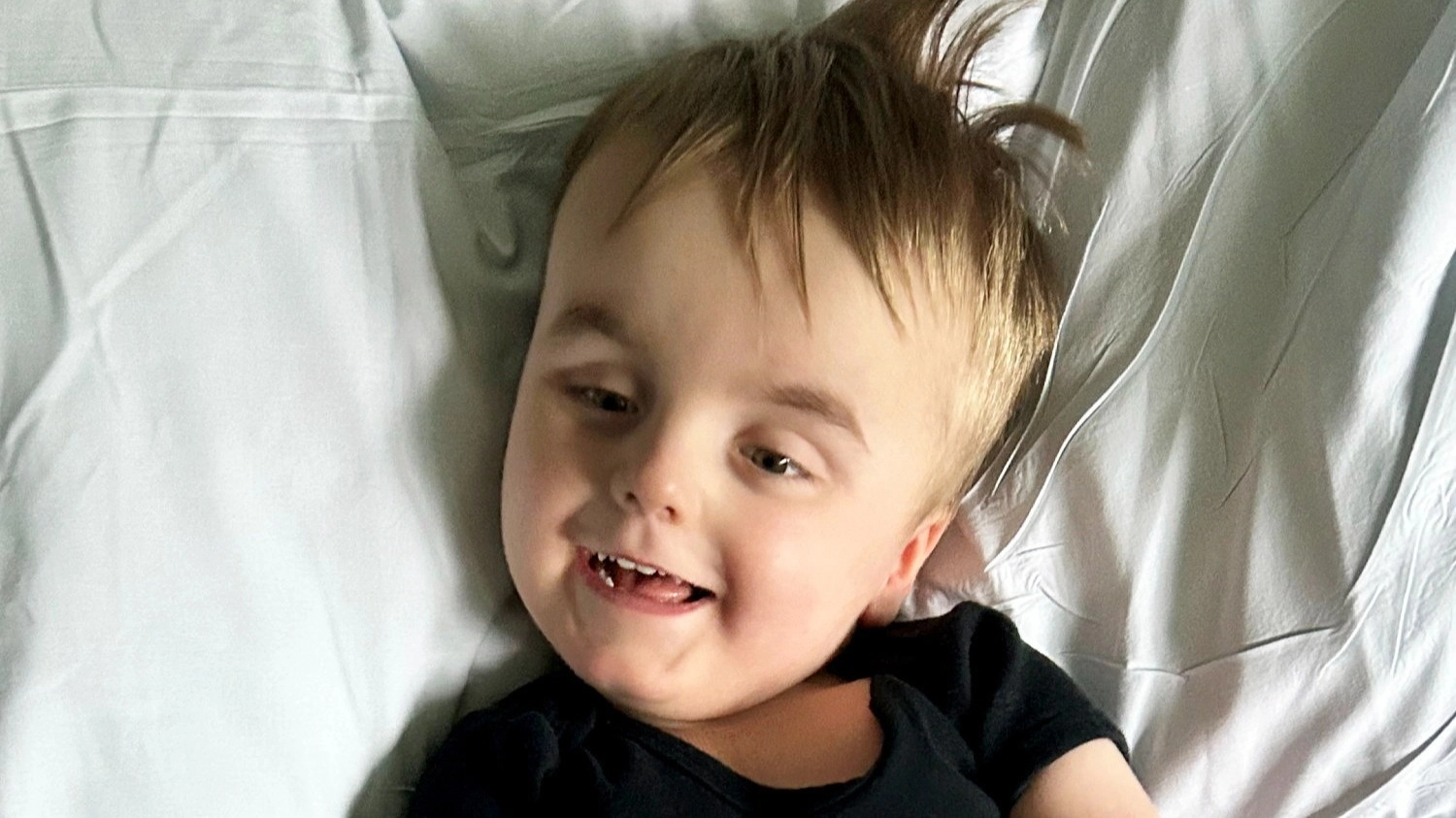
Drae Mead-Strong was just 17-weeks-old back in June 2022, when he was diagnosed with a rare neurogenetic disorder called TBCK.
He is the only person in the world with the diagnosis, as doctors explained that his dark eyes and squeaking noises were a sign of the health condition, which causes his brain to shrink.
The Brit became just the 27th person in history to be diagnosed with the disorder, which is caused by mutations in the TBCK gene.
It is characterised by developmental delays, itellectual disability and low muscle tone.
Advert
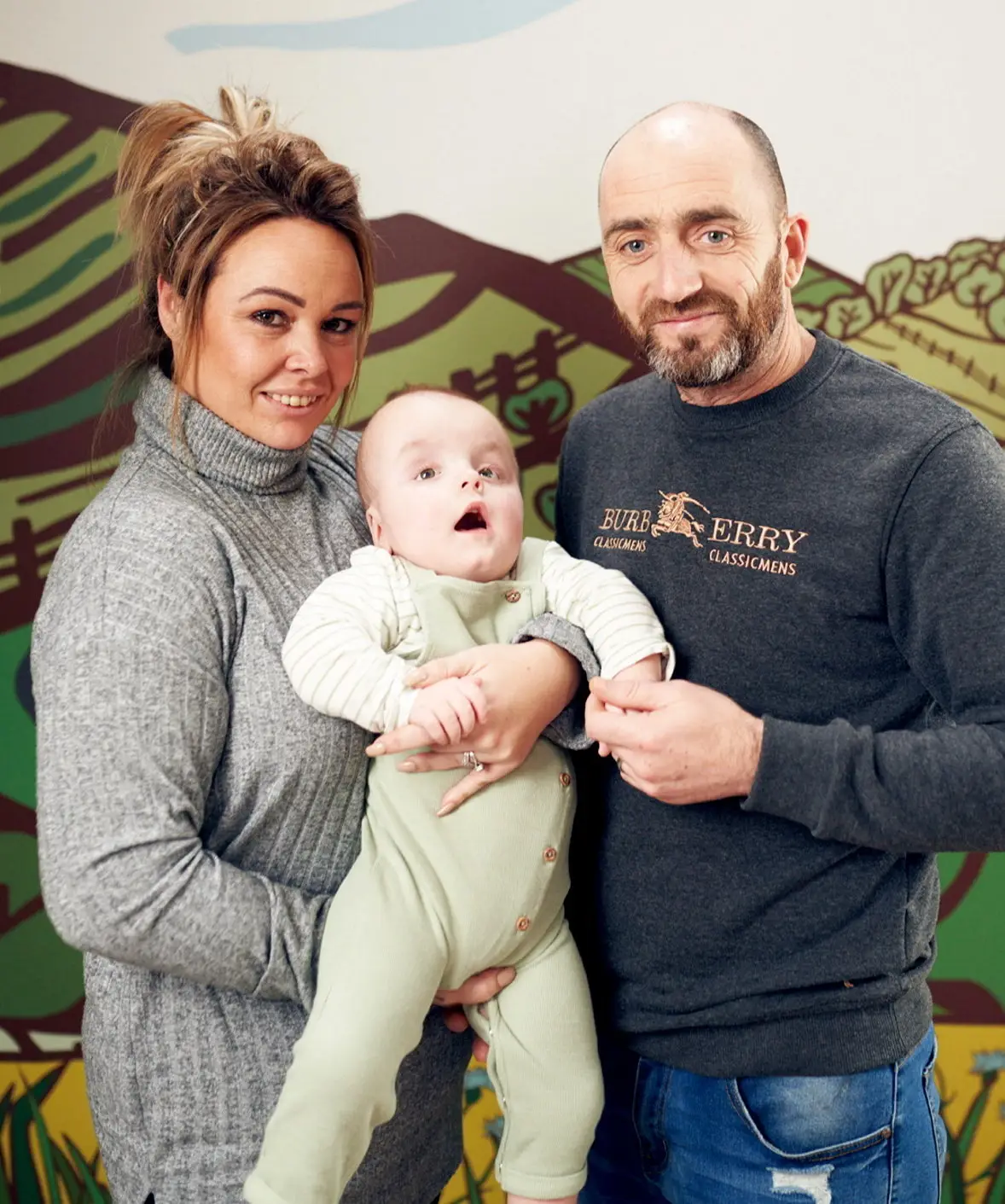
Both of Drae's parents, Rachel, 38, and Darren, 46, were carriers of the mutated gene, which gave their children a 25 percent chance of having the disorder.
While their older children Mia, 14, and Lacie, 12, were lucky to avoid the disorder, their brother has the two most severe variants, according to a doctor.
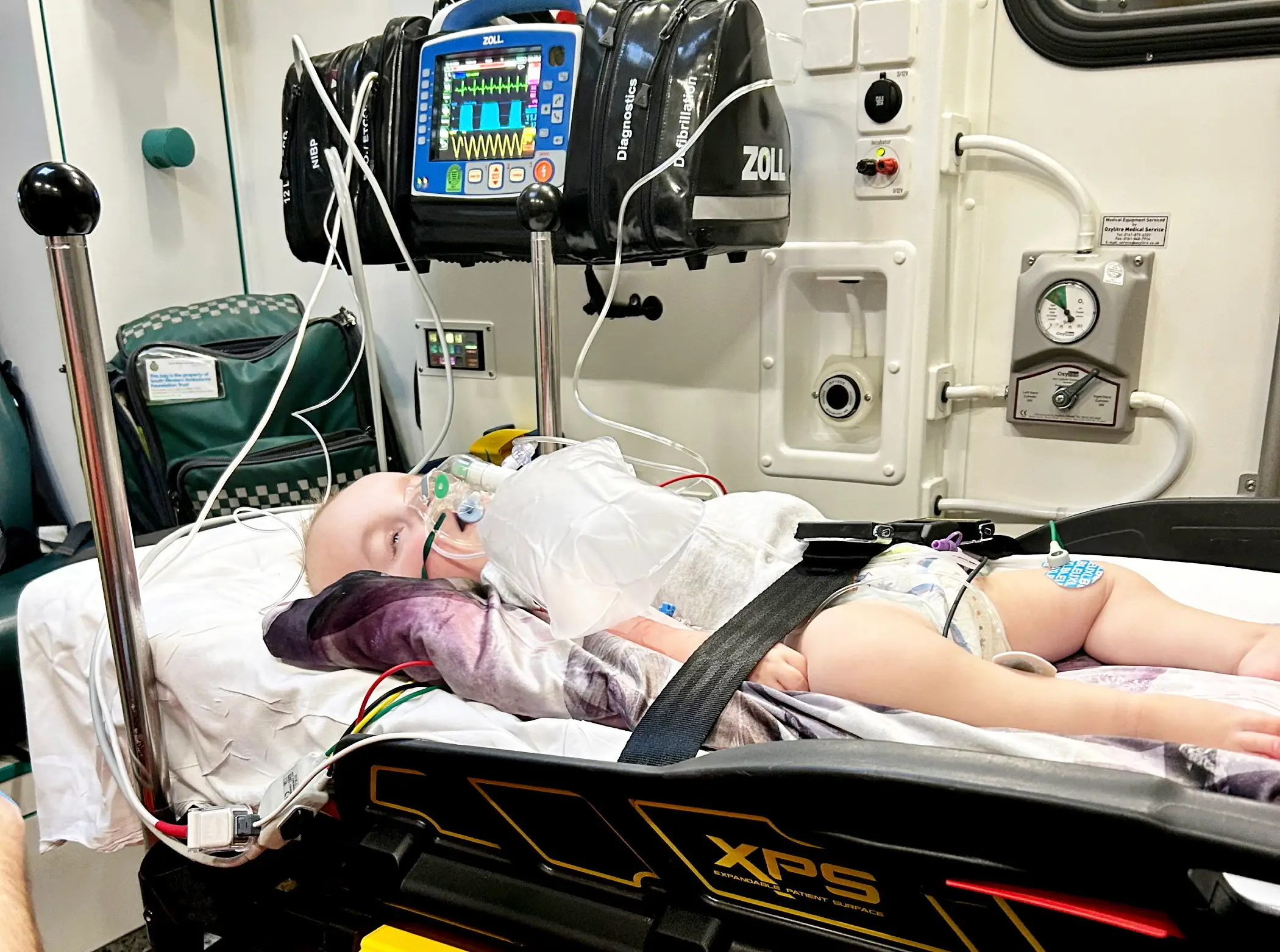
Without the TBCK gene working as normal, Drae's body is unable to produce the protein needed for the brain and central nervous system (CNS) to grow and survive, resulting in brain atrophy.
He is fully peg fed and cannot suck or swallow, sadly suffering from epilepsy, low muscle tone and digestive gut issues.
Drae also has Cerebral Visual Imapirment (CVI), with the damage to his brain's visual processing pathways rendering him blind.
There is currently no cure for TBCK, as Rachel is currently trying to raise £60,000 to pay for home adaptations for her son.
"Drae’s very severe variants have been seen separately, but not together," the mum from Westbury, Wilshire, explained.
She added: “His scans show just big open gaps as his brain is shrinking.
“Both me and Darren are both carriers of it which is mental in itself, how rare it is for us to carry it. We were told ‘don’t expect Drae to reach double figures’ by his neurologists.
“I try not to go there too often but I know in the back of my mind there is no treatment, no cure and no clinical trials," Rachel heartbreakingly admitted.
The mum had a 'feeling' that something may have been wrong as she didn't feel him moving during pregnancy, noting: “The only time I knew he was OK was if he had hiccups that day,
“It got to 36 weeks and we went in because there was still no movement.”
Rolling and bouncing on an exercise ball couldn't get the baby to move either, as the mum noted that 'his observations were all fine' prior to him being delivered by emergency c-section on 10 April 2022.
Rachel recalled seeing him for the first time: "They told me he was fine but I was looking at him and something was wrong.
"His eyes were dark and shaking and he was making these squeaking noises but every time I queried it they put it down to him being early."
Drae spent his first two weeks in hospital to undergo light therapy for jaundice, as his parents remembered him turning 'really grey, blue and would not be breathing and go proper floppy' when he was just six-weeks-old.
"He was still gaining weight but the weight was from the extra fluid in his head – his head was growing 1cm per week," Rachel pointed out.
Doctors believed that due to him having 'good eye contact' and being able to 'hold his head' at his 12-week clinic appointment, there was nothing wrong.
After an emergency trip to Bristol Children's Hospital, Drae was put on a feeding tube as he underwent genetic tests and an MRI.
Neurologists diagnosed him with TBCK at just five-months-old, as Draw has since been in two separate comas caused by seizures.
Rachel admitted that she 'thought he was going to die in my arms all the time', while explaining that her other children now have to 'go through losing a brother and a sibling'.
The mum has found support in a Facebook group for TBCK parents, which helped her find a doctor in Philadelphia, USA, who is looking into the disorder.
Happily, Rachel says Drae is 'doing okay', and will start primary school in September, having started saying 'mama' and 'dada' in the past month.
"He still can’t sit up or hold his head but he can roll over," she explained, adding: "Drae is the youngest in the world to be diagnosed.
"There are probably more older children out there with TBCK who did not have access to the genetic testing that’s available now – genome sequencing – when they were little," Rachel pointed out.
You can donate to the family's GoFundMe, here.
 Joshua Nair