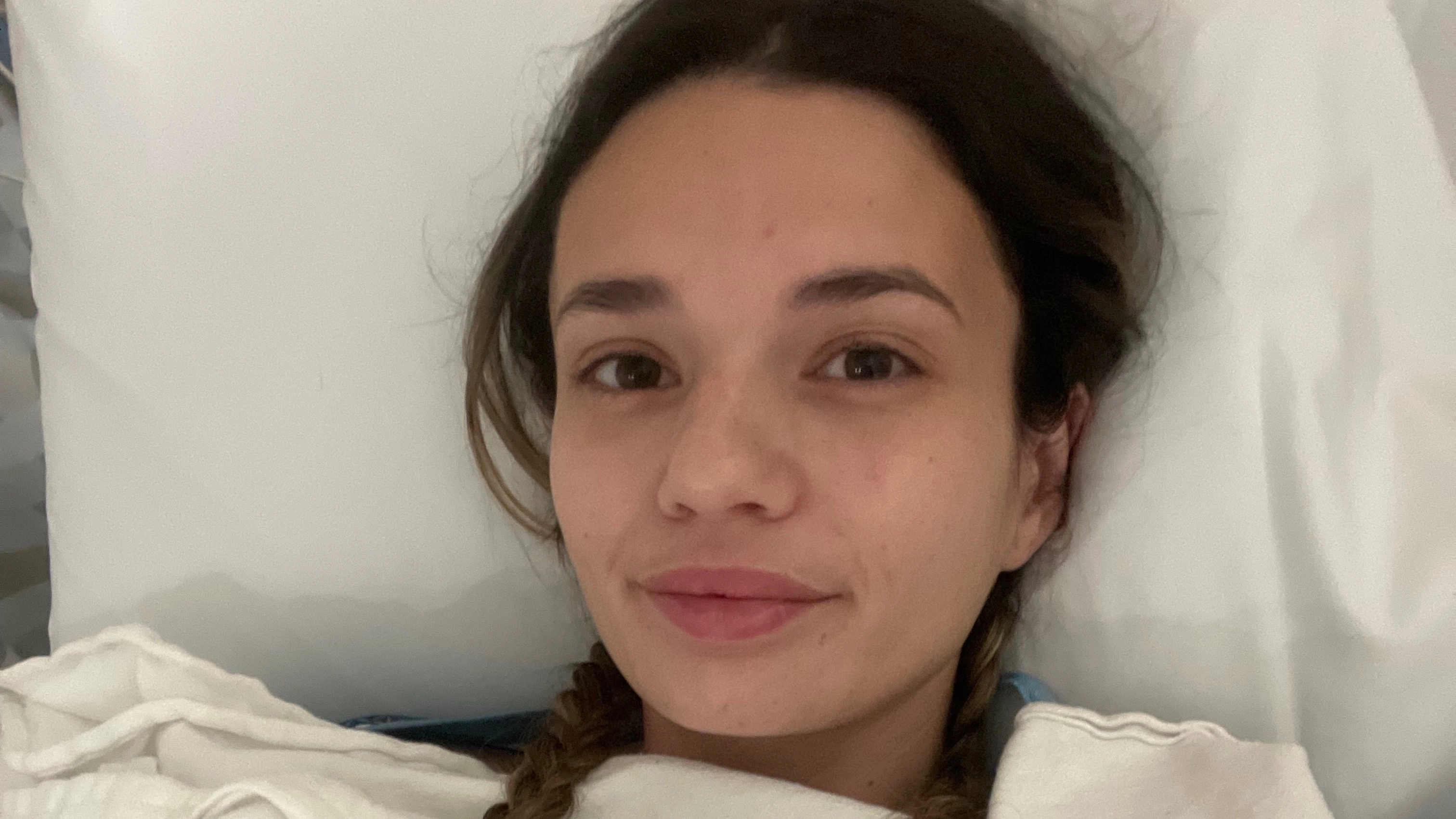
Woman was one move away from being decapitated due to silent condition millions have

A woman has shared the reality of living with a debilitating condition which left her at risk of 'internal decapitation'.
One wrong move could have cost Katlyn Brooks her life before she finally found a doctor who was willing to perform the risky surgery on her neck and spine.
Before she received the call from a neurosurgeon who wanted to get her on his table 'as soon as possible', the mum, 28, was forced to sport a neck brace all day while keeping her head as still as possible.
Prior to her undergoing the major four-hour operation in February this year, innocent missteps - such as braking too hard while driving - could have resulted in Katlyn suffering what is known as internal decapitation.
Advert
This injury, which is almost always fatal, means the neck would break away from the skull, leaving only muscles and skin to hold the two together. It's often seen in victims of car crashes, but in Katlyn's case, it's down to a genetic condition which she spent decades of her life battling to get a diagnosis for.
She was plagued by a series of bizarre symptoms - such as vomiting, dizziness and fatigue on a daily basis - since she was just a child, but claims doctors continuously dismissed her complaints as 'anxiety and panic attacks'.

"My physical symptoms were still all too real and debilitating," she told the Daily Mail. "My pain was dismissed. I started to question my own mental health. I was being treated like a joke."
After fighting to find out the reason behind her symptoms for years on end, Katlyn was finally diagnosed with hypermobile Ehlers-Danlos syndrome (hEDS) in her late twenties.
According to the NHS, this is the most common type of the genetic condition, and it can only be diagnosed via physical examination and an assessment of their medical history, rather than a simple test.
It causes joint hypermobility, loose, unstable joints that dislocate easily, pain, extreme fatigue, skin that bruises easily, digestive problems, dizziness, urinary incontinence and even problems with a patient's internal organs.
Experts reckon that millions of people around the world suffer from it, including at least 100,000 Americans have hEDS, but as it's hard to diagnose, the real stats are probably much higher.
hEDS also causes the body's connective tissue not to form properly due to a lack of collagen, and throughout her life, the ligaments and joints in Katlyn's neck have suffered a lot of 'wear and tear'. Upon her diagnosis, MRI scans showed that her skull and spine were clinging onto each other for dear life, leaving her with a condition known as craniocervical instability (CCI).
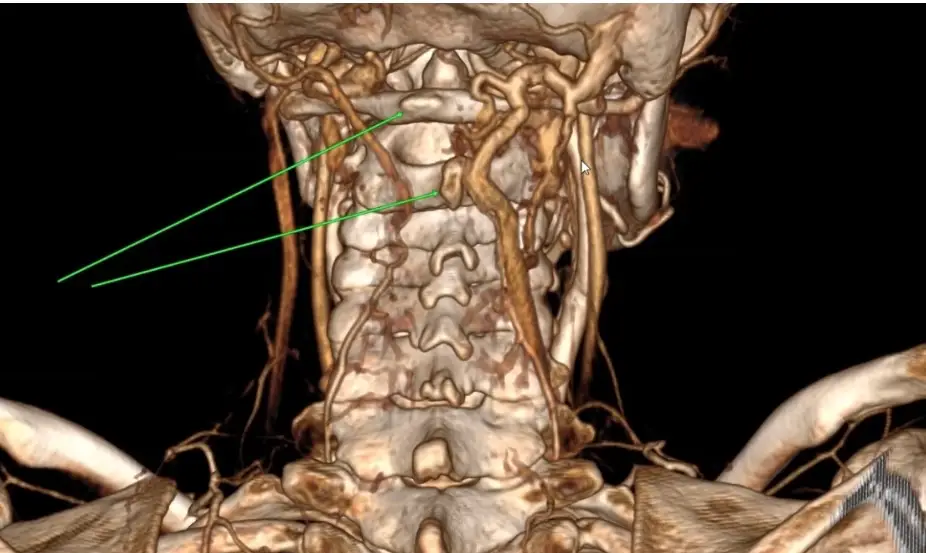
This term describes the loosening of the the top two vertebrae in the neck and the occipital bone in the skull, and it left Katlyn feeling like a 'bobblehead'.
"You can literally feel how loose your head is," she said. "It just kind of flops. I can feel the back of my head resting on my upper back."
The mum, from Michigan, says that doctors informed her that any sudden movements could easily result in her suffering internal decapitation.
A GoFundMe set up by her family to help raise money for her medical costs explains that CCI left Katlyn in a 'critical and sinister position' where she was at risk of 'her neck collapsing and crushing her spinal cord, jugular veins, and nervous system - all of which are an immediate death sentence'.
As a result, she desperately needed to undergo an operation known as a posterior occipitocervical fusion to stabilise her neck and skull, but she couldn't find a doctor who was willing to do it.
"I've been dismissed by pretty much every neurologist and neurosurgeon within my area, and that's even counting going three hours from my home and more," Katlyn said.
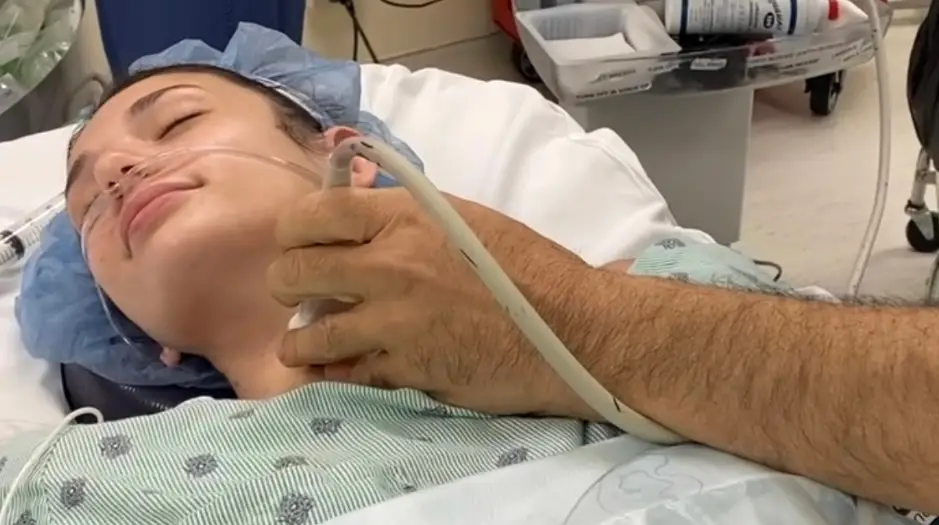
"We travelled just about everywhere in Michigan. I was cutting it too close to having spontaneous internal decapitation."
Then, on 24 December last year, she received a call from a neurosurgeon at the University of Cincinnati who informed her they wanted to get her in for the surgery 'almost immediately'.
She underwent the gruelling procedure in February, which Katlyn says provided her with 'pretty much instantaneous relief' from the myriad of symptoms she has shouldered for most of her life.
But her health woes aren't exactly over yet, as she has since endured a tethered spinal cord, and her medical bills total up to about $800,000.
She is now awaiting corrective surgery, which is set to take place in January next year to 'release' her spinal cord, while hopefully boosting her mobility and saving her from any further neurological damage.
"I'm living with these rare conditions that don't have a rule book," she added. "It really took a village of doctors who were curious and willing to listen."
 Olivia Burke