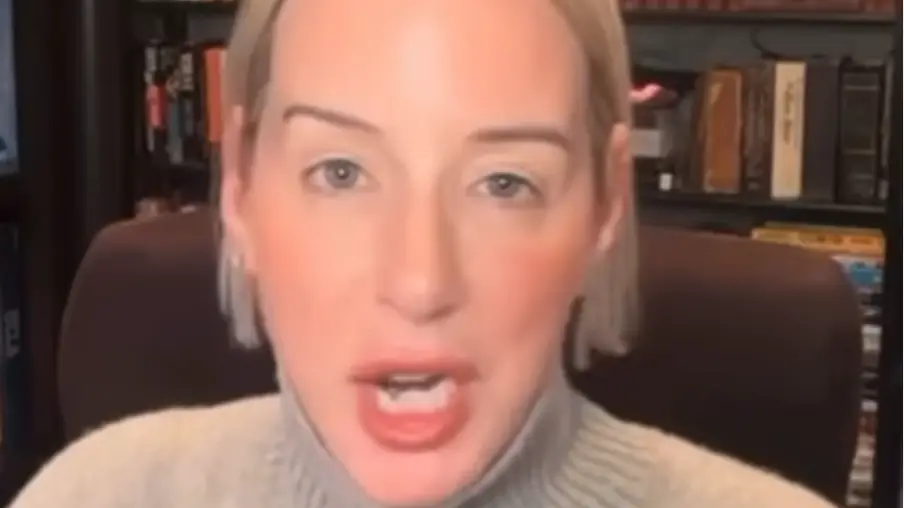
Sociopath says horrific moment aged seven was a telltale sign she was different

A sociopath revealed how she knew she 'was different' from the age of seven after committing a 'violent act'.
Upon reflection, Patric Gagne reckons that her childhood was littered with signs that she is one of the millions of people who have the mental health condition.
The writer and former therapist was given her diagnosis when she was in college after years of battling 'compulsions' and 'feeling nothing'.
A sociopath is a colloquial, non-clinical term, often attributed to those who have been diagnosed with antisocial personality disorder (ASPD).
Advert
The NHS explains that sociopaths have a severe form of ASPD, which relates to irresponsible, impulsive and even criminal behaviour. People who have this mental health condition will 'typically be manipulative, deceitful and reckless, and will not care for other people's feelings'.
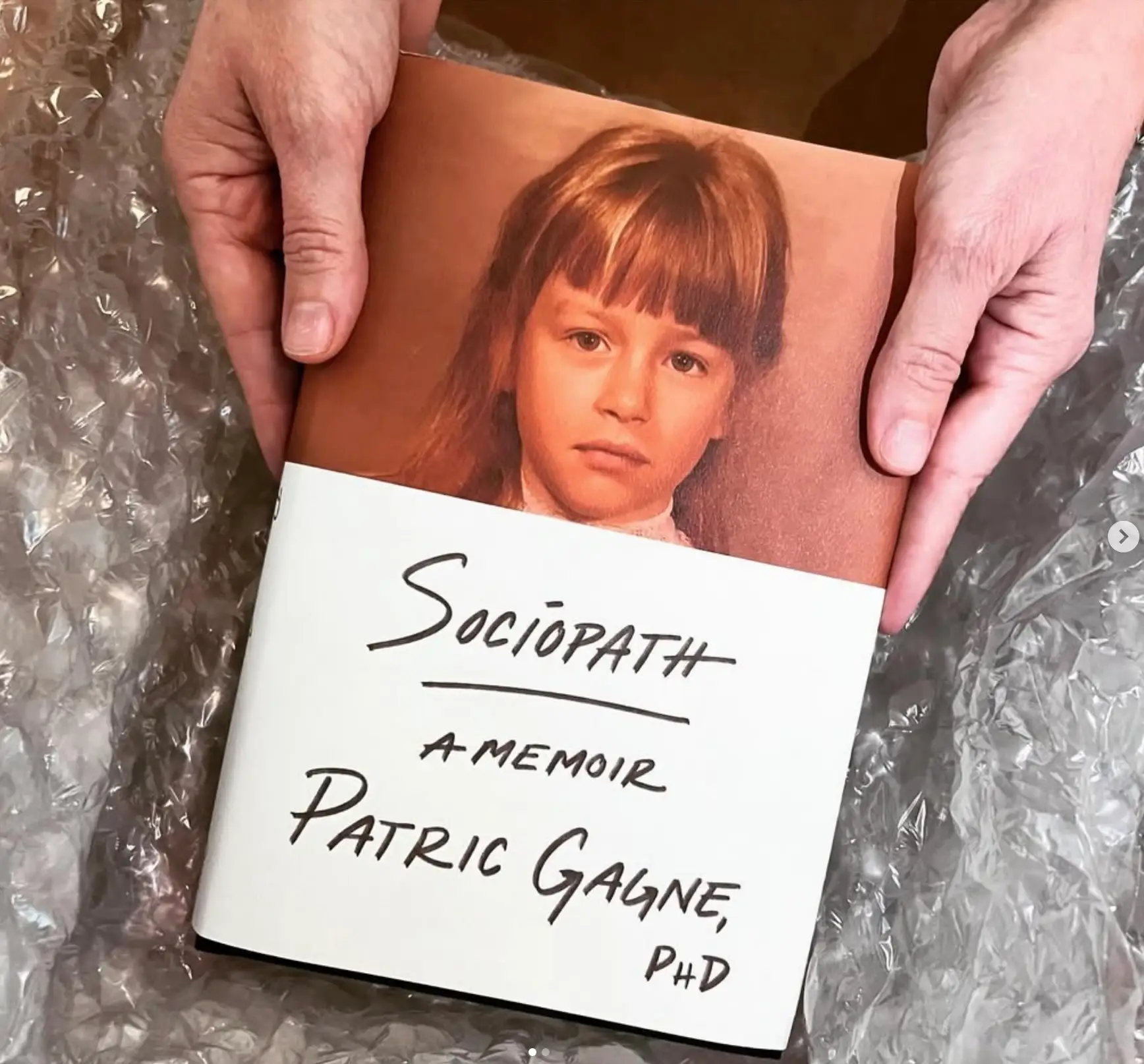
In 2024, Gagne penned a memoir titled Sociopath about her experience of growing up in California with the condition and how she felt out of sync with the people around her as 'destructive' thoughts plagued her mind.
The book details her 'mission to prove that those who share her diagnosis aren't all monsters' and how she 'managed to build a life full of love and hope'.
Which is quite the turnaround, considering the mum spent her younger years fighting 'to feel' something - as she realised at the age of seven that she 'didn't care about things the way other kids did'.
"Certain emotions - like happiness and anger - came naturally, if somewhat sporadically," Gagne previously told the Mail's YOU Magazine. "But social emotions - things like guilt, empathy, remorse and even love - did not.
"Most of the time, I felt nothing. So I did ‘bad’ things to make the nothingness go away. It was like a compulsion."
Comparing these urges to 'a pressure, a sort of tension building in her head', Gagne explained that the only way to rid herself of this feeling was 'to do something undeniably wrong'.
"All I knew was that I liked doing things that made me feel something, to feel anything," the author said. "It was better than nothing."
Gagne recalled how she began stealing her classmates' backpacks when she was in primary school for a cheap thrill, although she didn't actually want them and usually ended up returning them.
Detailing what was going through her mind, she said: "It didn’t matter where it was or whose it was, it was the taking that mattered.
"Doing anything I knew wasn’t ‘right’ was how I released the pressure, how I gave myself a jolt to counter my apathy."
But soon, this 'stopped working' for Gagne and her compulsions quickly became 'more extreme' - resulting in her later launching a brutal physical attack on one of her friends.
After the schoolgirls got into a minor spat, her pal Syd 'kicked her backpack' over and it sent her pencil case rolling across the floor.
"Without a word, I leaned down to collect my things," Gagne explained. "I grabbed [a pencil], stood up and jammed it into the side of her head. The pencil splintered and part of it lodged in her neck.
"Syd started screaming and the other kids understandably lost it. Meanwhile, I was in a daze. The pressure was gone. But, unlike every other time I’d done something bad, my physical attack on Syd had resulted in something different - a sort of euphoria.
"I walked away from the scene blissfully at ease... with that one violent act, all traces of pressure were eradicated. Not just gone, but replaced with a deep sense of peace."
Gagne recalled how she then headed home and 'calmly' told her parents what had happened, but her mother and father were left baffled by the fact that she didn't show any remorse.
The doctor of psychology explained that the conflicting feelings she felt about hurting Syd left her 'confused and scared' - and although Gagne's mum only 'vaguely' remembers the event all these years later, she can recollect it with 'absolute clarity'.
After all, it was quite a significant moment in her life, as it's how she realised that 'something was off' when she was just seven years old.
In a personal essay for Vogue in 2024, Gagne also admitted that 'the red flags were there from the beginning' about her having the condition.
Explaining how this ended up inspiring her to write a memoir, she said she wanted 'to show that not all sociopaths are evil', adding: "We’re children seeking acceptance. We’re parents hoping for validation. We’re doctors looking for answers. We’re human beings in need of compassion."
Topics: Books, Health, Lifestyle, Mental Health
 Olivia Burke