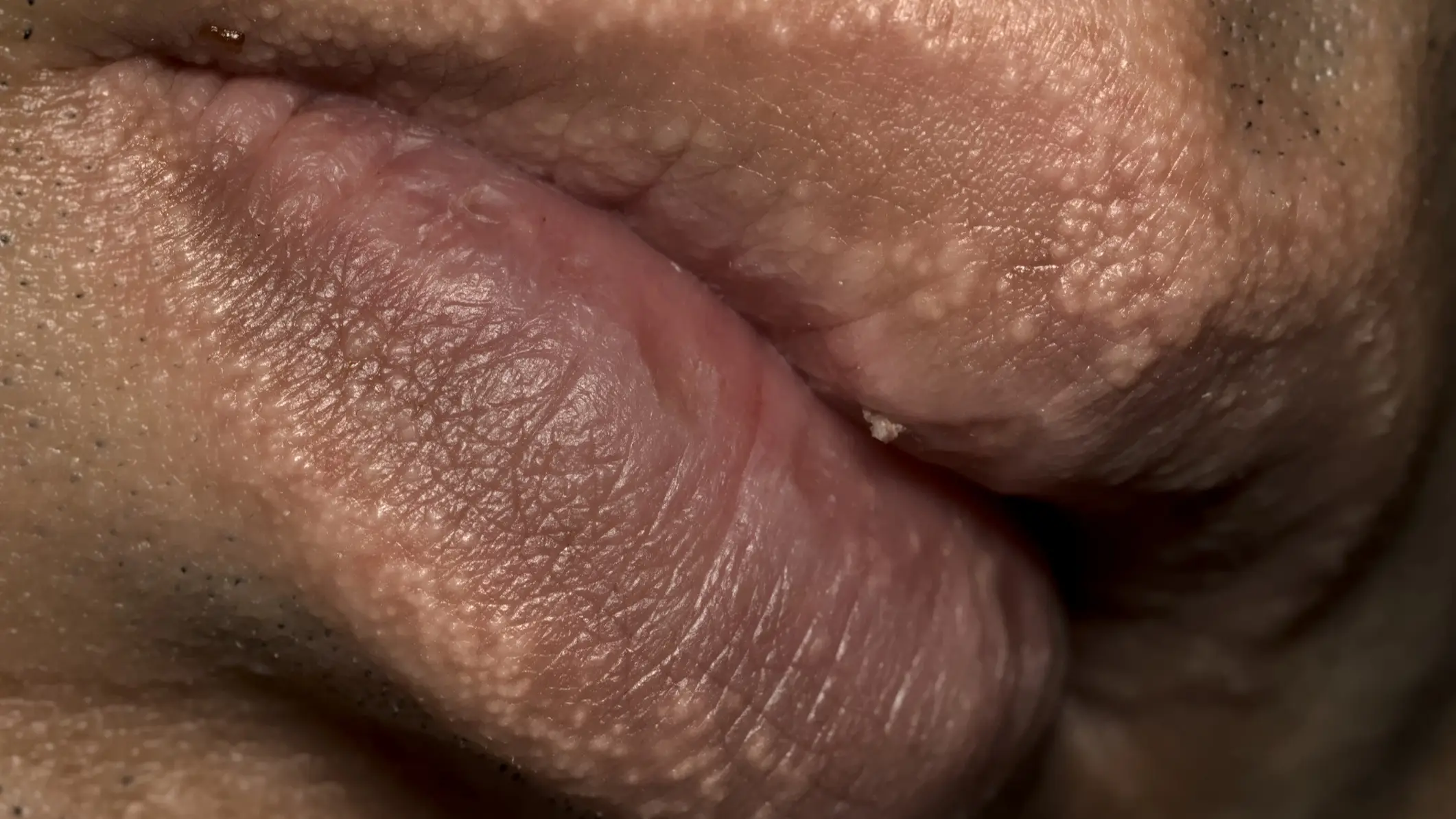
What it really means if strange white spots appear on your mouth or private parts

A cluster of white spots breaking out on your skin might cause some concern given there's an unannounced change to your appearance, but they have a name and a reason for being there.
If new things are happening to your body it's only natural to wonder if it's the herald of some change or a reason to see the doctor, but these white bumps you might see are called Fordyce spots.
They can pop up all over your body but are most often spotted around the mouth and genitals, and they're a lot more common than you might be fearing.
In fact, a majority of people will end up with these spots somewhere on their body at some point in their life so read on to learn more about what you've likely got in store, or already have.
First of all, what are Fordyce spots – and how do you get them?
Fordyce spots are small, white or yellow bumps which can appear on the mouth, inner cheeks and genitals.
Advert
Discovered in 1896 and named after US dermatologist Dr John Addison Fordyce, the spots are caused by the oil (sebaceous) glands in our skin becoming enlarged and visible.
According to Cleveland Clinic, these spots are typically present from birth but become more noticeable during and after puberty and are a 'natural part of your skin'.
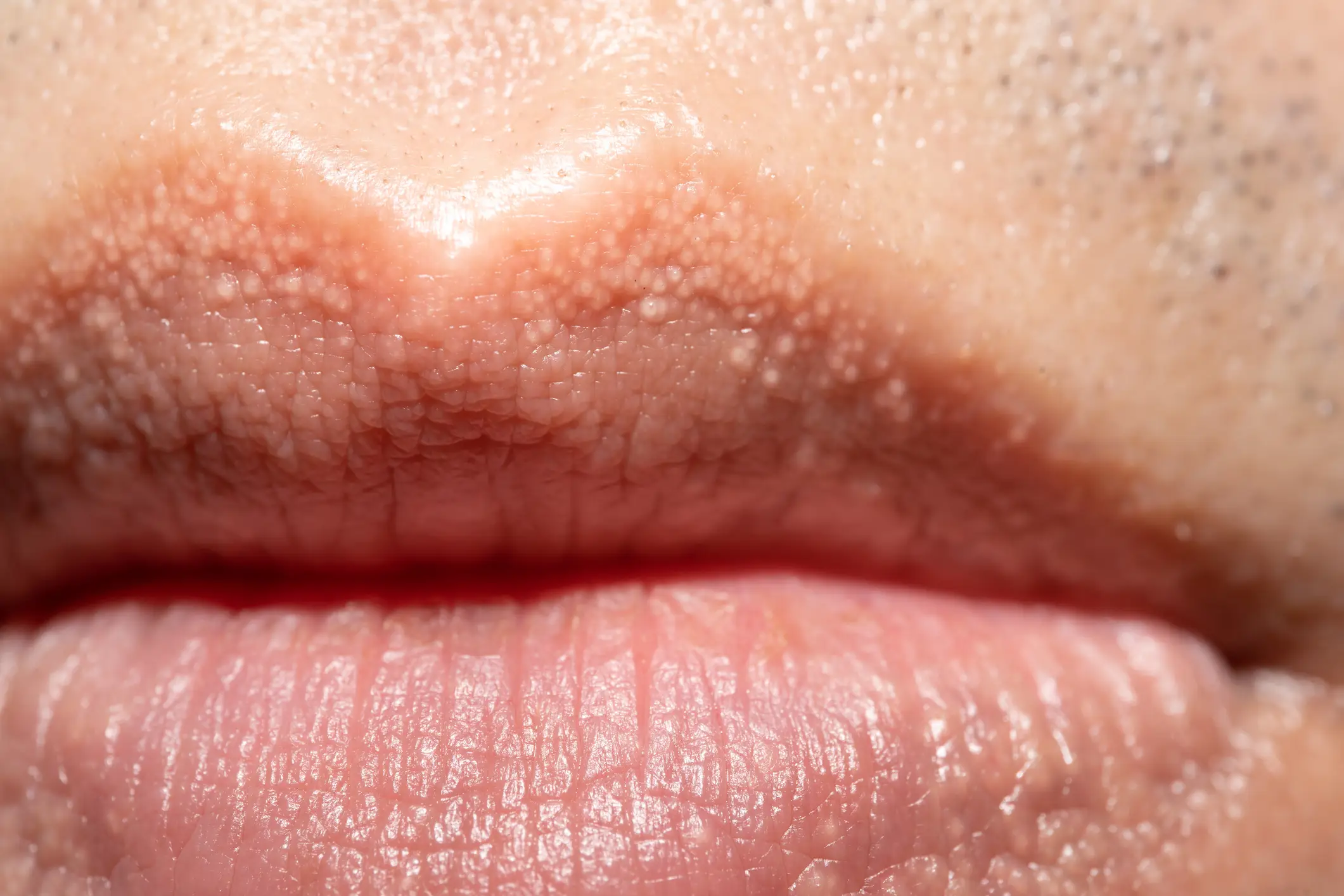
In fact it's likely that more of us have Fordyce spots then we realise, as Healthline states the spots show up in around 70 to 80 percent of adults.
So, nothing to worry about really.
What is the difference between Fordyce spots and herpes?
Let's be honest, the reason why you're likely here is due to Fordyce spots bearing a concerning resemblance to herpes.
Herpes is caused by the herpes simplex virus (HSV) and is transmitted through close contact with an infected area, often sexual activity, with the main symptom being painful blisters.
According to the World Health Organisation, 3.8 billion people under age 50 (64%) globally have herpes simplex virus type 1 (oral herpes) while 520 million people aged 15–49 (13%) worldwide have herpes simplex virus type 2 (genital herpes).
There is no cure for herpes, however the sores will go away and reoccur over time.
The key differences between Fordyce spots and herpes, is that the former aren't contagious, are painless and non-itchy – all of which are key indicators that you haven't developed herpes.
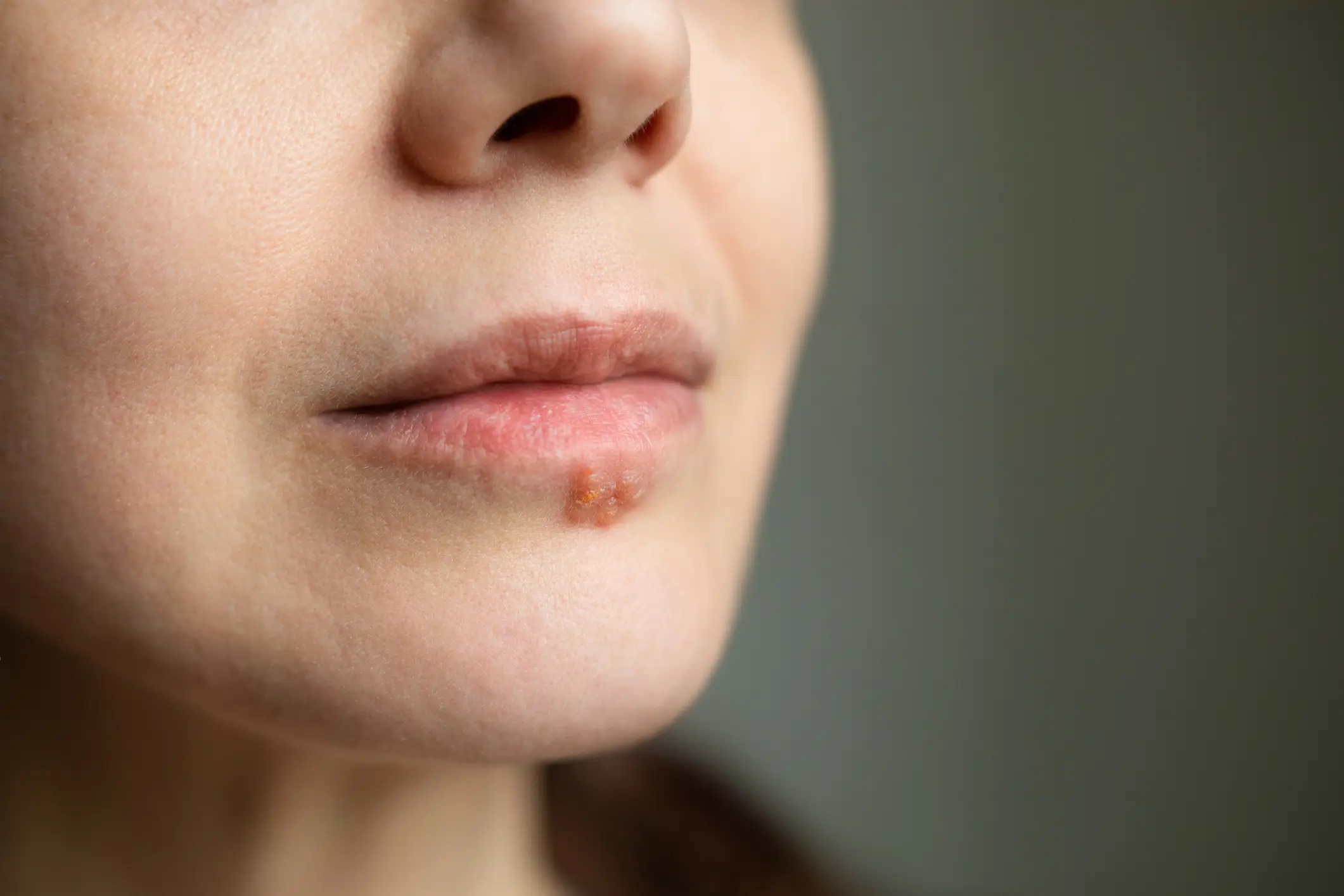
Which will certainly save you an awkward text conversation with last night's date.
How do you get rid of Fordyce spots?
Although the spots aren't anything to worry about, some people may want to get them removed anyway.
According to Cleveland clinic, there are several treatments which can be used to banish Fordyce spots. These include:
- Cryotherapy - extreme cold used to freeze and destroy targeted tissue
- Electrodessication - high frequency electric currents delivered through a needle to burn the affected area
- Laser treatments
- Micro-punch therapy: the most invasive option, micro-punch therapy involves removing the tissue.
If surgical treatments sound too drastic, you can also try certain topical treatments such as prescription retinoids or chemical peels.
Topics: Health
 Brenna Cooper