Mysterious interstellar object tracked by 'alien-hunting spacecraft' as it passes Earth

The comet everyone is talking about made its closest approach to Earth at 6am (UK time) today (19 December) and a spacecraft designed to search for extraterrestrial life is tracking it.
It feels like we've been hearing about 3I/ATLAS for months and months with it being just the third interstellar object ever recorded to enter our solar system.
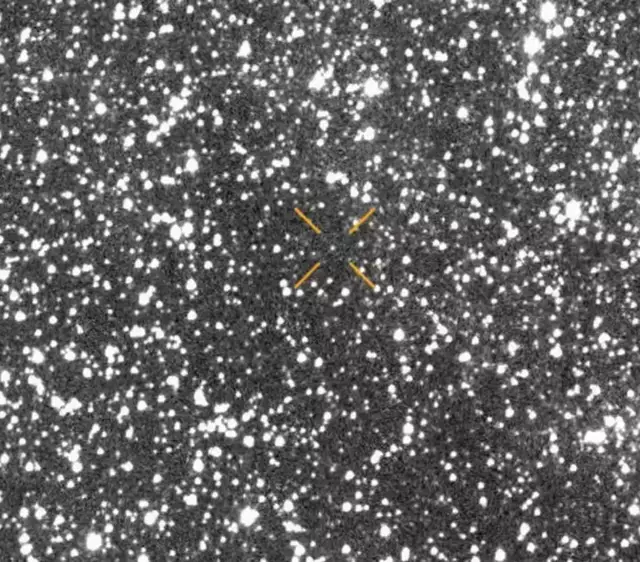
But as it zooms through space at an estimated 153,000 mph, physicist Avi Loeb has speculated that 3I/ATLAS could be a 'potentially hostile alien threat'.
Loeb argues 3I/ATLAS shows several 'anomalies' that could fit alien technology, like an unusually aligned trajectory and odd geometry.
Advert
"Alien technology is a potential threat because when you go on a blind date of interstellar proportions, you never know whether you have a friendly visitor as your dating partner or a serial killer," the Harvard University astrophysicist told Sky News.
"When there are implications to society, we must consider even an unlikely event and collect as much data as possible to convince us otherwise."
This is despite NASA's firm stance that the 'overwhelming evidence' points towards 3I/ATLAS being a comet.
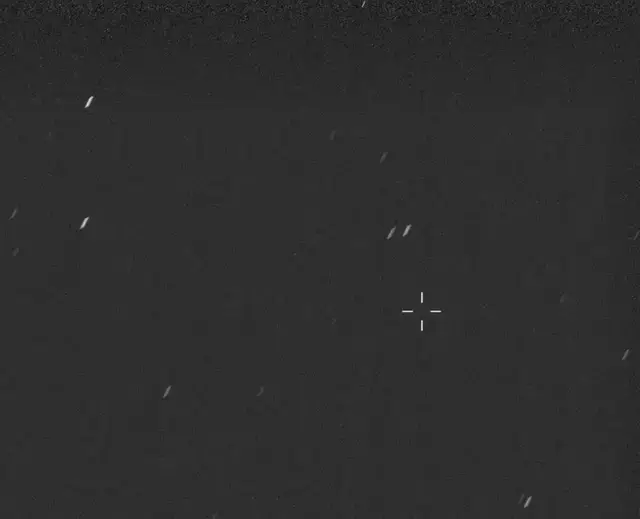
Well, today is the day we get a close look to see what's really happening with the interstellar object when it's about 168 million miles (270 million kilometres) from our planet.
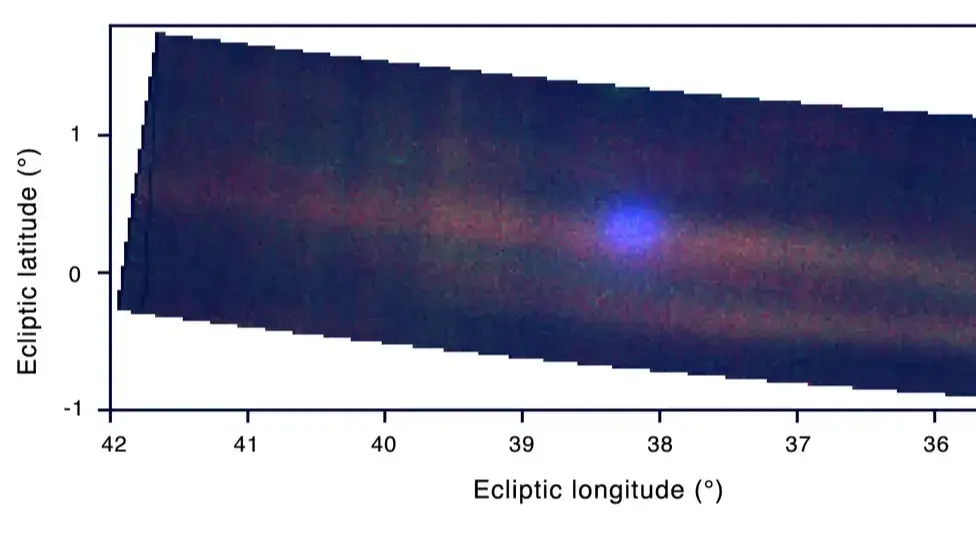
NASA’s Europa Clipper spacecraft, designed to search for extraterrestrial life on Jupiter’s moon Europa, has been capturing images of 3I/ATLAS.
But according to Live Science, it's not looking out for aliens, in this case, and is instead using the same technology to analyse the elements coming out of the comet.
Basically, Clipper will allow researchers to learn more about what makes 3I/ATLAS tick.
And NASA is set to share its findings as soon as they're available.
On whether to expect aliens or not, lead NASA scientist Tom Statler, said: "It looks like a comet. It does comet things. It very, very strongly resembles, in just about every way, the comets that we know.
"It has some interesting properties that are a little bit different from our solar system comets, but it behaves like a comet. And so the evidence is overwhelmingly pointing to this object being a natural body. It’s a comet."
Now it's passed Earth, 3I/ATLAS is heading off to the outer solar system and is due to pass Jupiter in early 2026, and by 2028 it will have crossed the orbits of Saturn, Uranus and Neptune too.
A live stream of the comet will be available later today, weather permitting, to continue to track 3I/ATLAS as it flies away from Earth.
 Anish Vij