
'Potentially hostile alien object' shows new strange behaviour just hours before closest-ever pass to Earth

Interstellar object 3I/ATLAS - AKA the comet which everybody has been talking about - is just a day away from reaching its closest point to Earth.
The comet, which will pass Earth on 19 December before zooming off into outer space for good, has been the subject of countless speculation ever since it was discovered back in July, with physicist Avi Loeb floating the idea that 3I/ATLAS could be a 'potentially hostile alien threat'.
Loeb's arguments aren't purely speculative either, with the Harvard scientist arguing that 3I/ATLAS has a number of peculiar features, including an 'anti-tail' and unusual trajectory, meaning that we can't rule out the prospect of the object being non-natural in origin – much to the opposition of NASA.
And now it appears to be exhibiting a number of strange behaviours as it prepares to speed past Earth.
Advert
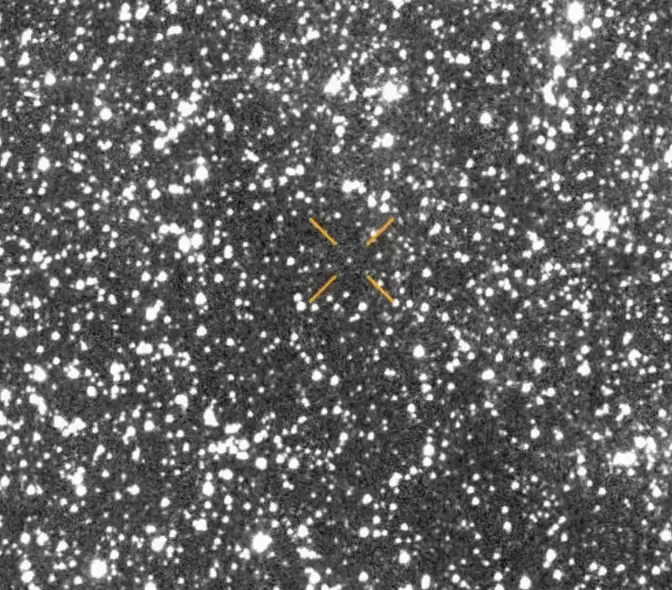
So, what's 3I/ATLAS up to now?
'Planned' trajectory
According to Loeb's latest observations, which he has shared on Medium, 3I/ATLAS has a trajectory which is closely aligned to that of the solar system's planets, 'within five degrees' of the ecliptic plane of the planets orbiting the Sun.
This, Loeb argues, suggests 'the trajectory may have been planned'.
Loeb has also referenced a recent study undertaken by a team of astronomers in Tenerife which detected a 'periodic wobble' emanating from jets in 3I/ALAS's nucleus.
Loeb argued the findings had 0.5 percent probability of occurring by chance and, put simply, that such a level of precision was more likely to be associated with a technological spacecraft manoeuvring through space.
Acceleration
According to the latest tracking data, 3I/ATLAS has accelerated since passing the Sun back in October.
The Smithsonian puts the comet's current speed at 130,000 miles per hour (209,214 kilometres per hour), which makes it the fastest speed on record for an object visiting our solar system from outer space.
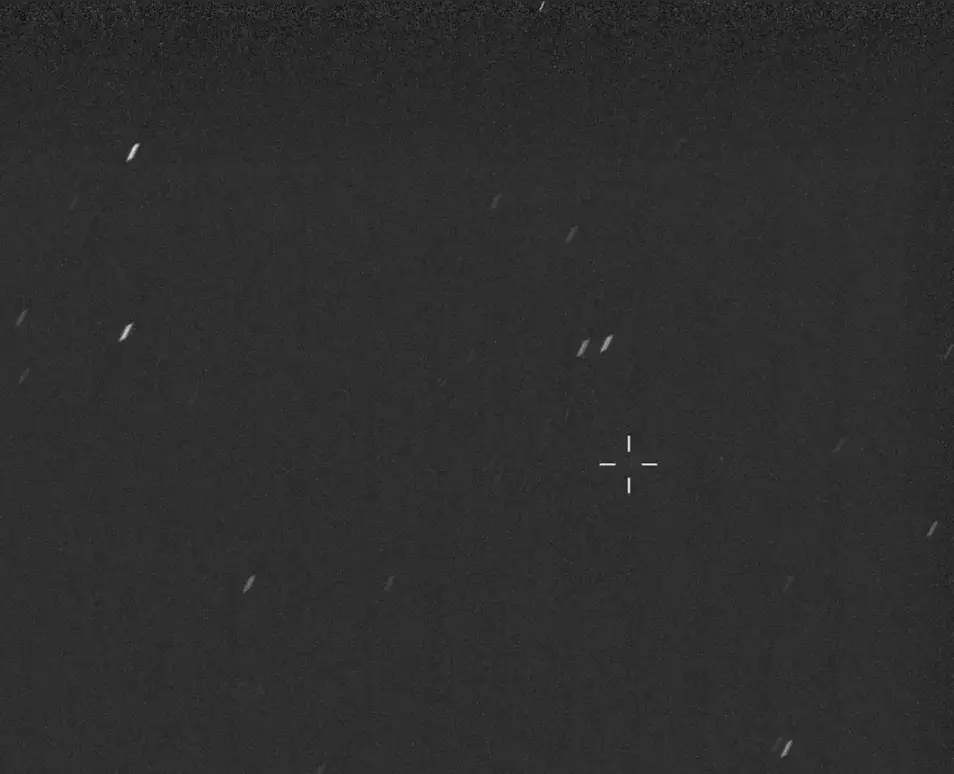
READ MORE:
‘POTENTIALLY HOSTILE ALIEN THREAT’ 3I/ATLAS CARRIES ‘KEY’ SUBSTANCE FOR LIFE
How to view 3I/ATLAS
While the comet will indeed be at its closest point to Earth tomorrow, it's important to stress that this doesn't mean it'll actually going to be close to our planet, as 'close' in this scenario means 170 million miles away.
So if you want to view 3I/ATLAS on its farewell tour of our solar system, you're going to need to know what you're looking for.
According to guidance from NASA, you'll want to be pointing your telescope in the 'east to northeast ' direction (about 6am UK time) to get the best chance of seeing 3I/ATLAS as it passes under the star Regulus.
To do this, you'll need a telescope which has 'an aperture of at least 30 centimetres'.
And if you don't happen to have one of these lying around in your house, then you can always tune into The Virtual Telescope Project, which is hosting a livestream from 1am UK time.
 Brenna Cooper