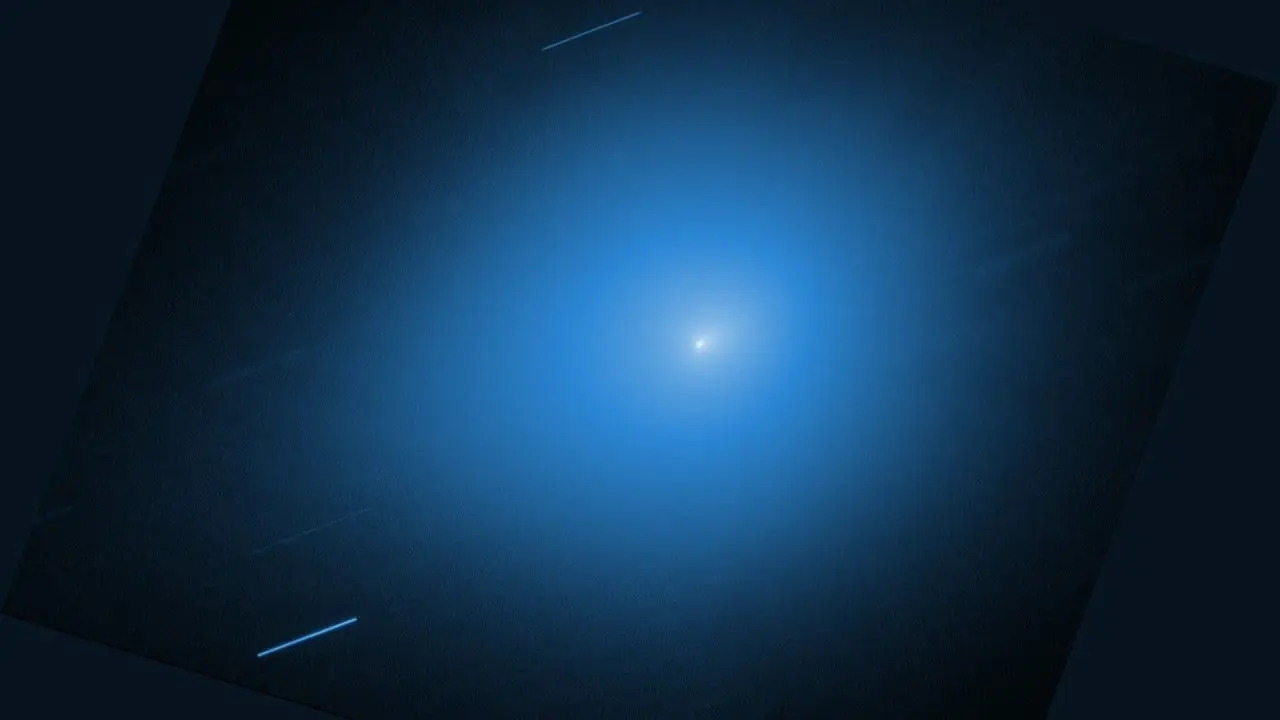
Harvard scientist has worrying theory over 'potentially hostile alien threat' as it moves closest to Earth tonight

A Harvard scientist who is convinced 3I/ATLAS could be 'alien technology' has explained why he thinks it is only pretending to be a comet as it's set to make its closest approach to Earth within hours.
Avi Loeb is a theoretical physicist who has long suggested that the mysterious object which has been making its way around our solar system could be an 'alien spaceship'.
NASA and other scientific experts have been quick to dismiss this claim, but Loeb remains adamant that the possibility is there, while it may not be certain.
In a telling interview with LADbible, he even accused NASA of 'pretending to be the adults in the room' as they didn't investigate possibilities of extra-terrestrial life at all.
Advert
The space rock has made its way around the Sun and is set to reach its closest point to Earth, around 270 million kilometres (170 million miles) away, tonight (18 December) and in the early hours of tomorrow.
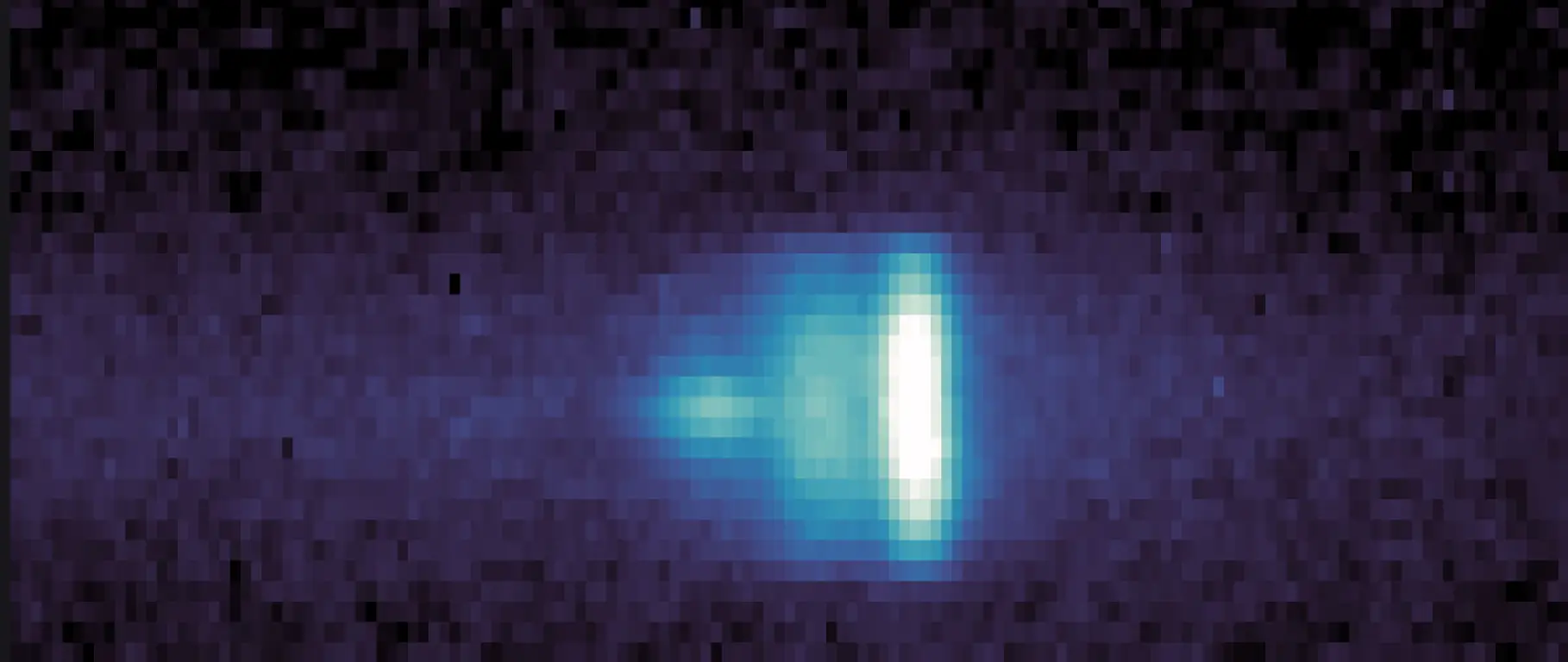
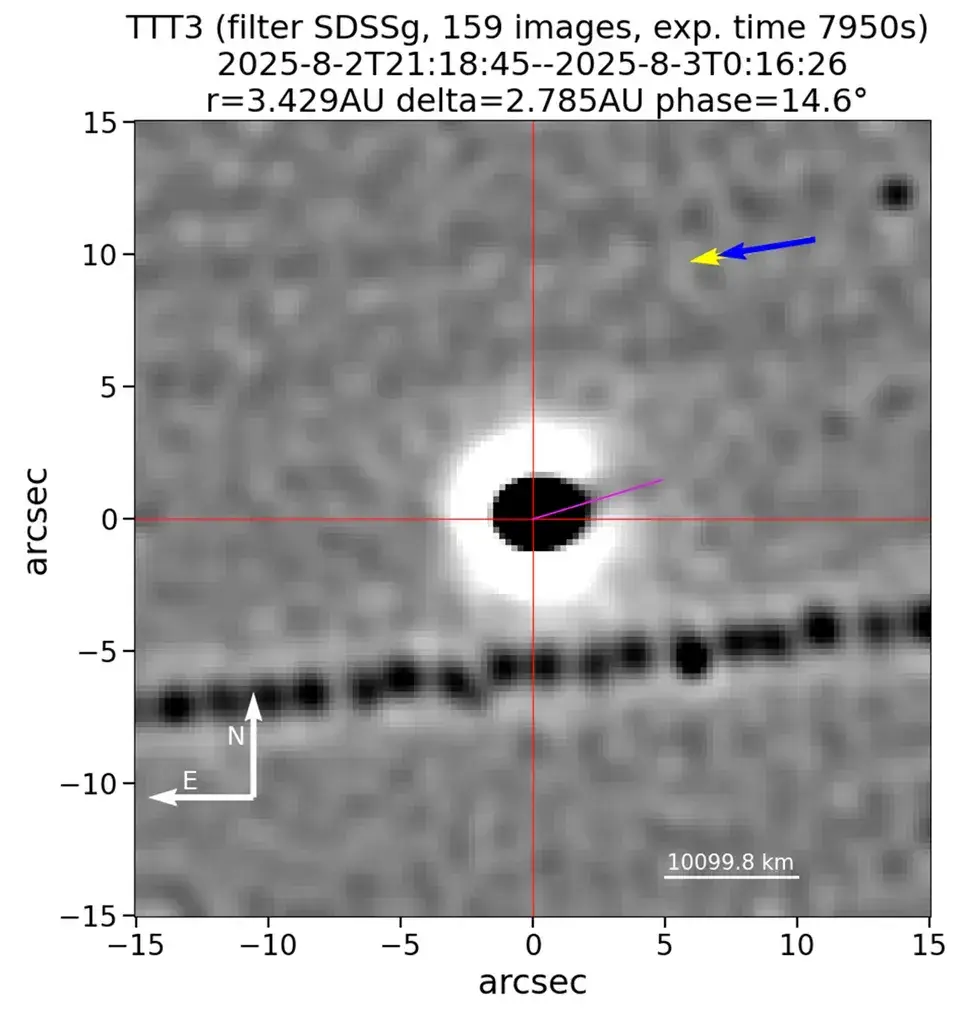
Loeb says that he is staying firm on the likelihood of alien life or technology being on the object, which he says has an 'anti-tail' while also having a 'non-gravitational acceleration'.
He also reckons the shade of blue coming out of the comet could be a suggestion of an alien 'engine'.
Speaking more about 3I/ATLAS in a blog post, the scientist suggested that a theory about the object could come true, based on past suggestions.
He explained: "It is important to keep in mind that other technological civilisations could have used the foundation of a natural object to plant technological devices within it."
Loeb referenced a 2011 paper, suggesting: "Whether we encounter a 'Trojan Horse' can be decided only through a careful study of the anomalies that distinguish 3I/ATLAS from familiar comets."
The astrophysicist spoke about the ongoing Planetary Defense campaign being run by the International Asteroid Warning Network, which is collecting all possible data on 3I/ATLAS between November 27, 2025 and January 27, 2026.
"Once this data is made public, I will update my rank for 3I/ATLAS on the Loeb Classification Scale," he stated.
Also known as the 'Interstellar Object Significance Scale', the zero to 10 system classifies interstellar objects based on how likely they are artificial, or legitimate.
If ranked at eight to 10, it means that the object could be 'technological' and present a threat to our planet, while zero means that the object is natural and not worth worrying about.
Loeb previously ranked 3I/ATLAS at four on the scale, classifying it as meeting the 'Anomaly Meeting Potential Technosignature Criteria', meaning it has enough to warrant a deeper investigation.
The scientist went into more detail about the maths behind his scale in a separate paper, though many will be eagerly awaiting the new ranking of the space object, despite the likelihood of it being billions of miles away at that point.
 Joshua Nair