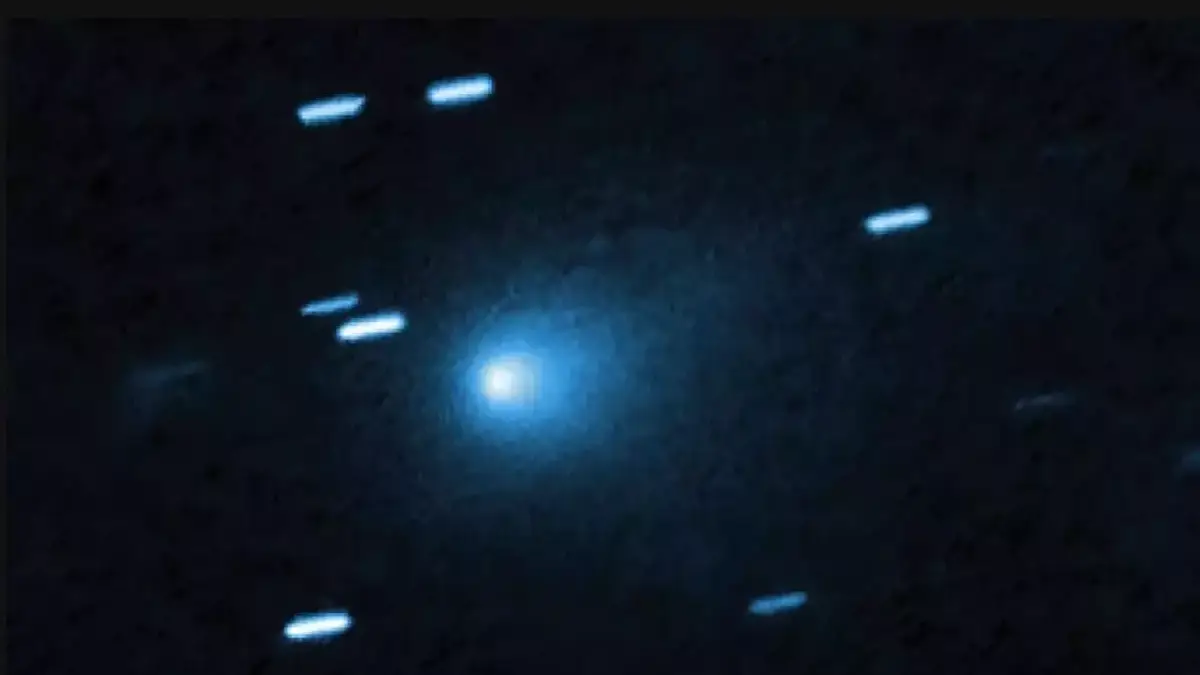
Harvard scientist shares ‘anomaly’ NASA didn't mention about ‘potentially hostile alien threat’

Despite NASA clarifying once again what 'potentially hostile alien threat' 3I/ATLAS really is, one Harvard scientist has now pointed out an apparent anomaly with their explanation.
After first entering our solar system back in the summer, 3I/ATLAS has been a huge topic of debate over the past five months, especially after one scientist claimed that it could even attack the Earth.
Thanks to the James Webb Space Telescope, we were able to identify that it is reportedly seven billion years old and has come from another solar system, which means it has travelled a very long way indeed.
Elon Musk even weighed in on the interstellar object, suggesting in his typically jolly manner that it could kill most of human life, which means he should probably stop with the politics and instead put his money towards building a real-life version of the Avengers to defend the Earth.
Advert
Fortunately, NASA were able to put out a statement yesterday which might put most minds at ease, as they once again identified 3I/ATLAS as a comet, something which most scientists have been saying all along.
They said: "First observed earlier this year, the 3I/ATLAS comet is only the third object ever identified as entering our solar system from elsewhere in the galaxy.
"While it poses no threat to Earth and will get no closer than 170 million miles to Earth, the comet flew within 19 million miles of Mars in early October."

However, Harvard scientist Avi Loeb, who previously spoke to LADbible about the curious comet, suggests that NASA failed to mention an 'anomaly' which could throw doubt on their explanation.
Speaking to FOX 32 Chicago, Loeb said: "The main anomaly that I find extremely puzzling, that they didn't even mention, is the size of the object.
"Based on the data that we have now, which is not just the Webb Telescope data that they mentioned, but other details, it looks like the object is at least 5km in diameter, maybe more.
"That means that it is 1000x more massive than the previous [interstellar] comet, which was discovered in 2019.
"It's about a million times more massive than Oumuamua, the first interstellar object. When you see the third object being a thousand times more massive than the second and a million times more massive than the first, it should raise a big question. How is that possible?"
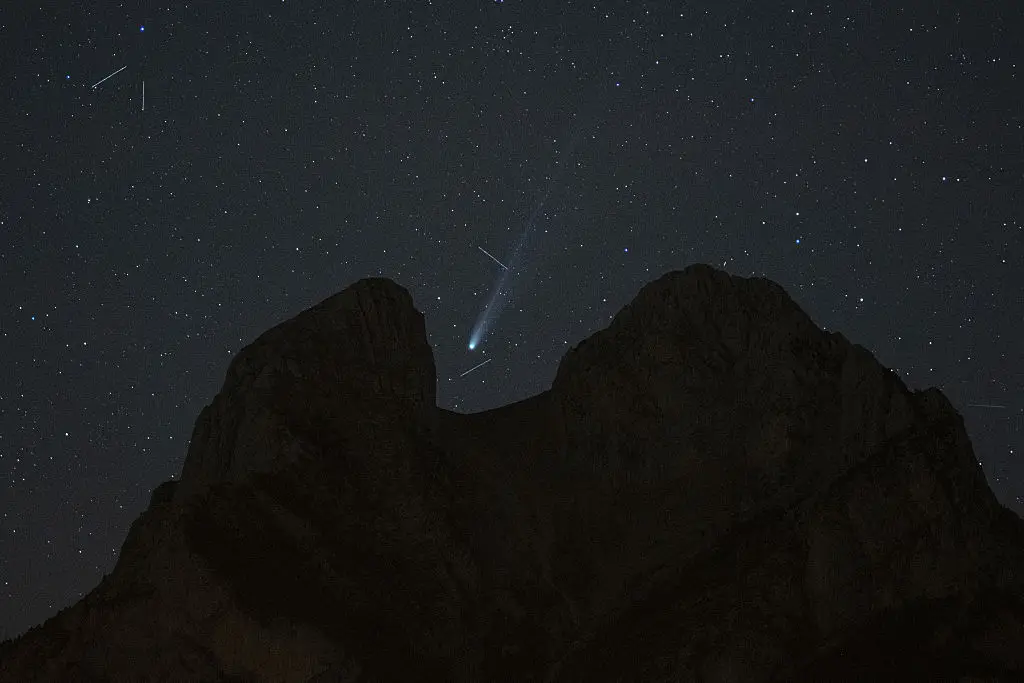
Loeb goes on to question the likelihood of 3I/ATLAS being so visible, as NASA scientists have been able to monitor it for several months now, despite him suggesting that interstellar objects have a one in 500 chance of being aligned with the ecliptic plane of the planets.
So, Loeb certainly seems to think that there's something odd about NASA's comet comments, but most of us are probably just hoping that, whatever it is, it doesn't come crashing into the Earth.
 James Moorhouse