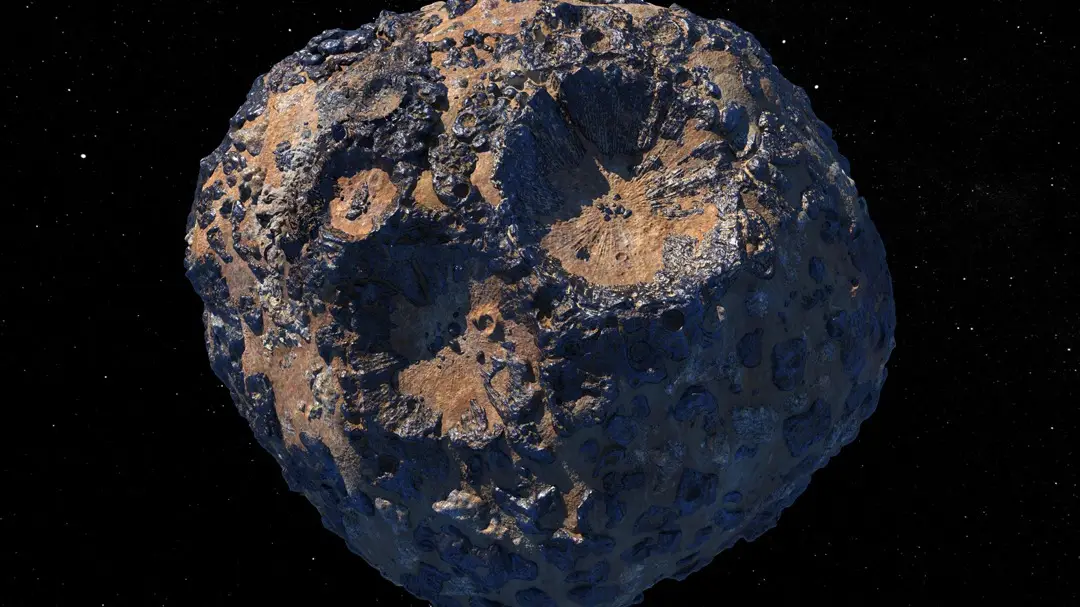
Scientist made admission about true value of £8,000,000,000,000,000,000 asteroid after NASA launched mission

A scientist who suggested an asteroid in our solar system could be worth a heck of a lot of money later made an admission about its true value.
The asteroid 16 Psyche was first discovered back in 1852 by Italian astronomer Annibale de Gasparis, who is sadly no longer with us on account of having lived two centuries ago.
It's turned out to be the largest M-Type asteroid we've discovered in our solar system, which means it's a sizeable chunk of space rock with a diameter of about 220km.
Lindy Elkins-Tanton, a planetary scientist at Arizona State University, is the principal investigator of NASA's Psyche mission to explore the asteroid, and she once estimated the precious metals inside could be worth quintillions.
Advert
However, she later made an admission about that prediction to put the brakes on the idea that if we can unlock the wealth of the asteroid, we'll all be fine.
Writing in the New York Times a couple of years ago, Peter Coy noted that Professor Elkins-Tanton had told him several years after she made that estimation that it was a ballpark figure which relied on actually getting the asteroid's wealth back to Earth.
She said that the estimation of the value was 'fallacious in every way' and the real value of the asteroid was the scientific discovery that came with studying it.
"It’s fundamental science. We’ve never visited an asteroid with a metal surface. It’s a whole new kind of object in our solar system," she explained.
She arrived at her initial estimation due to mineral knowledge, but it was never intended to be a specific figure or a realistic prediction of how much could be earned from it.
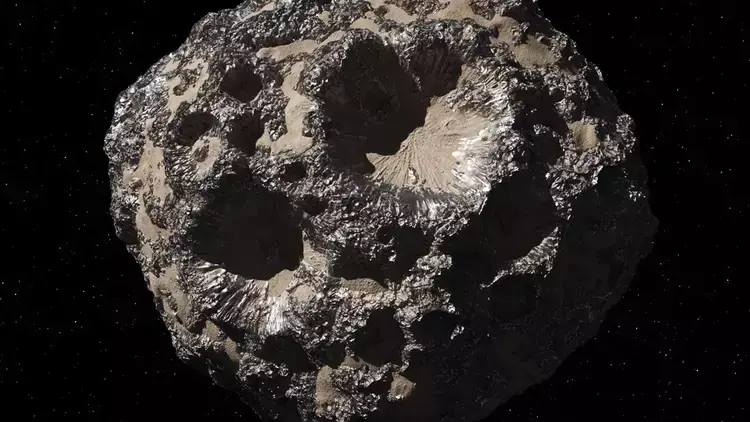
A major issue with this idea is that an asteroid containing mineral riches worth several quintillion quid would be more valuable than all the money in the world.
Simply put, the net worth of all of humanity would be measured in the hundreds of trillions, so we're not even touching quintillions, let alone affording multiples of them.
As such, the asteroid is just a faraway chunk of space rock which may or may not contain a huge haul of precious metals that could be too expensive for anyone to buy.
Another big problem is that the sudden arrival of lots of something valuable is going to devalue it, and therefore the value of the asteroid. If it really is packed with precious metals, then it'd crash the market and provide so much supply that you'd expect the prices of these precious metals to plummet.
On one hand, it'd make the asteroid more affordable and might solve the first issue, but there goes the hope that this chunk of space rock would be worth so much money.
 Joe Harker