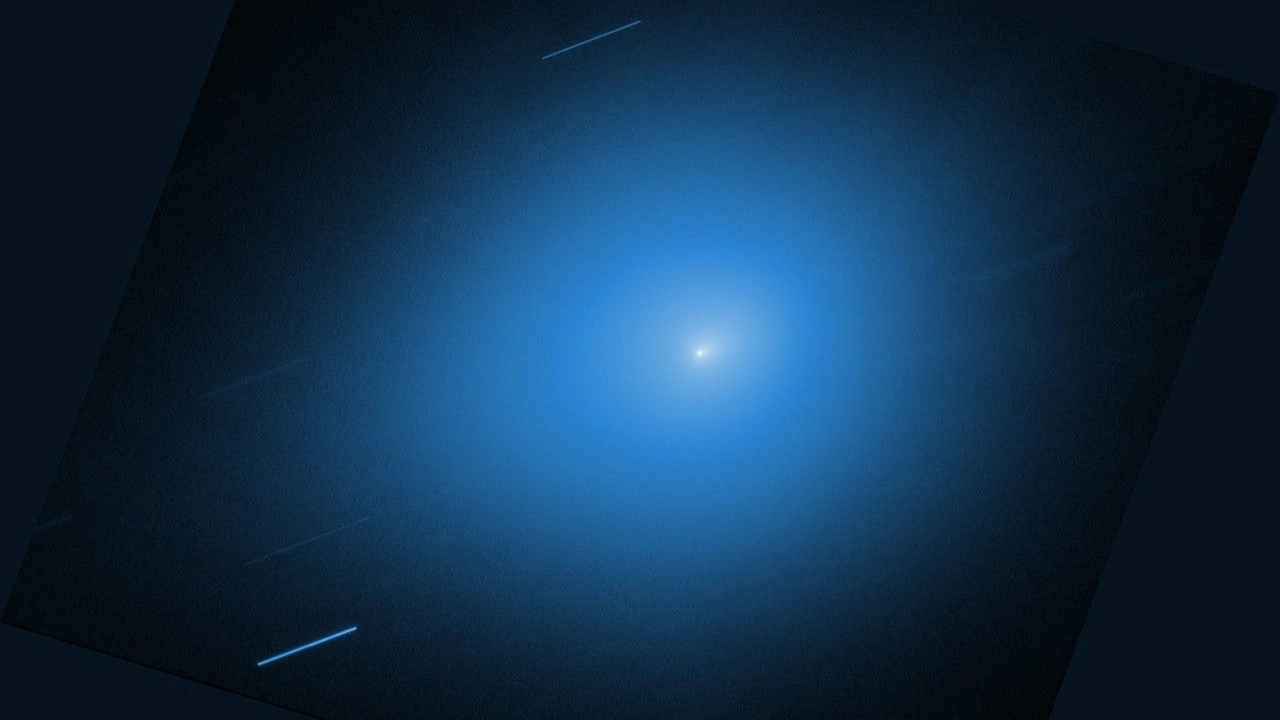
'Potentially hostile alien threat' 3I/ATLAS makes strange change as it nears Earth

When it comes to space, the perennial question of extra-terrestrial is always in the back of our minds.
You can't but wonder when you look up - what if there is someone, or something, else out there?
Well, at least one person thinks that the evidence for alien life out in space might well be closer than we think.
Theoretical physicist Avi Loeb has been watching a comet called 3I/ATLAS... you know, the one that has been seen as a 'potentially hostile alien threat'?
Advert
3I/ATLAS is the third interstellar object from outside our solar system 'to be discovered passing through our celestial neighbourhood', according to NASA.
This intriguing comet has a lot of unusual features that have led Loeb to wonder if there is some sort of intelligence behind it. And one recent change to the object as it nears Earth has only added fuel to that fire.
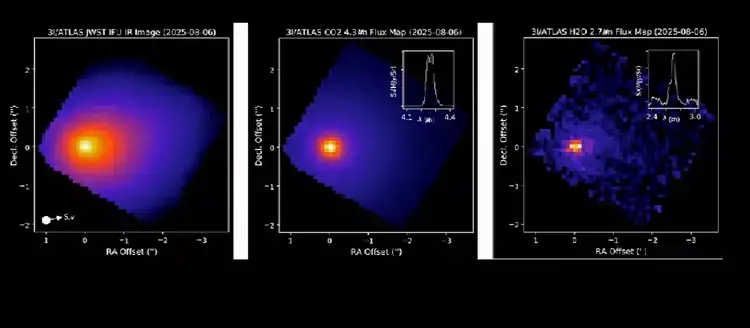
This is that the object appears to have changed colour.
Loeb took to Medium to share a blog post on the strange phenomenon, specifically after the 'perihelion' stage - that's the point in an object's orbit where it's closest to the Sun.
"The post-perihelion image combines exposures through four filters - blue, green, orange, and red, and its peak brightness is centered on the nucleus 3I/ATLAS," he wrote.
"The color of the glowing halo appears green, possibly as a result of diatomic carbon (C2) molecules which emit green light."
He continued: "A pre-perihelion image, posted on September 4, 2025, from the twin 8.1-meter telescope Gemini South in Chile, displayed a red colour of the glow around 3I/ATLAS."
Getting to a possible explanation as to why the colour change occurred, he wrote: "The change in colours from red to green means that the molecular composition of the plume of gas shed by 3I/ATLAS had changed near the Sun."
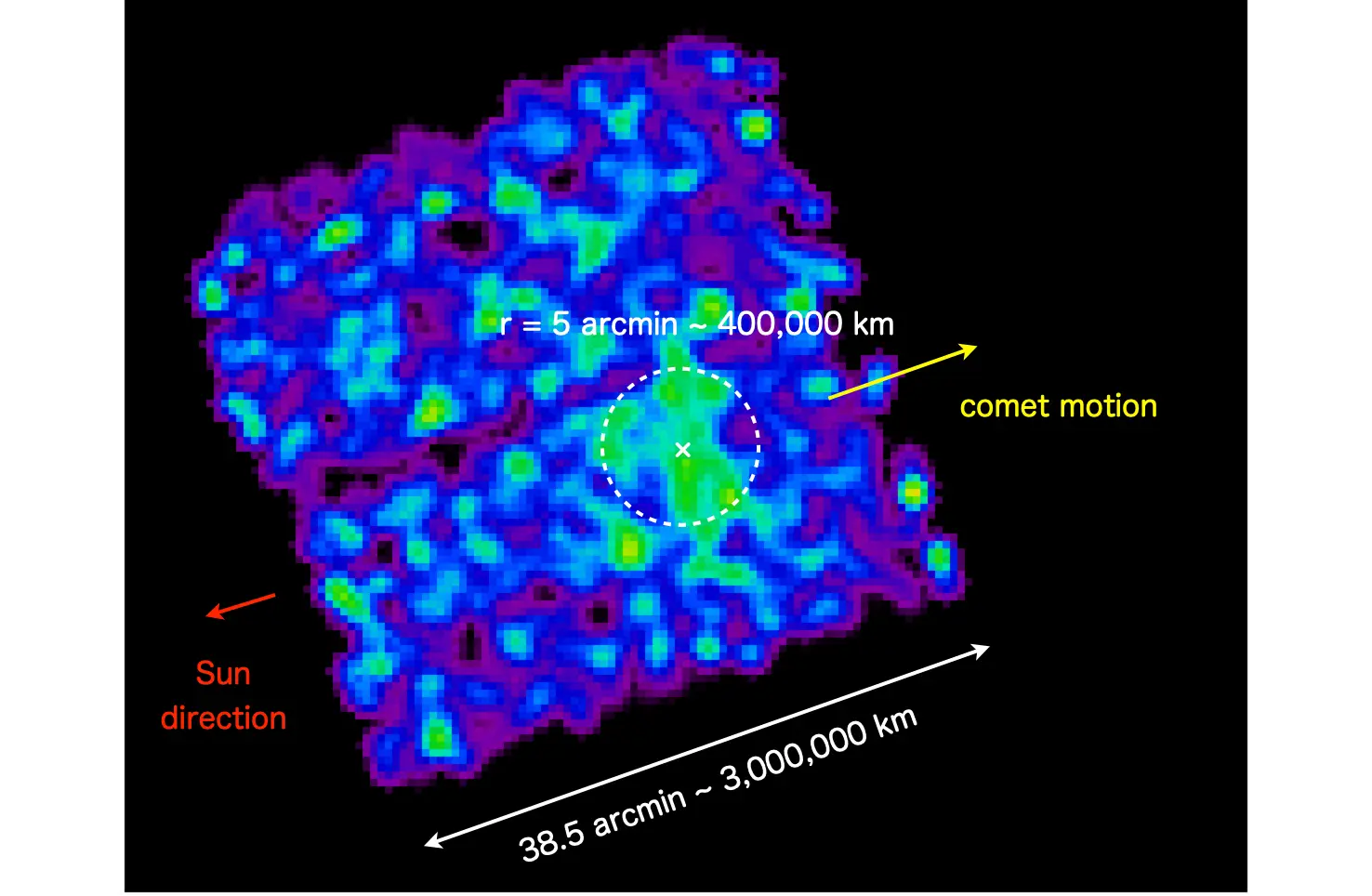
Loeb also noted a glow around the object which he had not seen before, describing it as a 'plume of gas', and saying he believes it to be a series of gamma rays - that's a burst of energy in space, not the beer.
The burst was first seen in July at about the same time that the object was discovered, and according to Loeb it was followed by a supernova, where a star explodes.
"This means that an ultra-long duration burst occurs as a result of a random cosmic event once per 14 years, during which there is a total of about 4,000 bursts," Loeb wrote.
"A seven-hour gamma-ray burst should therefore coincide to within 17 degrees of the arrival direction of 3I/ATLAS once per 670 years."
Of course, whether or not 3I/ATLAS truly has alien life is still up for debate - if you believe aliens exist at all.
 Kit Roberts