
Humans will soon live to 150 years old due to huge breakthrough, says expert

Humans could end up living to be as old as 150, says a scientist who came up with an accurate method for estimating biological age.
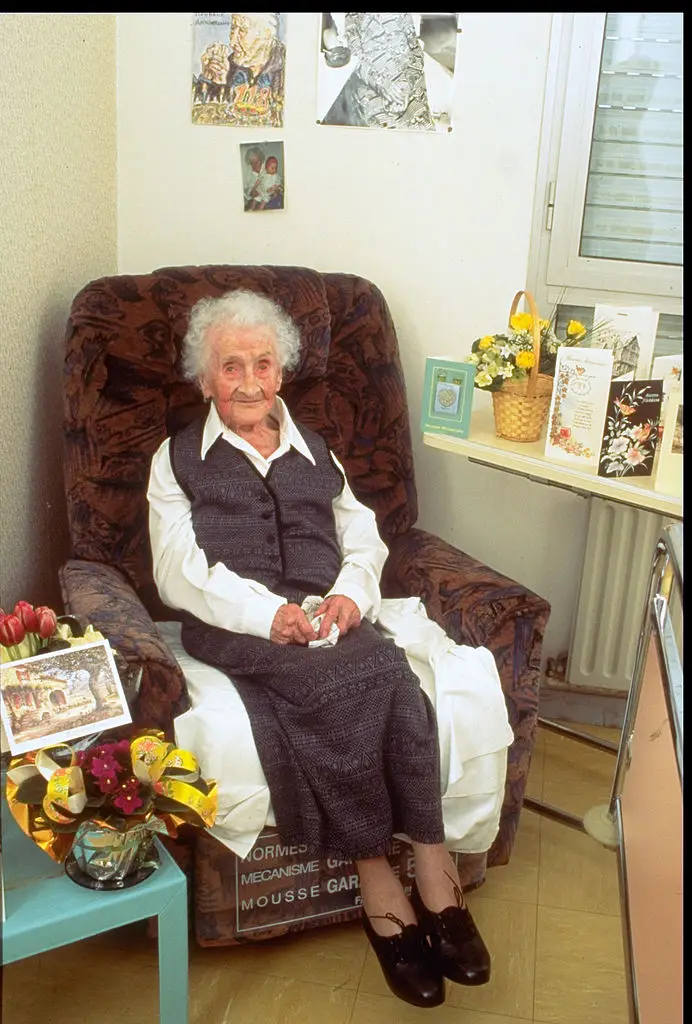
The verified oldest person ever to live was French woman Jeanne Louise Calment, who was born in 1875 and died at the ripe old age of 122 years and 164 days in 1997.
Nobody has ever lived longer than that and if you're lucky to be getting around that age, you're not going to be particularly active - it's unlikely all the bits you had will still be working.
Some studies have indicated that there's basically a soft cap on human lifespan of about 150, after which point cell resilience would completely give out and that'd basically be it for the chances of living longer.
Advert
Professor Steve Horvath of Alto Labs in the UK is known for developing something called the 'Horvath aging clock', no prizes for guessing who it was named after, which has been an effective way of measuring how many actual miles on the clock a body has.
Speaking to Time, he said he once dreamed of humans living to 1,000 but 'we're not close at all' to that and he described it as 'totally science fiction' that somebody could live so long.
However, he's more optimistic about humanity making it to 150, saying he has 'no doubt it will happen' and reckons there's 'no question' that someone will make it to a century-and-a-half old.
He said: "My mathematical answer is, I do think at some point there will be drastic extensions of lifespan.
"Imagine we have 100 more years of biomedical innovations—what will that do for health? Of course, we would expect major breakthroughs.
"So in an abstract sense, if we don't wipe each other out in a nuclear holocaust and if we can avoid wars and pandemics, I think our species at some point will find ways to extend lifespan drastically. "

Horvath has said developing biological clocks and being able to measure how old a person's body actually is beyond just numerical years was 'a quintessential tool to find interventions for rejuvenation'.
If you can better measure aging then you can test longevity treatments, which could help somebody live longer.
To his mind, the huge breakthrough is not here yet, but give scientists another century of working on it and he reckons they'll know much more about the aging process as well as how it can be slowed or even reversed.
Though, of course, there's the question of whether humanity would actually want to live to 150, we won't live forever.
Drugs to try and extend people's lifespans have already been tested, but any sort of treatment if it could ever exist is likely to be a long way off.
Topics: Health, Science, World News
 Joe Harker