
Monkeys help Oxford scientists discover why 90% of humans are right-handed - lefties remain a mystery

Why are the majority of humans right handed? It's a question that's finally been answered by experts at Oxford University, with how we began walking alongside the size of our brains being at the core of figuring out the journey behind why.
Almost nine in ten of us use our right hands to write, with just 10% of humanity using their left.
Now, after researchers have spent decades researching genetics, development, and the brain, they think they've cracked the code as to why
New research led by Oxford boffins, published in PLOS Biology, suggests it comes down to two defining features of humanity's historic evolution; those being walking on two legs and the explosive expansion of the human brain function.
Advert

The team looked at data from a total of 2,025 monkeys and apes from across 41 different primate species.
From there, they tested their evolutionary relationships including using tools, their diet, habitats, body mass, social structure, brain size and motor skills.
To begin with, humans looked like they were a stand out compared to every other primate - that was until scientists included the vital traits of brain size and the size ratio between leg and arm lengths.
This then put humanity's exceptional status out the window. As Oxford Uni says, 'once you account for upright walking and a large brain, humans stop looking like an evolutionary anomaly'.
From there, using the same models, the Oxford researchers estimated likely handedness in extinct human ancestors.
The picture that emerged was gradual - early human species such as Ardipithecus and Australopithecus 'probably had only mild rightward preferences, broadly similar to modern great apes'. With genus Homo, Oxford said the 'bias strengthens markedly - through Homo ergaster, Homo erectus and Neanderthals - reaching its modern extreme in Homo sapiens'.
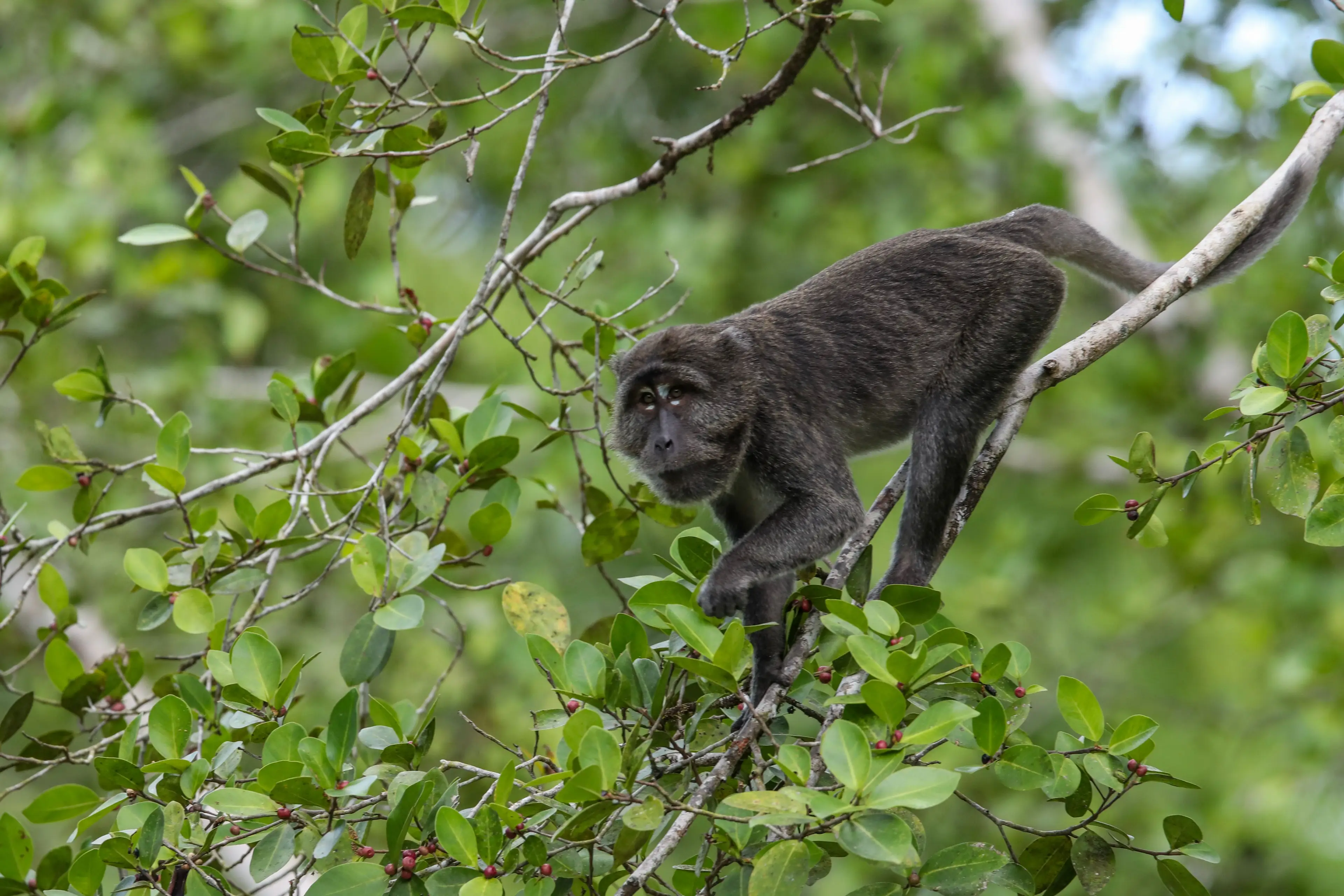
But one species of humanity, known as homo floresiensis - which were small-brained 'hobbit' like humans in Indonesia - had a much weaker preference for either hand.
"The researchers suggest this fits the wider pattern: floresiensis had a small brain and a body adapted to a mix of upright walking and climbing, rather than full bipedalism," Oxford says.
"The findings point to a two-stage story. Walking upright came first, freeing the hands from the work of locomotion and creating new selective pressure for fine, lateralised manual behaviours.
"Larger brains came later, and as they grew and reorganised, the rightward bias hardened into the near-universal pattern seen today."

As for left-handedness, that mystery still remains and is likely to for some time, with questions being asked as to whether we can understand why from other species like kangaroos and parrots.
Dr Thomas A. Püschel, Wendy James Associate Professor in Evolutionary Anthropology, said: "This is the first study to test several of the major hypotheses for human handedness in a single framework.
"Our results suggest it is probably tied to some of the key features that make us human, especially walking upright and the evolution of larger brains.
"By looking across many primate species, we can begin to understand which aspects of handedness are ancient and shared, and which are uniquely human."
 Tom Earnshaw