ladbible homepage
ladbible homepage
  • Home
  • News
    • UK
    • US
    • World
    • Ireland
    • Australia
    • Science
    • Crime
    • Weather
  • Entertainment
    • Celebrity
    • TV
    • Film
    • Music
    • Gaming
    • Netflix
    • Disney
  • Sport
  • Technology
  • Travel
  • Lifestyle
  • Money
  • Originals
    • FFS PRODUCTIONS
    • Say Maaate to a Mate
    • Daily Ladness
    • UOKM8?
    • FreeToBe
    • Citizen Reef
  • Videos
  • Advertise
  • Terms
  • Privacy & Cookies
  • License Our Content
  • About Us & Contact
  • Jobs
  • Latest
  • Archive
  • Topics A-Z
  • Authors
Facebook
Instagram
X
Threads
Snapchat
TikTok
YouTube
Submit Your Content Here
  • GAMINGbible
  • LADbible Group
  • UNILAD
  • SPORTbible
  • Tyla
  • FOODbible
  • UNILAD Tech
James Webb Space Telescope gives first clear look at dying star over 1,000 light years away
Home>News>Science
Published 16:03 15 Apr 2025 GMT+1

James Webb Space Telescope gives first clear look at dying star over 1,000 light years away

The new images were released by NASA

Michael Slavin

Michael Slavin

google discoverFollow us on Google Discover

The James Webb Space Telescope has given the first proper look at a dying star which exists over 1,000 light-years away.

The news was announced by NASA’s Jet Propulsion Laboratory (JPL), which revealed the images that show the incredible phenomenon.

NASA’s JPL is a research and development laboratory, initially founded by the California Institute of Technology, which is now run by NASA.

In a press release put out yesterday, April 14, NASA announced that they had gathered photos of ‘previously unseen layers of a dramatic cosmic scene’.

Advert

The James Webb telescope is the premier space telescope, launched on Christmas Day 2021, and is currently orbiting the Sun some 1.5 million kilometres away.

This allows imagery to be picked up from much further distances, with NASA describing the telescope as studying ‘every phase in the history of our Universe’.
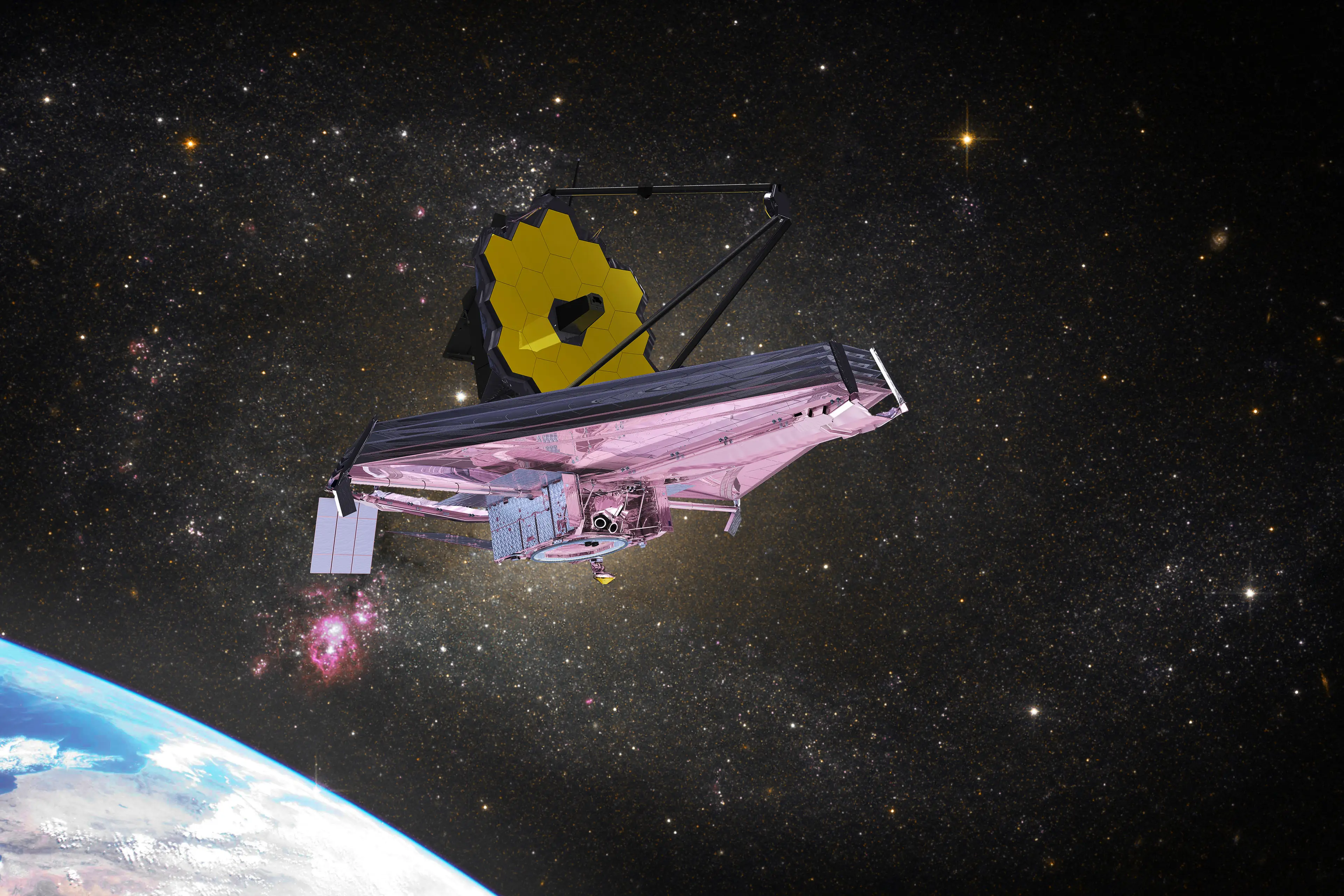
The James Webb Space Telescope (24K-Production via Getty Images)

In this case, it allowed imagery of a dying star, previously only captured in fuzzy images, to be picked up in crystal clear colour.

One particular instrument on the telescope, the Mid-Infrared Instrument (MIRI), was essential in allowing this to happen.

Mike Ressler, a researcher and project scientist for the Webb telescope’s MIRI, said: “Before Webb, we weren’t able to detect most of this material, let alone observe it so clearly.

“With MIRI’s data, we can now comprehensively examine the turbulent nature of this nebula.”

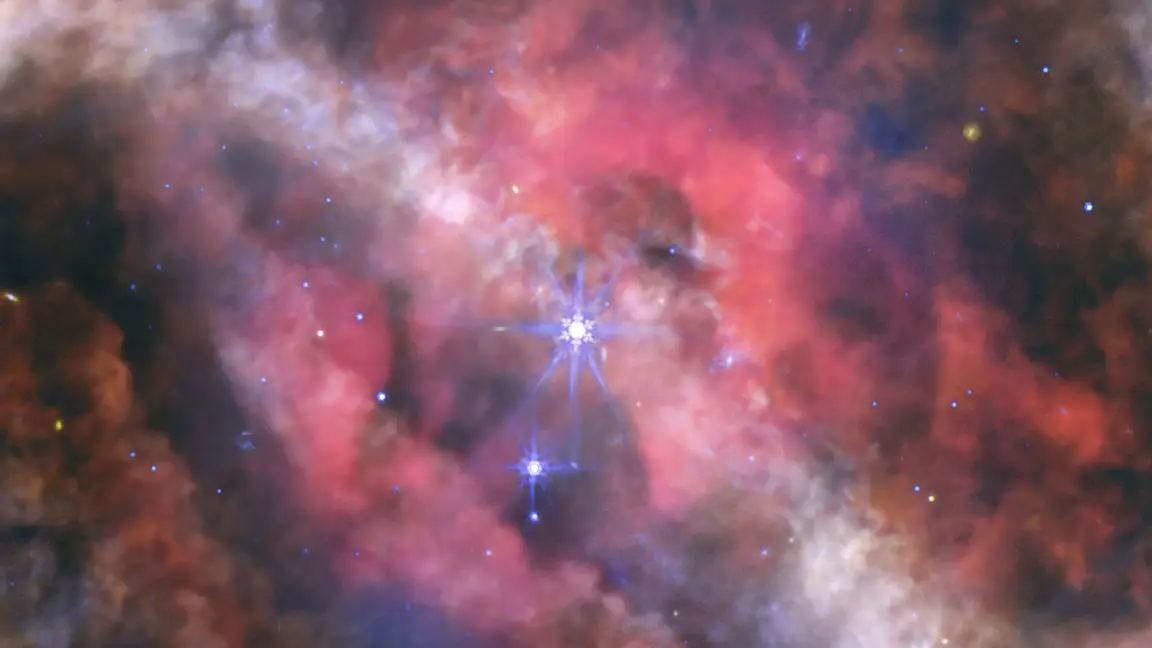
At the centre of the nebula is a pair of stars, which appear as one in the picture, one of which used to be ‘several times more massive than our sun’.
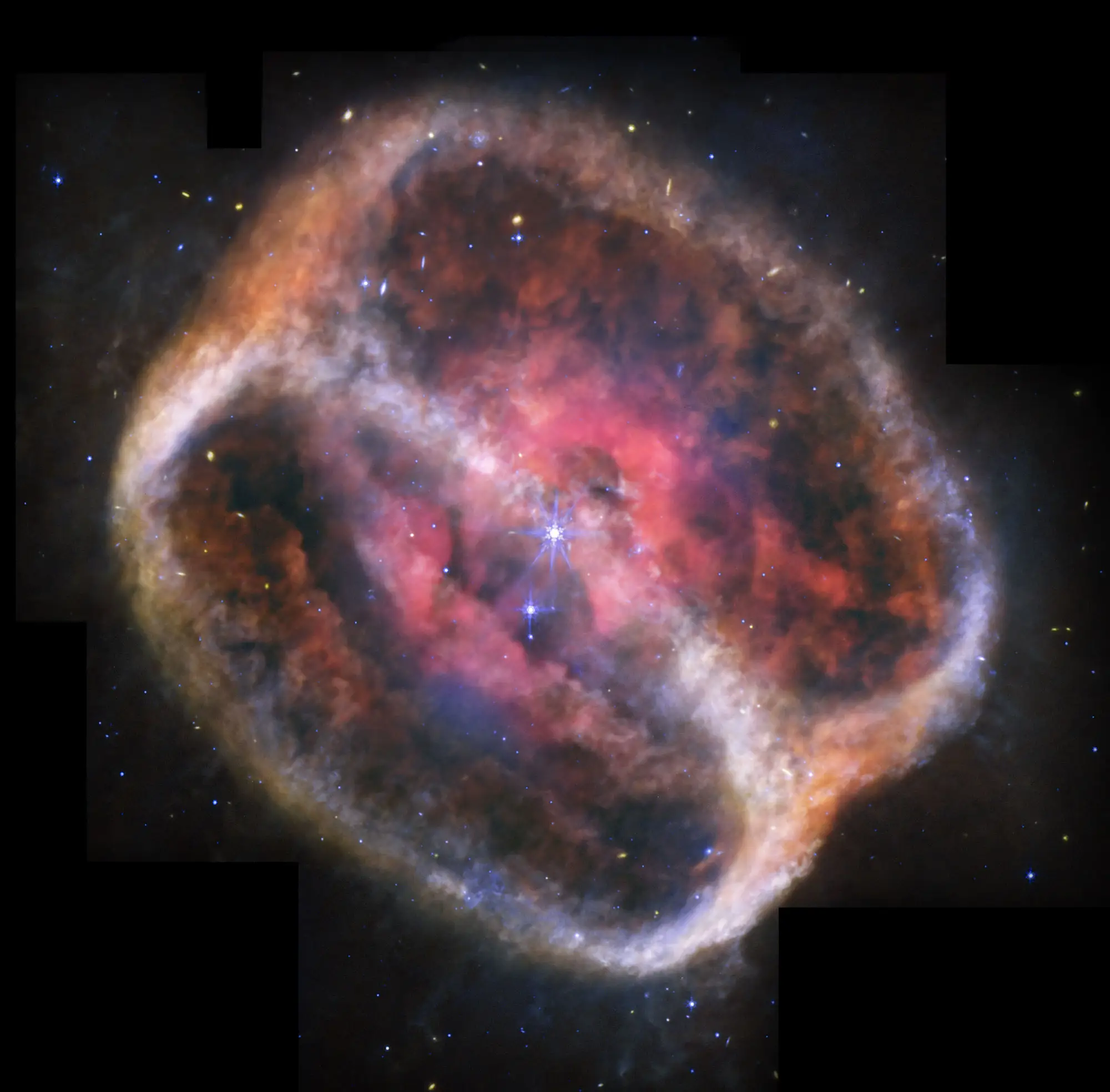
The full image of the nebula (NASA, ESA, CSA, STScI, Michael Ressler (NASA-JPL), Dave Jones (IAC))

David Jones, a scientist at the Institute of Astrophysics on the Canary Islands, proved that there were two stars at the centre in 2017, saying of the biggest star in the binary: “As it evolved, it puffed up, throwing off layers of gas and dust in a very slow, dense stellar wind.”

The release compared previous pictures of the scene, in which the pair of stars, appearing as one, are surrounded by rings – likely composed of ‘small dust grains, heated by ultraviolet light from a white dwarf star’, to new ones.

The scene, called NGC 1514, is 1,500 light years away in the Taurus constellation and was discovered as far back as 1790.
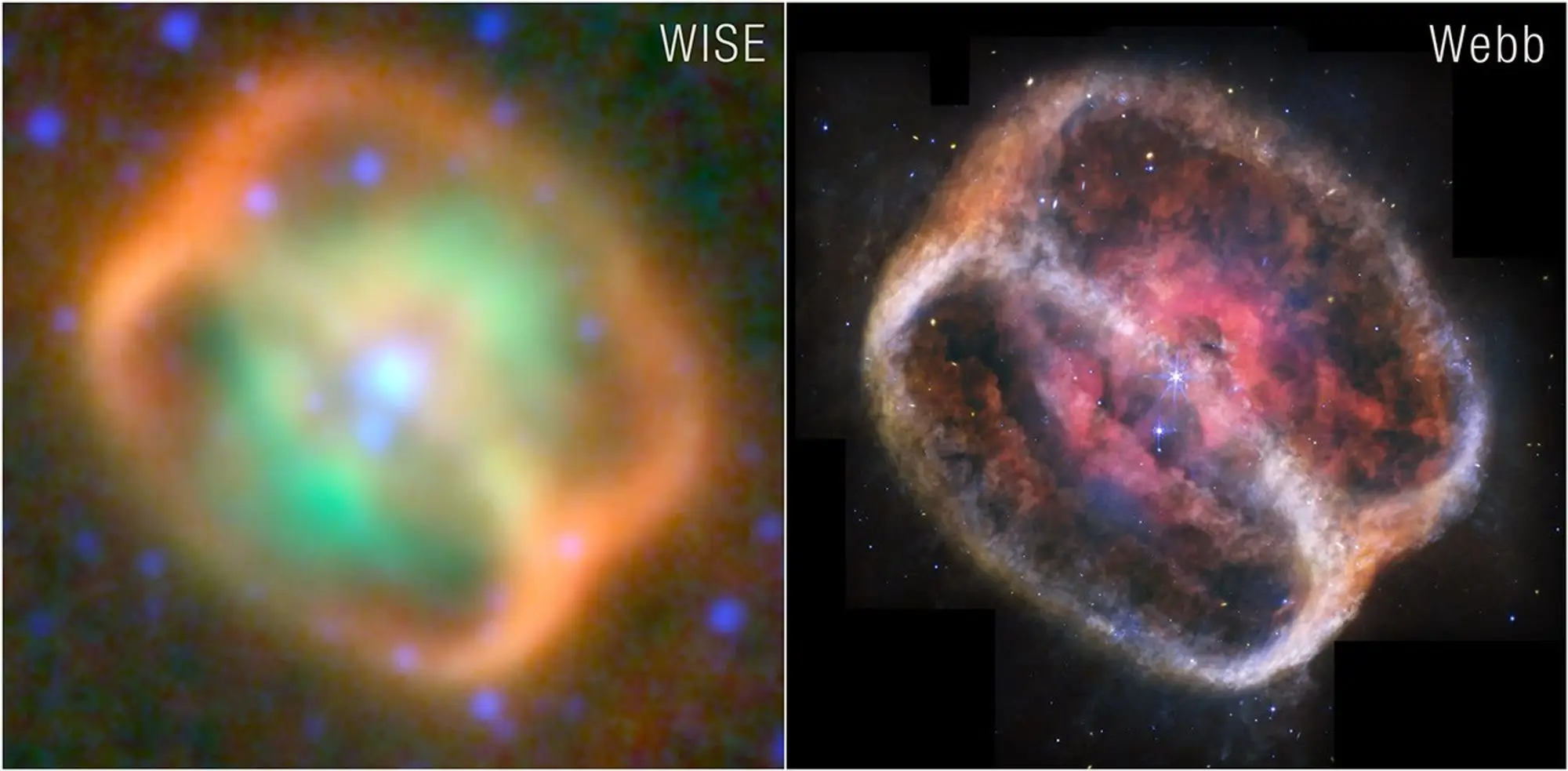
Old pictures of NGC 1514 vs the newest ones, revealed yesterday (NASA, ESA, CSA, STScI, NASA-JPL, Caltech, UCLA, Michael Ressler (NASA-JPL), Dave Jones (IAC))

This news, and beautiful pictures, comes at a fractured time for NASA’s JPL.

In addition to a reported 900 layoffs in recent years, a senior figure was recently confirmed to have been fired due to Donald Trump’s ongoing attempts to remove DEI (Diversity, Equity, Inclusion) positions.

Neela Rajendra previously worked as the laboratory’s Chief DEI officer, before her role was changed to Chief of the Office of Team Excellence and Employee Success following President Trump’s executive order.

JPL director Laurie Leshin confirmed her exit, telling the Daily Mail: “Neela Rajendra is no longer working at [the Jet Propulsion Laboratory].

“We are incredibly grateful for the lasting impact she made to our organisation. We wish her the very best.”

Featured Image Credit: NASA, ESA, CSA, STScI, Michael Ressler (NASA-JPL), Dave Jones (IAC)

Topics: James Webb Space Telescope, NASA, Space, Science

Michael Slavin
Michael Slavin

Michael Slavin is LADbible's dedicated specialist Film and TV writer. Following his completion of a Masters in International Journalism at Salford University, he began working for the Warrington Guardian as a reporter. Throughout this he did freelance work about Entertainment for publications such as DiscussingFilm, where he was the Film and TV editor. Now, he is LAD's go to voice on all things Netflix, True Crime, and UK TV, as well as interviewing huge global stars such as Jake Gyllenhaal, Daisy Ridley, and Ben Stiller.

X

@michaelslavin98

Recommended reads

Why Argentina automatically qualify for next World Cup as 23 million sign petition calling for banElsa/Getty ImagesMan bit by rattlesnake revived with 34 doses of antivenom after terrifying encounterGoFundMeChadwick Boseman's stance on Black Panther recast as David Jonsson announced as T'Challa's sonGareth Cattermole/Getty Images for DisneyFormer Nickelodeon child actor freaks out over how much she's paid in residual paymentsInstagram/missrockdoll

Advert

  • James Webb Telescope discovers ‘potentially hostile alien threat’ is 7 billion years old
  • James Webb telescope findings suggest we might be living 'inside a black hole'
  • NASA telescope accidentally captures moment astronomers thought they would never see
  • NASA 'considering blowing up' asteroid before potential Moon crash in seven years

Choose your content:

Just now
14 mins ago
an hour ago
2 hours ago
  • Elsa/Getty Images
    Just now

    Why Argentina automatically qualify for next World Cup as 23 million sign petition calling for ban

    Unusual rules from FIFA mean the team will automatically qualify

    News
  • GoFundMe
    14 mins ago

    Man bit by rattlesnake revived with 34 doses of antivenom after terrifying encounter

    The snake bite survivor has opened up about the 'agonising pain'

    News
  • Harry Langer/DeFodi Images/DeFodi via Getty Images
    an hour ago

    FIFA boss Gianni Infantino's letter to Argentina team 'leaked' after World Cup final loss

    Infantino wrote to the Argentinian football association after their 1-0 defeat to Spain in the World Cup final

    News
  • Jed Cullen/Dave Benett/Getty Images for Blauer
    2 hours ago

    Freddy Brazier's dog at risk of being put down after mauling owner in vicious attack

    He's only got a few days to find a new home for the dog

    News