ladbible homepage
ladbible homepage
  • Home
  • News
    • UK
    • US
    • World
    • Ireland
    • Australia
    • Science
    • Crime
    • Weather
  • Entertainment
    • Celebrity
    • TV
    • Film
    • Music
    • Gaming
    • Netflix
    • Disney
  • Sport
  • Technology
  • Travel
  • Lifestyle
  • Money
  • Originals
    • FFS PRODUCTIONS
    • Say Maaate to a Mate
    • Daily Ladness
    • UOKM8?
    • FreeToBe
    • Citizen Reef
  • Videos
  • Advertise
  • Terms
  • Privacy & Cookies
  • License Our Content
  • About Us & Contact
  • Jobs
  • Latest
  • Archive
  • Topics A-Z
  • Authors
Facebook
Instagram
X
Threads
Snapchat
TikTok
YouTube
Submit Your Content Here
  • GAMINGbible
  • LADbible Group
  • UNILAD
  • SPORTbible
  • Tyla
  • FOODbible
  • UNILAD Tech
James Webb Telescope makes significant discovery that changes everything scientists thought they knew
Home>News>Science
Published 20:58 8 Nov 2024 GMT

James Webb Telescope makes significant discovery that changes everything scientists thought they knew

The discovery has changed everything, baffling the science community

Britt Jones

Britt Jones

google discoverFollow us on Google Discover

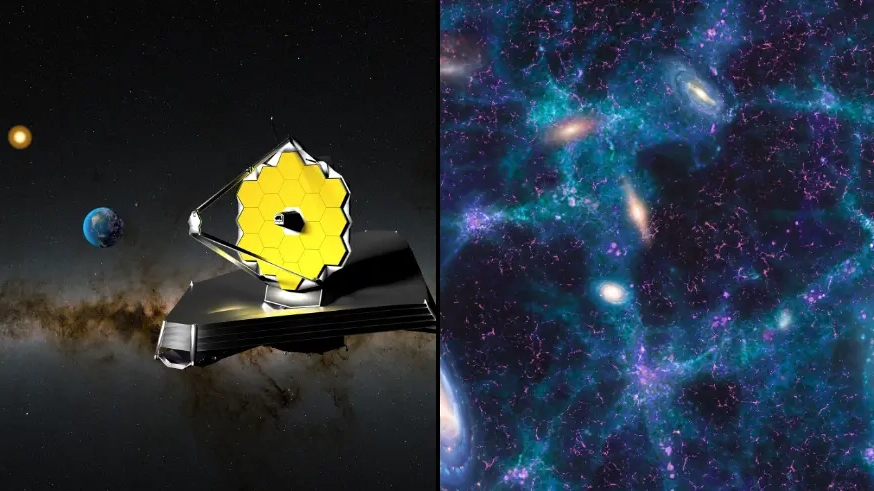
Space never ceases to amaze us, but what the James Webb Space Telescope (JWST) just found has changed everything that we know about the universe.

The JWST is an advanced version of the 1990 Hubble telescope, which was launched into space in December 2021.

However, the JWST has made numerous discoveries in space, some of which could even point to there being life beyond our small planet.

It also found that potential planets could be forming right in front of us after discs and dust gathered around two stars.

Advert

But now, it’s found something bigger.
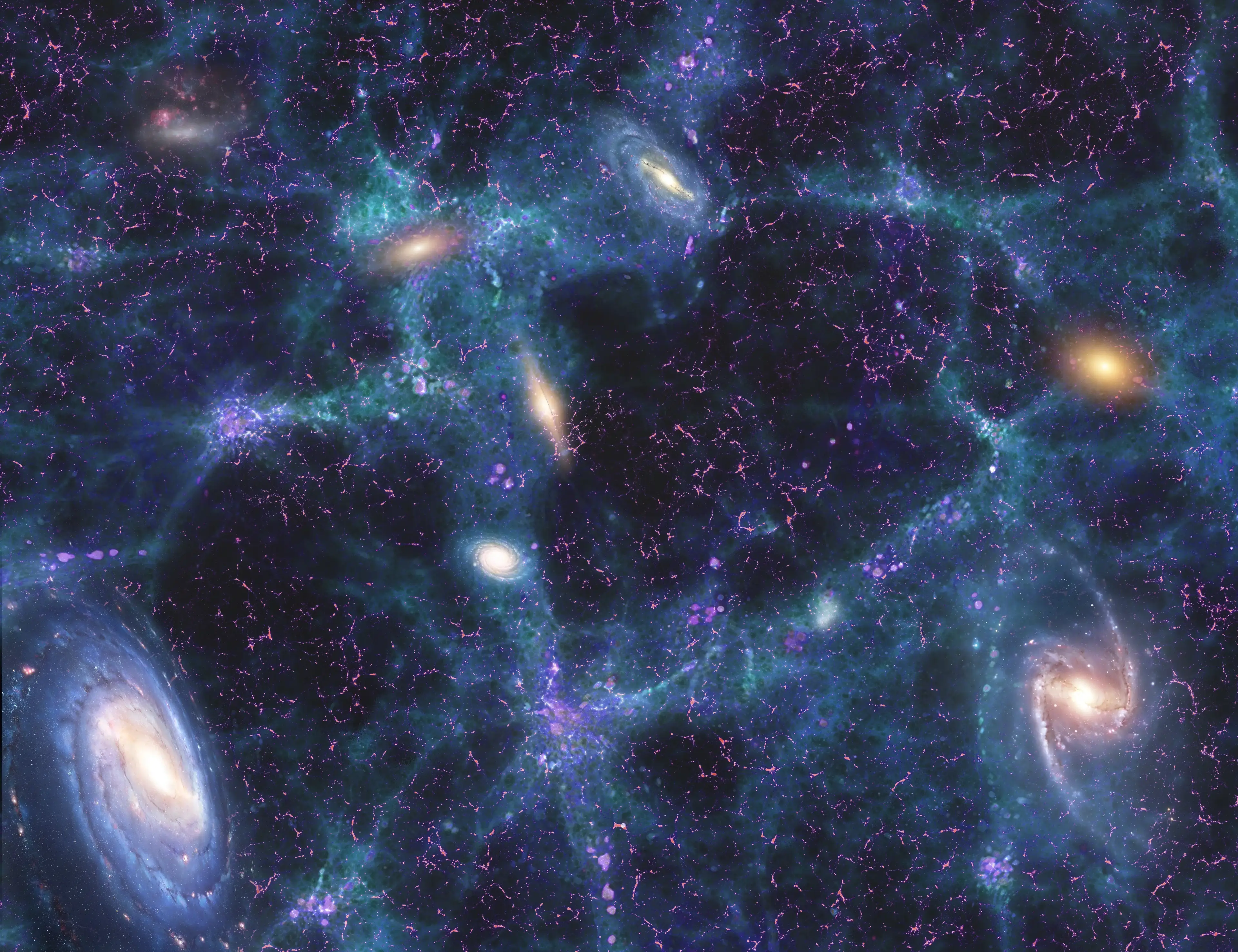
The universe is vast (Getty Stock Images)

While we’re just a speck of dust in the cosmos, we’ve been trying to figure out all that there is to know about the universe for quite some time.

That means we’ve tried to date back to how old the universe is.

For years, cosmologists have believed the universe is approximately 13.8 billion years old, but new JWST findings suggest that this may be incredibly inaccurate.

New research had found that the universe’s age is probably more likely to be 26.7 billion years, which accounts for the JWST’s observations.

Data from the 1990s' Hubble Space Telescope launch meant that originally, people thought it was between 7 billion to 20 billion years, and later agreed on 13.8 billion years.

It all began with the presence of 'impossible early galaxies'.

These galaxies emerged during the cosmic dawn, which occurred around 500 to 800 million years post-Big Bang, and really shouldn't have evolved disks so quickly.

So, surely they had been created earlier than we thought?
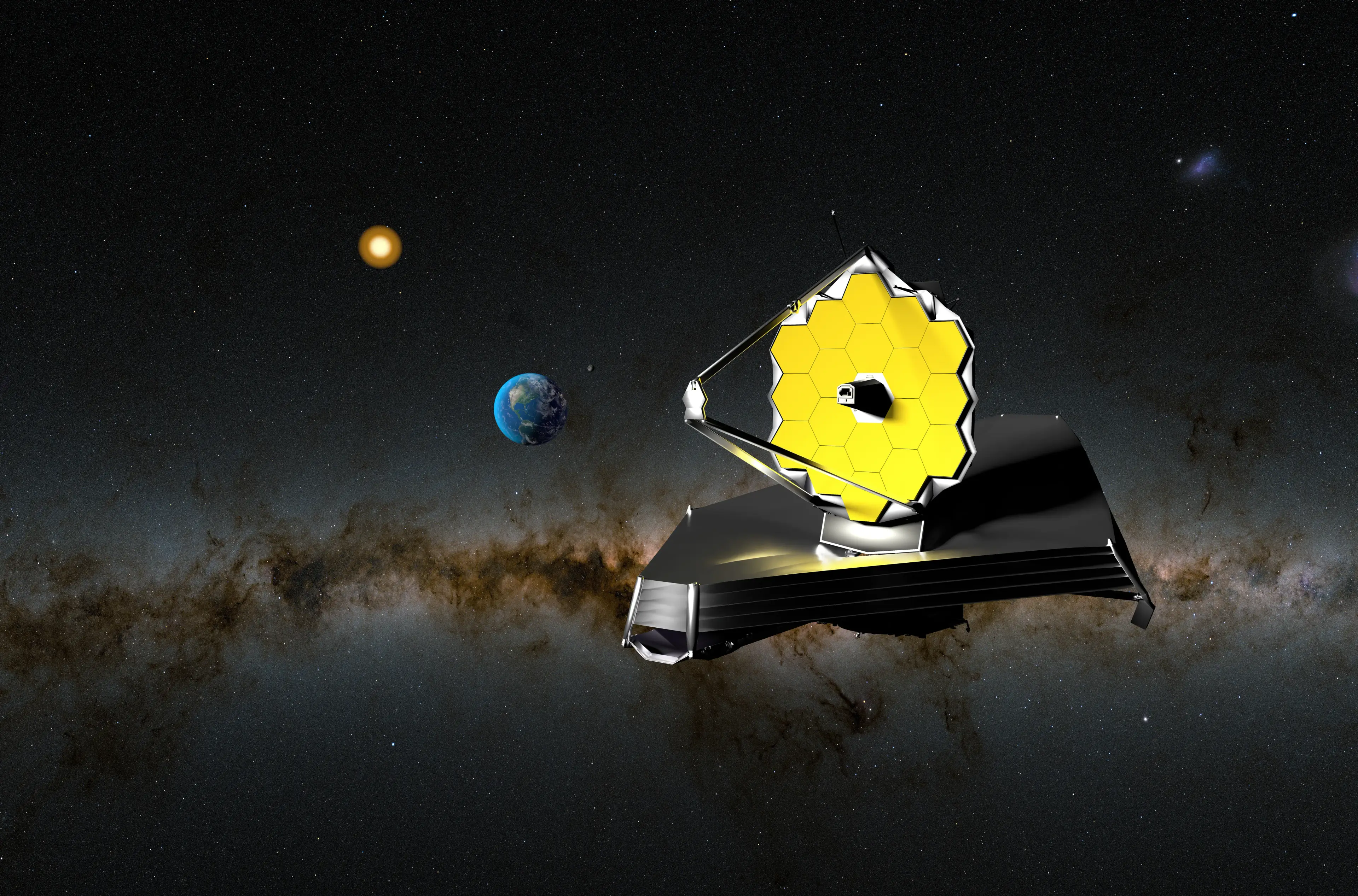
The JWST changed everything (Getty Stock Images)

Explaining how the universe’s age was challenged, Rajendra Gupta from the University of Ottawa told The Brighter Side: "I attempted to marry the conventional big-bang model with the tired light theory, hoping to account for both supernovae and JWST data.

"While this expanded our universe's age to 19.3 billion years, it couldn’t entirely account for the JWST data.”

That’s when he tried combining the tired light theory with an evolving model based on the coupling constants, which gave a lot better results. Still with us?

Thanks to this, the hybrid model accounted for the JWST's observations and also put the universe's age to 26.7 billion years.

Although the Hubble Space Telescope had already guessed at the 'impossible early galaxy' issue, the JWST's launch in December 2021 strengthened these claims.

Now, scientists have a clear picture of when the universe came to be, and this could help them in the future to recalculate the date of emerging planets, among other things.

As the universe continues to be a vast space of confusion for us to wrap our heads around, at least this one thing has been put to bed at last.

Featured Image Credit: Getty Stock Images

Topics: James Webb Space Telescope, Space, Science

Britt Jones
Britt Jones

Recommended reads

Holly Ramsay and swimmer Adam Peaty announce baby news six months after their high-profile wedding Max Mumby/Indigo/Getty ImagesJamie Lynn Spears reveals why she left Hollywood for 'the middle of nowhere'Frazer Harrison/ACMA2014/Getty Images for ACMKaty Perry makes subtle dig at exes including Orlando Bloom during showAlvaro Ballesteros/Europa Press via Getty ImagesWoman says she's a 'real-life vampire' due to rare condition that leaves her hospitalised after minutes in the sun(Supplied/Emily Richardson)

Advert

Choose your content:

14 hours ago
15 hours ago
16 hours ago
  • (Supplied/Emily Richardson)
    14 hours ago

    Woman says she's a 'real-life vampire' due to rare condition that leaves her hospitalised after minutes in the sun

    She needs to wear full UV protection whenever she leaves her home

    News
  • Mark Smith/ISI Photos/ISI Photos via Getty Images
    15 hours ago

    Norway's football team ship traditional food to its US World Cup training base to avoid eating American food

    Anything to keep Haaland happy

    News
  • Aphantasia is thought to impact 10% of the global population. (Jacob Wackerhausen/Getty Images)
    15 hours ago

    Millions of people have 'mind blindness' and don't realise it

    There a people out their who live with a condition called Aphantasia, which affects them on a daily basis and they don't even know it.

    News
  • Some people don't think in words. (Daniel Lozzano Gonzalez/Getty Images)
    16 hours ago

    This is how people with no internal monologue really think

    Cognitive scientist Johanne Nedergård has explained how minds without an inner monologue work.

    News
  • James Webb telescope findings suggest we might be living 'inside a black hole'
  • James Webb Telescope discovers ‘potentially hostile alien threat’ is 7 billion years old
  • NASA's James Webb Telescope discovers its first ever exoplanet
  • NASA telescope accidentally captures moment astronomers thought they would never see