NASA telescope accidentally captures moment astronomers thought they would never see

NASA's telescopes have become amazingly advanced in recent years but astronomers are still often left amazed by the results.
Thanks to the incredible capabilities of technology such as the James Webb Space Telescope, we are now able to see further into space than ever before, although we still haven't come across any significant signs of alien life.
Looking beyond the Earth is important for many reasons, as we look to keep our home planet safe from potential threats such as asteroids, while we've also kept a close eye on passerby comets, such as the 3I/ATLAS which some scientists briefly described as a potentially hostile alien threat.
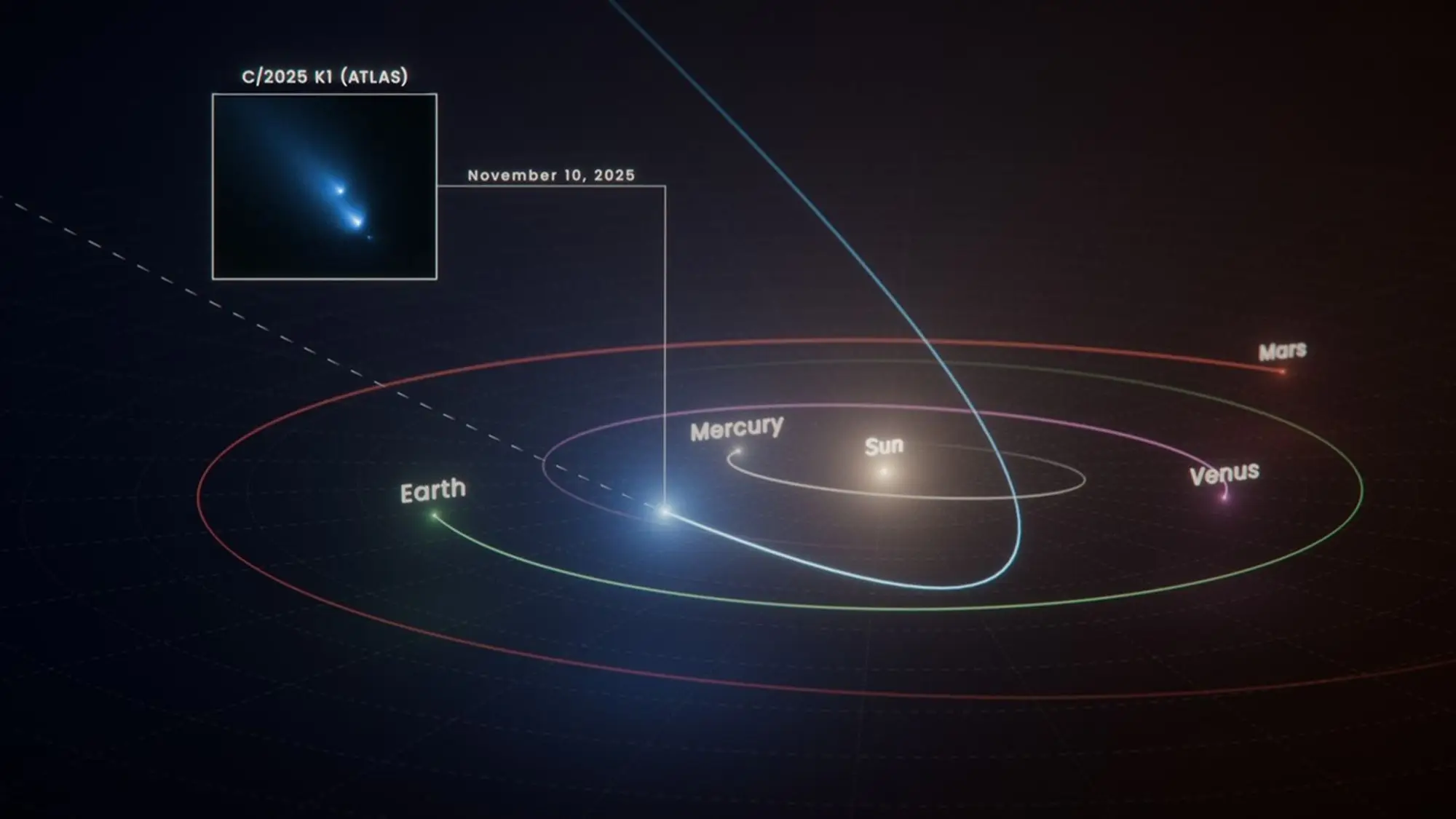
But recently, scientists stumbled upon an incredibly rare sight when peering through their telescopes, after observing a comet breaking up in a never-before-seen moment.
Advert
"Sometimes the best science happens by accident,’ John Noonan, a research professor in the Department of Physics at Auburn University in Alabama, said in a statement for NASA.
"This comet got observed because our original comet was not viewable due to some new technical constraints after we won our proposal. We had to find a new target – and right when we observed it, it happened to break apart, which is the slimmest of slim chances.”
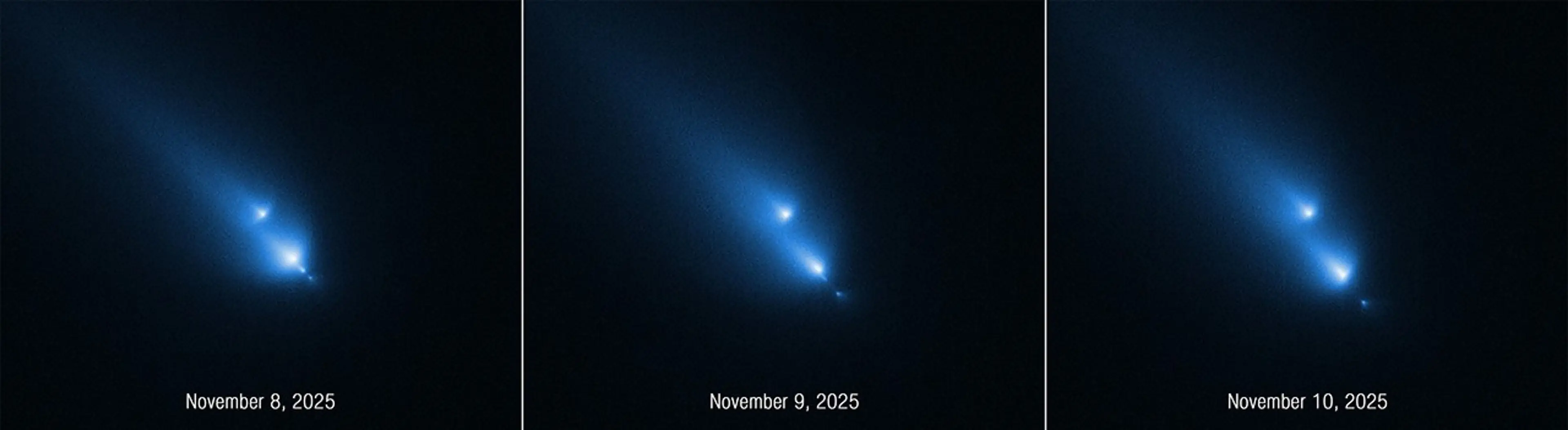
It has since been named Comet C/2025 K1 (ATLAS) and was first captured in images back in November 2025, with astronomers publishing their remarkable findings in a journal earlier this week.
Noonan added: "While I was taking an initial look at the data, I saw that there were four comets in those images when we only proposed to look at one. So we knew this was something really, really special."
It's often said that a watched pot never boils and while astronomers have long been looking for a crumbling comet, the chances of seeing it live are remarkably slim, so it was certainly ironic that they captured this event while originally looking elsewhere.
"The irony is now we’re just studying a regular comet and it crumbles in front of our eyes,’ said principal investigator Dennis Bodewits, also of Auburn University.
"Comets are leftovers of the era of solar system formation, so they’re made of “old stuff”—the primordial materials that made our solar system.
"But they are not pristine – they’ve been heated; they’ve been irradiated by the Sun and by cosmic rays.
"So, when looking at a comet’s composition, the question we always have is, 'Is this a primitive property or is this due to evolution?'
"By cracking open a comet, you can see the ancient material that has not been processed."
It was the Hubble telescope on this occasion that caught a glimpse of the comet when it fell apart, with Noonan confirming that they were able to see witness it just days after it occurred, giving them one of the best and most unexpected views.
It's also likely to be groundbreaking as it can teach scientists more about what is actually happening at the comet's surface.
Noonan concludes: "This is telling us something very important about the physics of what’s happening at the comet’s surface. We may be seeing the timescale it takes to form a substantial dust layer that can then be ejected by the gas."
Further research and investigations will only reveal more about the composition of the comet and potentially more about the origins of our own solar system.
Topics: Space, NASA, Science, James Webb Space Telescope
 James Moorhouse