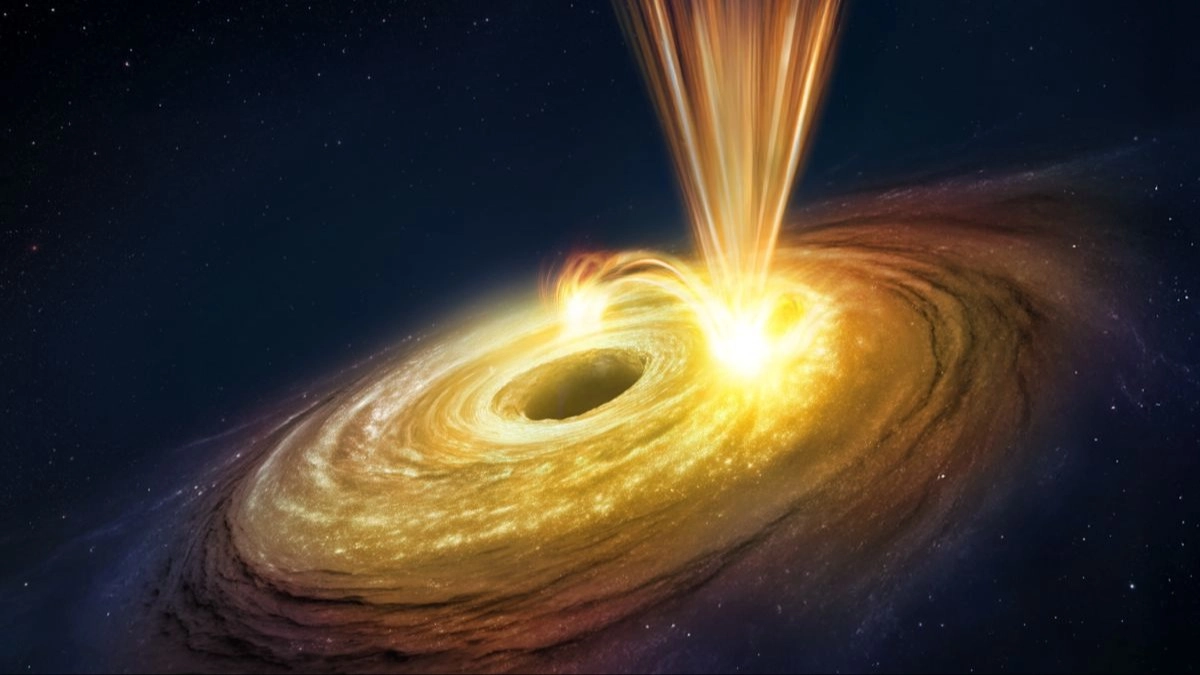
Major scientific breakthrough as black hole producing 'UFO' captured for first time

A black hole has been spotted causing chaos in space in a rare scientific first.
Black holes are something of a scientific fascination, and why wouldn't they be? There are numerous theories about them, ranging from the idea that they are 'hiding in our homes' to the suggestion that we might even be living inside one.
However, a supermassive black hole located in the galaxy NGC 3783 has done a scientific first. According to the European Space Agency (ESA), NGC 3783 is a 'bright barred spiral galaxy about 130 million light-years from Earth', with a black hole smack bang in the middle.
The ESA's XMM-Newton and JAXA's XRISM X-ray telescopes have a good view of it; according to Science Alert, it is about 28 million times the mass of the Sun and is absorbing its surroundings at a rapid rate.
Advert
In July 2024, a flare was observed reaching high speeds over a 10-day period.
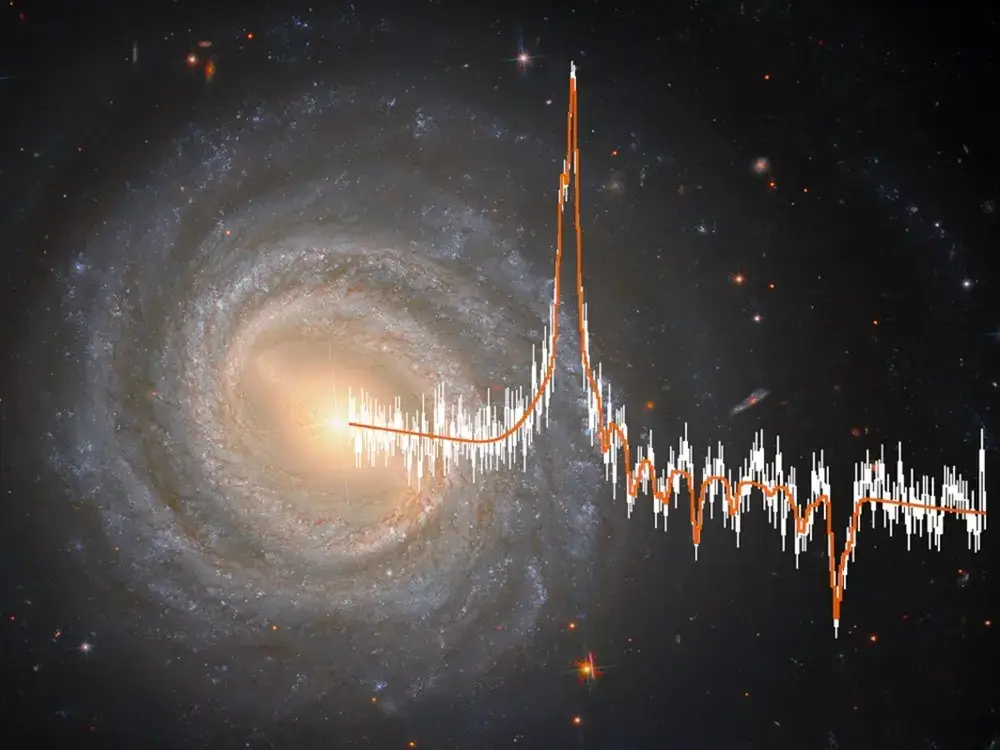
Both telescopes detected a bright X-ray flare that faded; however, before it disappeared 12 hours later, fast winds emerged, reportedly reaching about 57,000 kilometres (35,400 miles) per second.
According to EurekAlert!, these winds, which are called ultrafast outflow, or 'UFO', were also approximately one-fifth the speed of light. While not the fastest on record, it is the first one to have been spotted during its creation and evolution.
"We've not watched a black hole create winds this speedily before," Liyi Gu, lead author of the study published in Astronomy & Astrophysics and astronomer at the Space Research Organisation Netherlands (SRON), said.
"For the first time, we've seen how a rapid burst of X-ray light from a black hole immediately triggers ultra-fast winds, with these winds forming in just a single day."
The black hole is part of an active galactic nucleus (AGN), which, according to ESA, is a small region at the centre of some galaxies which are 'far brighter than can be explained by the stellar population alone'.
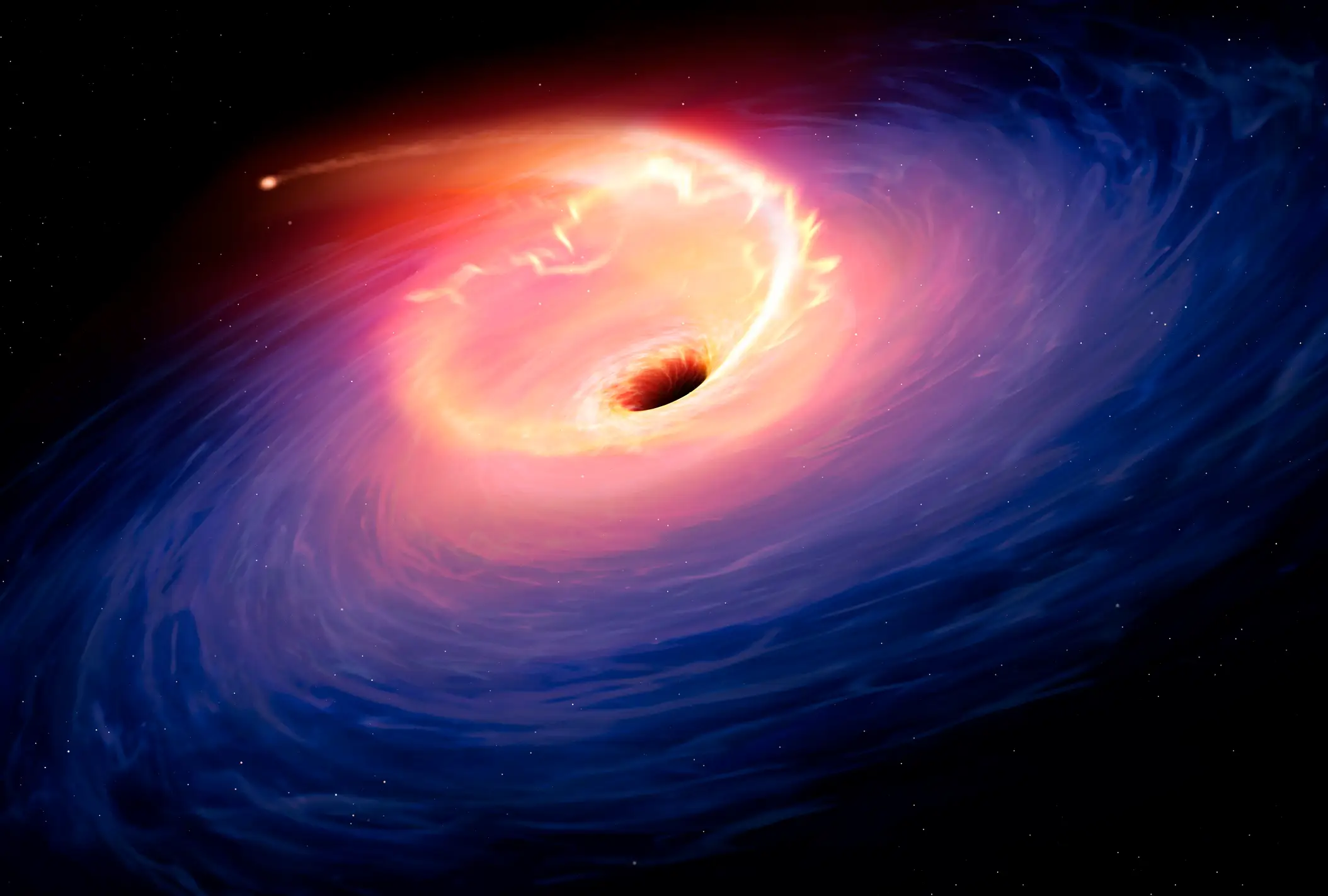
Matteo Guainazzi, ESA XRISM Project Scientist and co-author of the discovery, explains that the winds around the black hole seem to have been created 'as the AGN’s tangled magnetic field suddenly ‘untwisted’ – similar to the flares that erupt from the Sun', though on a much bigger scale.
Meanwhile, Gu said the data suggested that the outflow speed was 'driven by magnetic forces, similar to coronal mass ejections from the sun'.
Phys describes coronal mass ejections as huge amounts of 'solar plasma' being tossed into space.
"By zeroing in on an active supermassive black hole, the two telescopes have found something we've not seen before: rapid, ultra-fast, flare-triggered winds reminiscent of those that form at the Sun," said ESA astronomer Erik Kuulkers.
As for what this new discovery means, Kuulkers explained that it ‘suggests’ that ‘solar and high-energy physics may work in surprisingly familiar ways throughout the Universe’.
It could also provide new insights into how galaxies evolve over time.
Topics: Science, Space, Technology, NASA
 Britt Jones