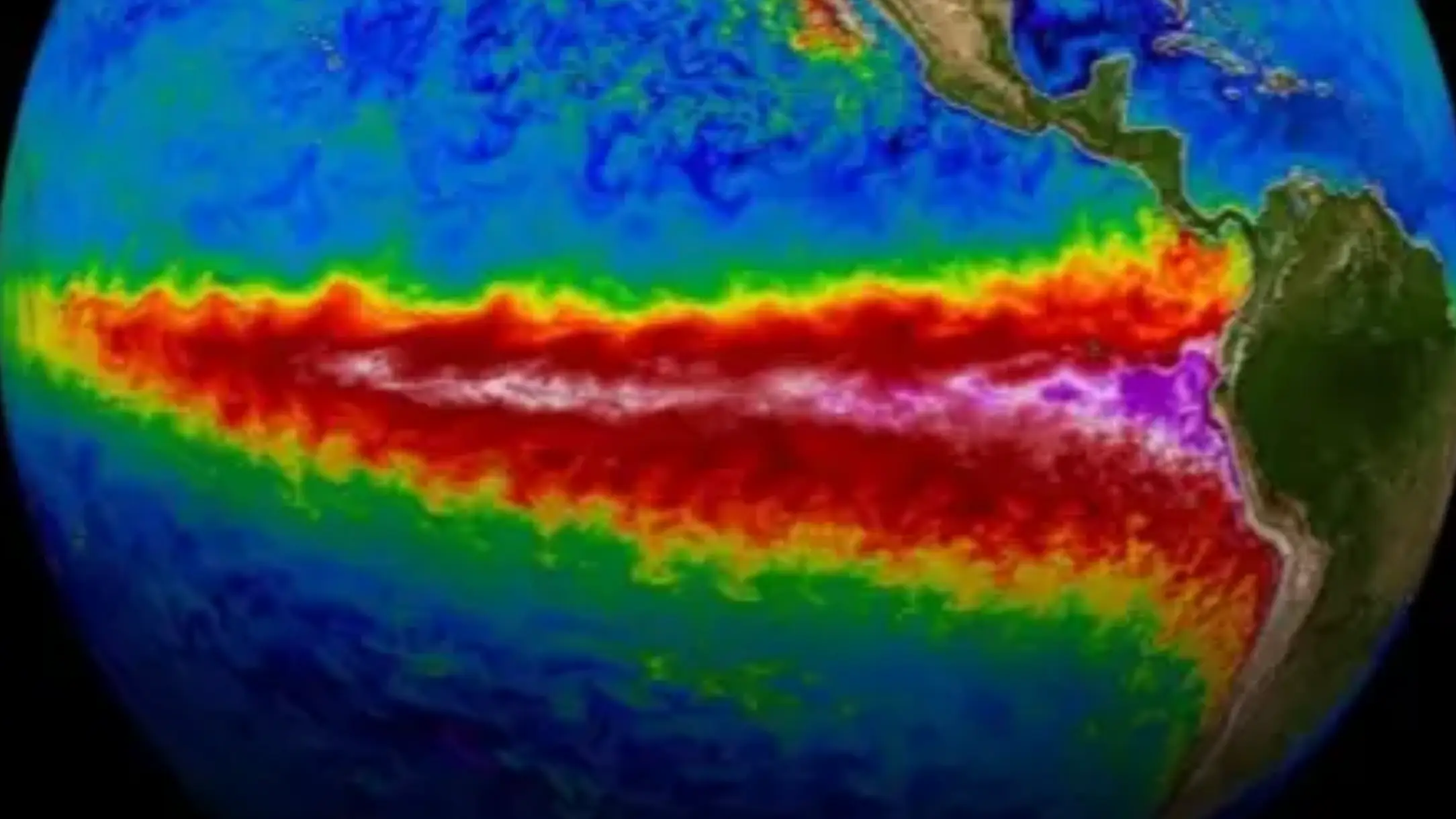
'Super El Niño' wiped out nearly all life in event worse than dinosaur apocalypse

While there are warnings of a 'super El Niño', a powerful weather event which could lead to next year being the warmest on record, it hopefully won't be anything like one from the past.
If you had to answer the question of what the most devastating mass extinction event in Earth's history you might guess it was the asteroid striking the planet which resulted in the extinction of the dinosaurs.
However, if that was your answer then you'd have been wrong, because the truth is that 252 million years ago something called the 'Great Dying', or the Permian-Triassic extinction.
Researchers from the University of Bristol and China University of Geosciences discovered how 'super El Niños' were part of this catastrophic destruction which wiped out most of the species in the world.
Advert
For a long time scientists had laid the blame for the 'Great Dying' at volcanic eruptions in the part of the world that's now Siberia, but the researchers from across the world found 'much more intense and prolonged El Niño events than witnessed today' had something to do with it.
Study co-author Dr Alexander Farnsworth explained: "Climate warming alone cannot drive such devastating extinctions because, as we are seeing today, when the tropics become too hot, species migrate to the cooler, higher latitudes.
"Our research has revealed that increased greenhouse gases don’t just make the majority of the planet warmer, they also increase weather and climate variability making it even more ‘wild’ and difficult for life to survive."
Co-lead author Professor Yadong Sun added that it had been 'nearly, but not quite, the end of the life on Earth'.
By studying fossilised teeth of tiny marine life from the time they were able to determine that the seas got incredibly hot, and really it 'got too hot everywhere' before species had time to adapt to rises in temperature.
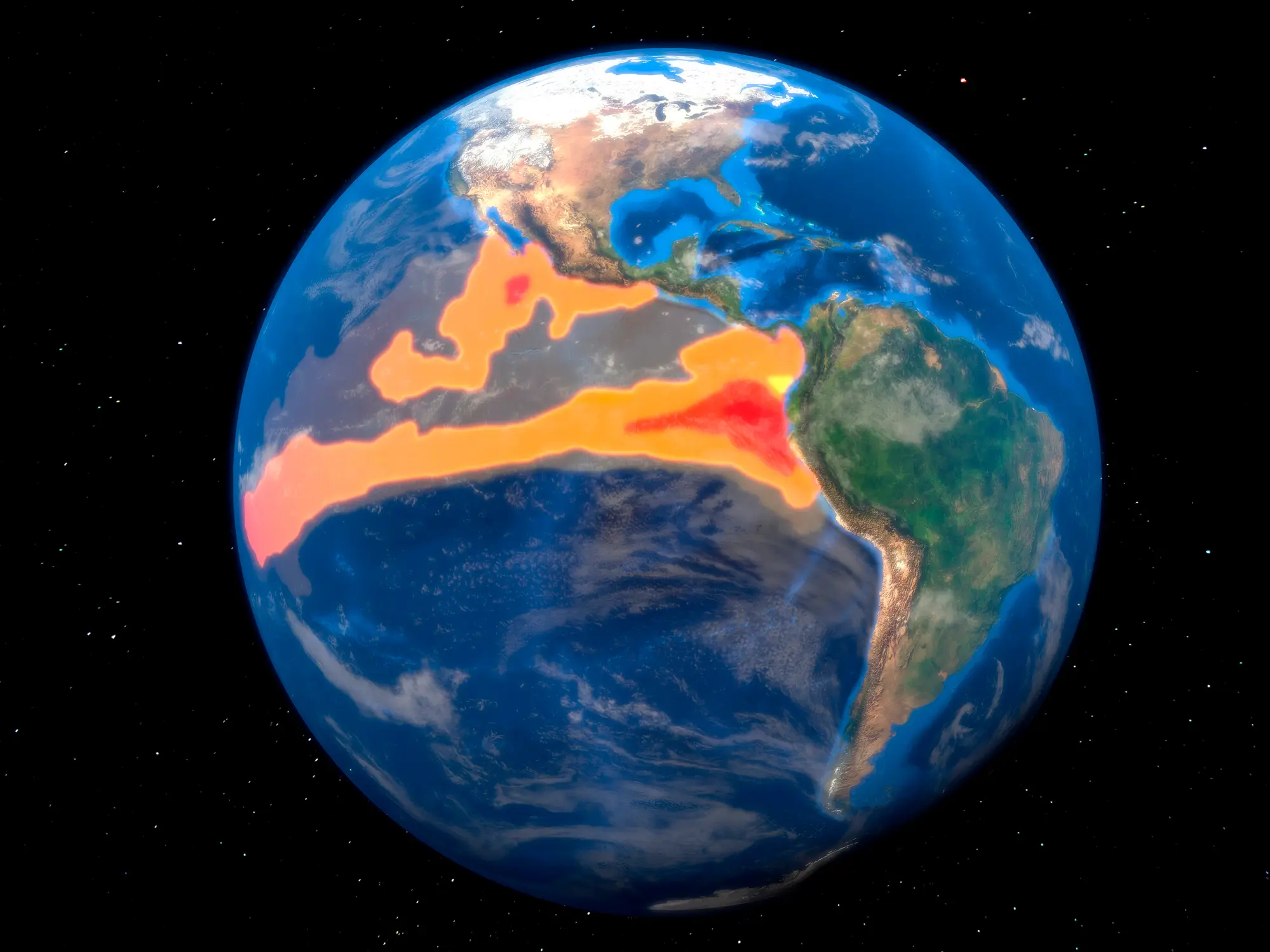
An El Niño is declared when sea temperatures in the tropical eastern Pacific rise 0.5 °C above the long-term average, and the ones caused by the events that triggered the 'Great Dying' had a devastating effect on the world.
The one currently developing in the Pacific Ocean runs the risk of making 2027 the hottest year on record, and it could cause a serious amount of damage.
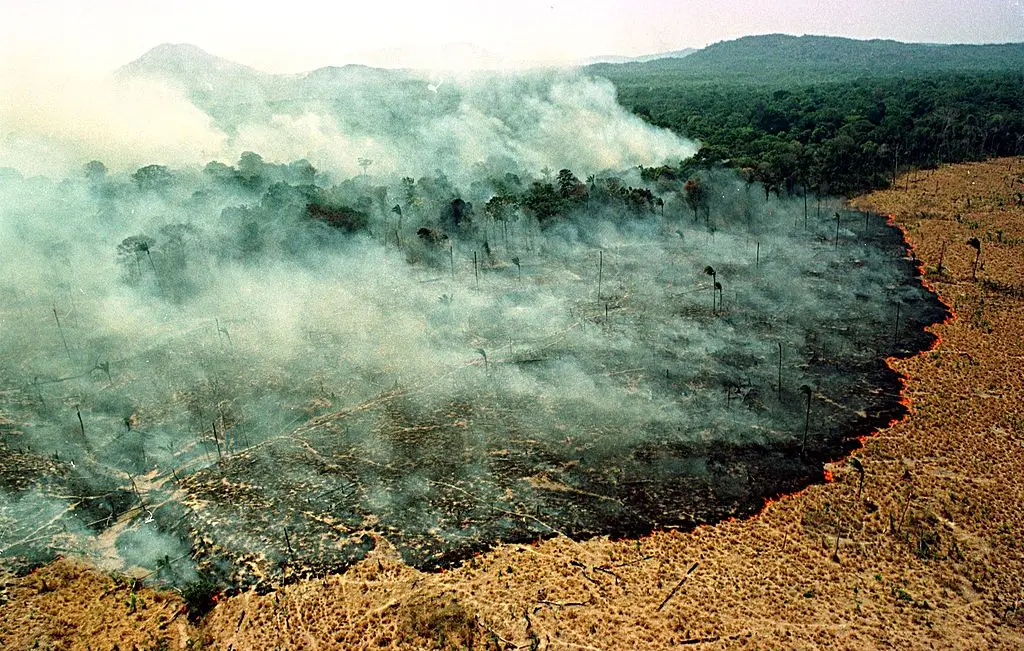
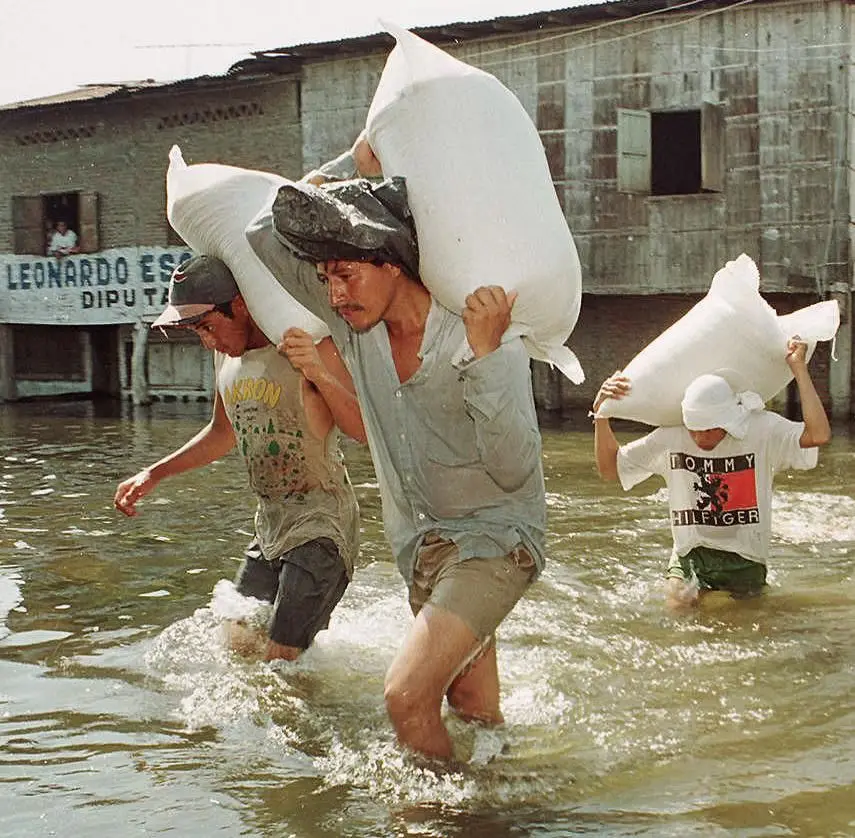
The strongest El Niño that humans have actually been around to record properly happened in 1997-1998, killing 23,000 people and causing upwards of £28 billion in damage as it triggered floods, cyclones, droughts and wildfires.
Another El Niño event in 2015 triggered a record-breaking hurricane season.
While they typically occur in the Pacific, don't think the UK is spared the consequences.
Any impact on the UK is likely to lag behind the main damage but it could mean hotter weather in the summer and colder in the winter, while the 2015 El Niño event caused severe flooding in the UK in December of that year.
How does an El Niño year happen?
Strap in, folks. It’s time for some science.
It all starts with something called trade winds, which are permanent winds around the equator, which usually blow from east to west. So in the equatorial Pacific, they blow from the Americas towards Australia and New Zealand.
As the wind blows the water east, it is warmed by the sun, so by the time it gets to the other side of the Pacific, the warm water causes hot air to rise, leading to warm, wet and unsettled weather. Meanwhile, colder water from deeper in the ocean rises in the east to replace the water blown west.
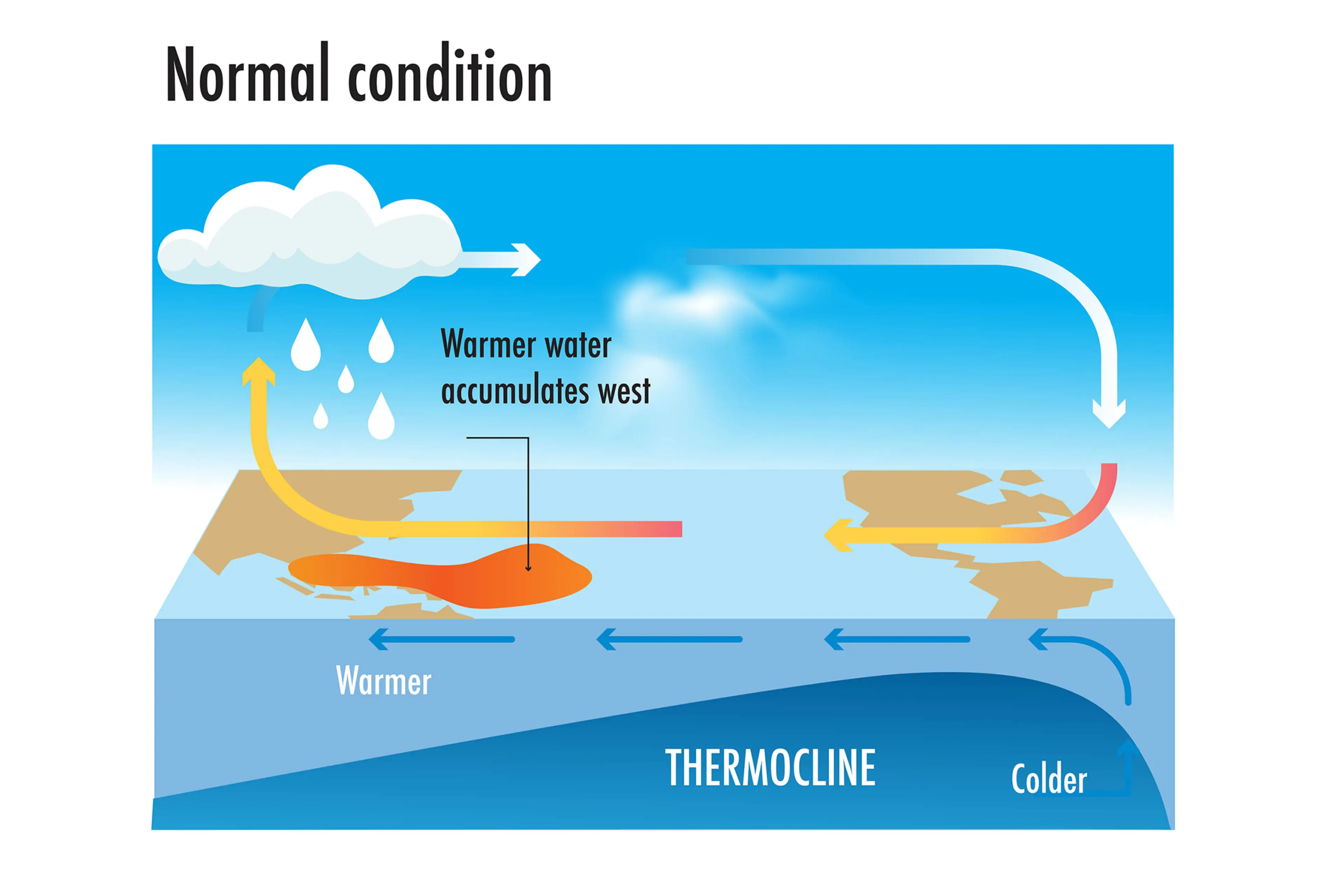
But during El Niño years, this gets disrupted.
Trade winds are weakened or even reversed, the temperature difference between the east and west is cancelled out, and usually cold parts of the ocean warm up.
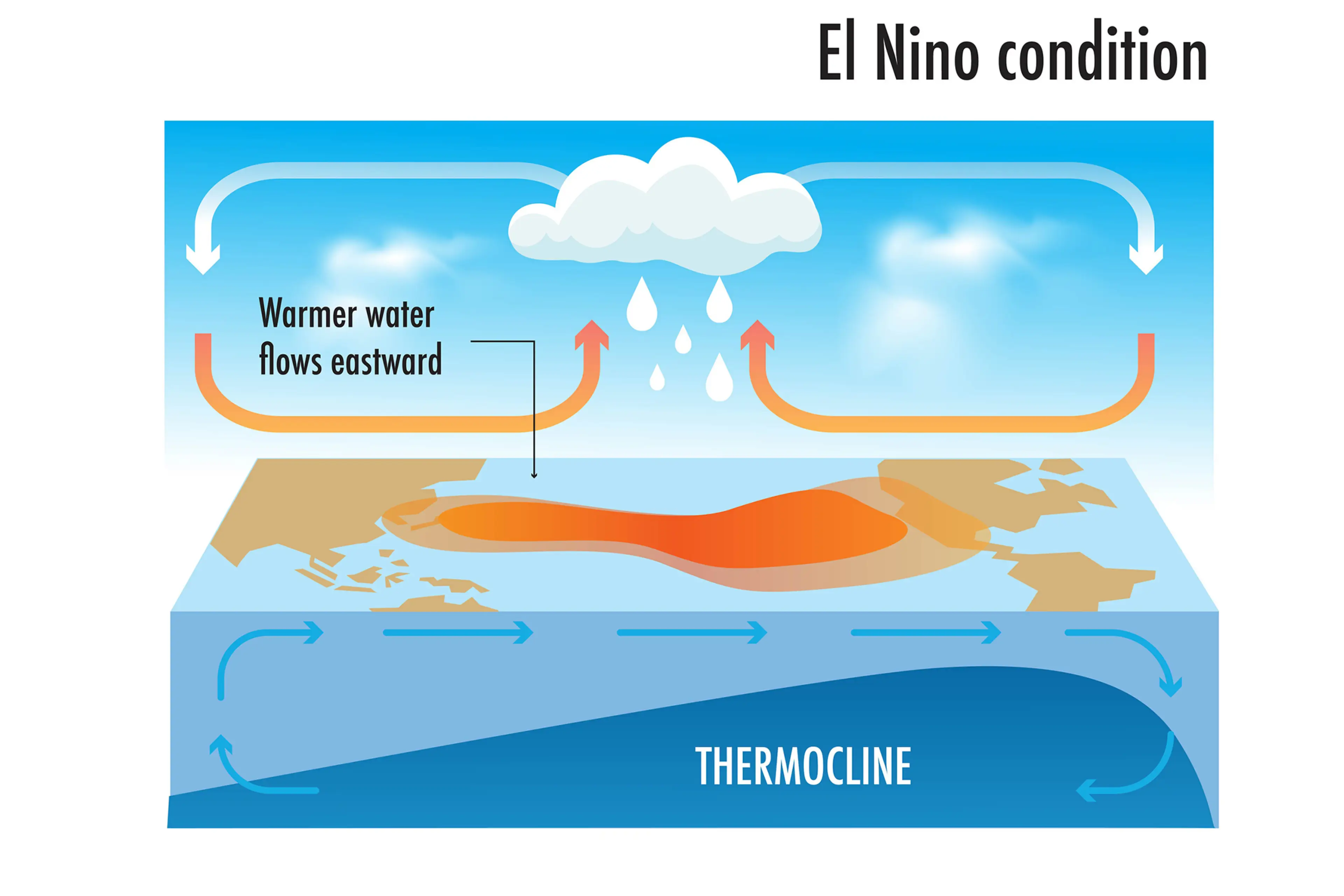
Rainfall and wind patterns change across the equatorial Pacific, which has a knock-on effect around the world.
Anyone else's head hurt a bit?
Topics: Environment, History, Science, World News, El Niño
 Joe Harker