
Difference between vape smoke and cigarette smoke as doctor explains which is worse

Experts have highlighted the difference between smoking tobacco and vaping as a doctor explains which one is worse.
The health risks associated with smoking have been well documented by decades' worth of medical studies, linking smoking tobacco to cancer, heart disease, as well as a whole host of other health conditions and heightened risks.
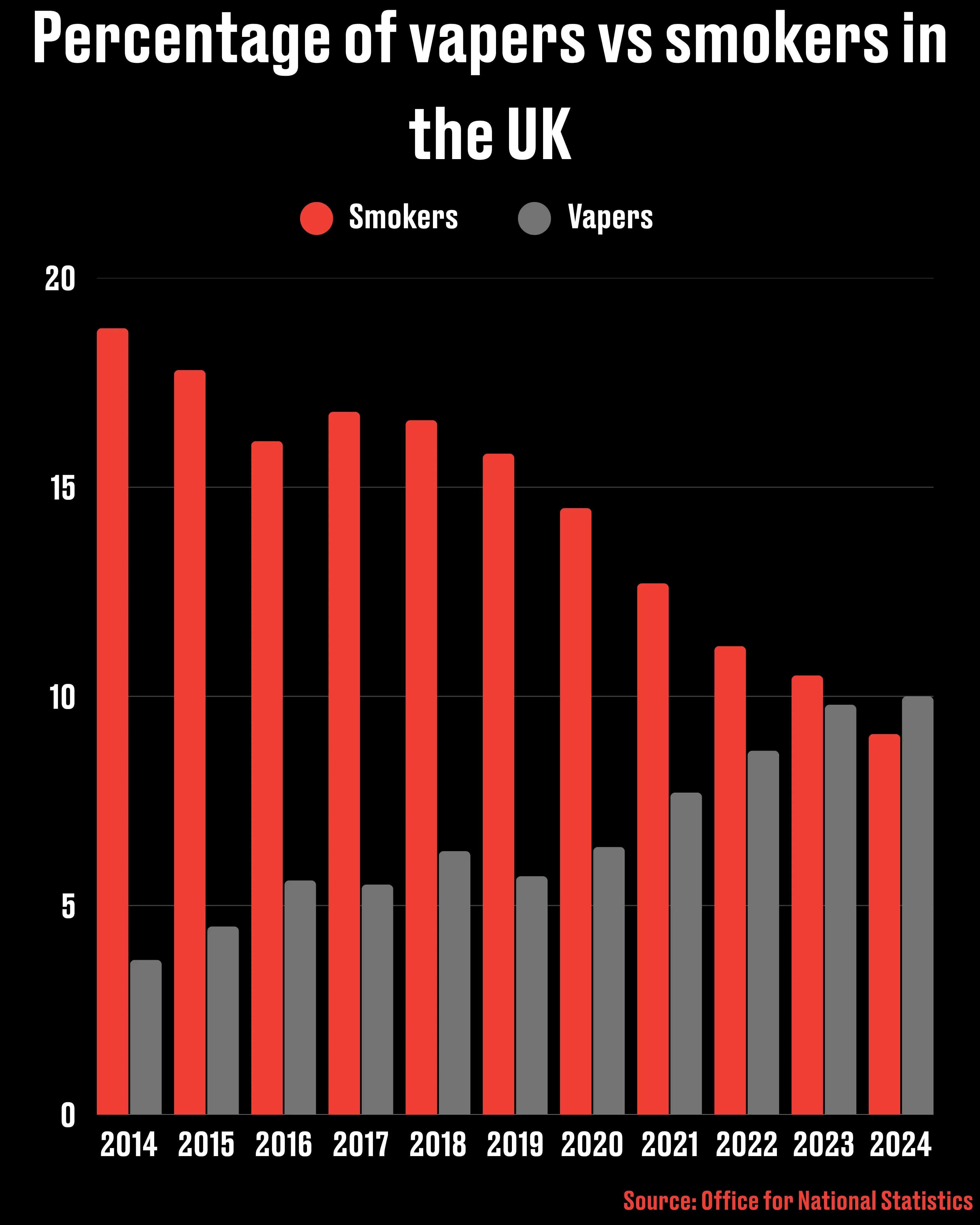
Vaping is growing in popularity as a habit in its own right, and while there is still a need for further study on its precise health impacts some evidence already points to the habit coming with health risks.
Dr Rayyan Zafar explained that while both smoking and vaping are bad for you, smoking tobacco is still much worse, whether it's cigarettes, cigars, or if you somehow manage to sustain smoking a pipe in 2026.
Advert
NHS guidance suggests that vaping can be useful as a way for someone who already smokes tobacco to reduce the harm done to them as a result, but if you do not already smoke then the advice is to not take up vaping as while it has not been shown to be as harmful as tobacco, it is still not safe.
Michael Joseph Blaha is the director of clinical research at the Johns Hopkins Ciccarone Center for the Prevention of Heart Disease, and shared how there is still a risk with vaping.
“People need to understand that e-cigarettes are potentially dangerous to your health,” said Blaha.
But what exactly are the differences between vaping and smoking tobacco?
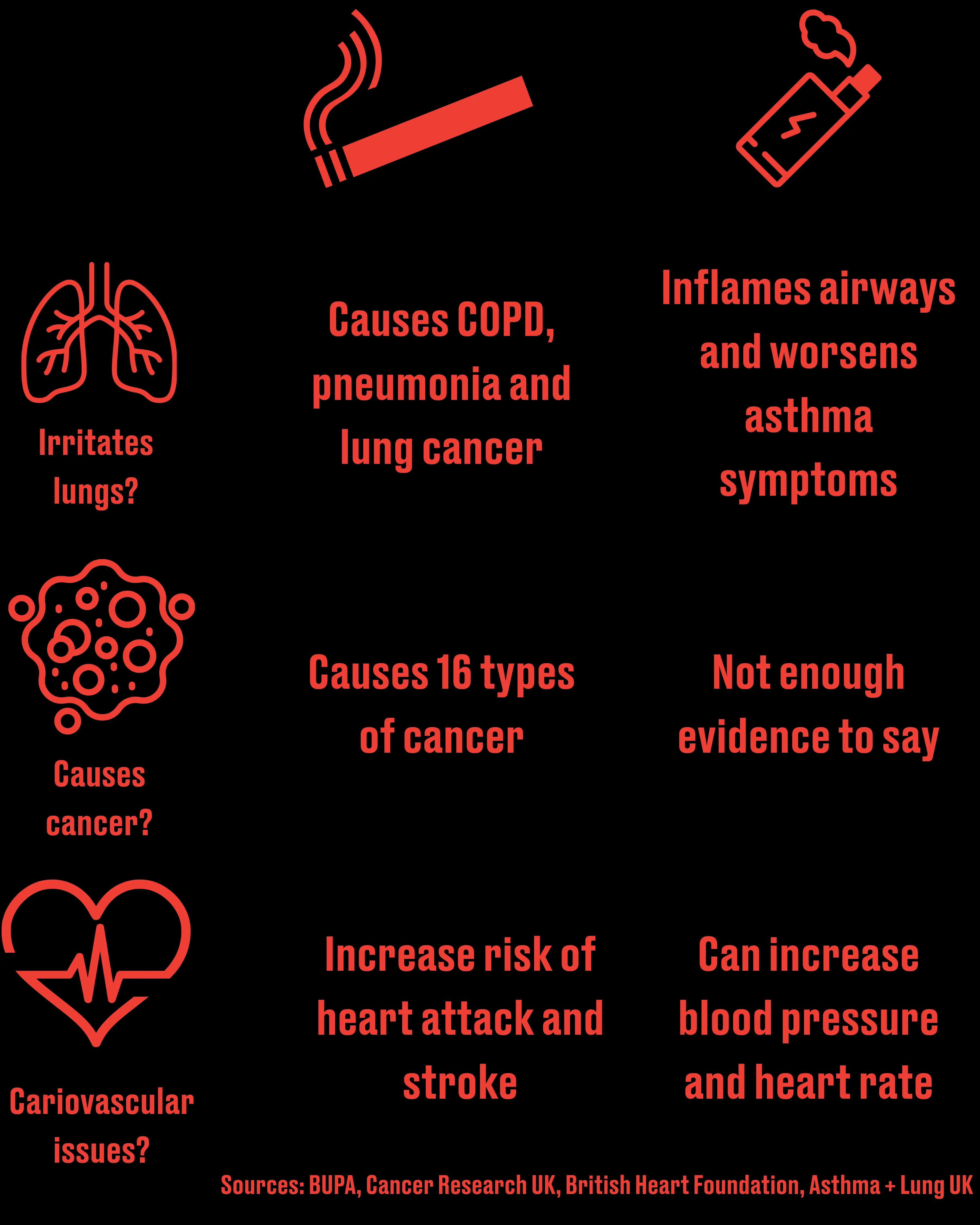
The health risks associated with tobacco smoke, which contains thousands of harmful chemicals, are well understood.
While the risks with vaping need to be studied further, Blaha warned there is already evidence of a link between
“Emerging data suggests links to chronic lung disease and asthma, as well as associations between dual use of e-cigarettes and smoking with cardiovascular disease. You’re exposing yourself to all kinds of chemicals that we don’t yet understand and that are probably not safe.”
However there is one factor where cigarettes are the same - they both contain nicotine.
And Blaha warned that while vapes are not as closely understood as tobacco, people who use e-cigarettes may be taking in a higher quantity of nicotine than they would be if they were smoking tobacco.
For example, people can buy cartridges with a higher strength than regular ones, or they can turn up the voltage on the e-cigarette to give them a bigger hit from the vape.
And although NHS guidance suggests that vaping can be a way to reduce harm from smoking tobacco, Blaha expressed concern about people who are taking vaping as a habit in itself, and who don't already smoke.
“What I find most concerning about the rise of vaping is that people who would’ve never smoked otherwise, especially youth, are taking up the habit,” said Blaha.
“It’s one thing if you convert from cigarette smoking to vaping. It’s quite another thing to start up nicotine use with vaping. And, getting hooked on nicotine often leads to using traditional tobacco products down the road.”
 Kit Roberts