Sobering simulation shows what really happens to your body when you inhale from a vape

The horrors inflicted upon the human body by e-cigarettes have been illustrated in a gruesome simulation video.
We've still a way to go as a collective society, but it seems as though more and more vapers are becoming aware of how unhealthy it can be for them.
Authorities across the globe are putting in measures to stop this epidemic from getting any further out of hand. This includes UK prime minister Keir Starmer, who's vowed to not only ban cigarettes for all of those born in 2009 or after, but restrict the way in which vapes are sold in shops.
Though these are obviously positive steps, it's worth knowing what vapes are physically doing to us when we inhale those cola-flavoured (or whichever fruitiness floats your boat) fumes.
Advert
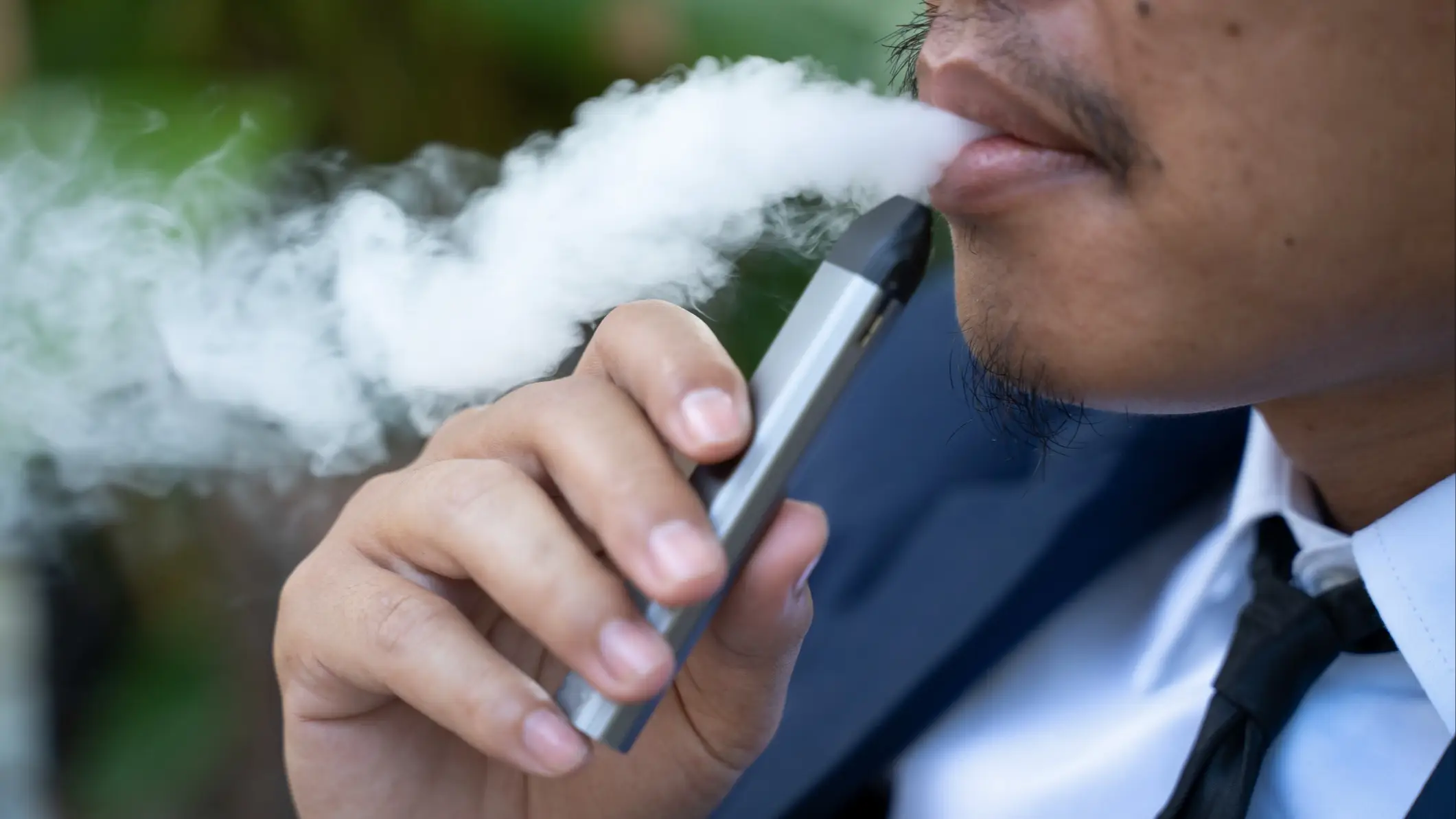
The majority of vapes consist of a mouthpiece, a heating element, a microprocessor, a battery, and a cartridge containing e-liquid.
When the juice is drawn out of the cartridge by the heating element, it is vapourised and inhaled à la cigarette smoke.
Initially thought to be a 'healthier' alternative to smoking ciggies, it turns out that there's a lot to be concerned about when it comes to chonging on these battery-powered suckers.
In 2019, the United States had an outbreak of over 1,600 cases of unexplained lung injury, with 34 being fatal, and 92 percent of patients admitting that they had used black-market THC vape cartridges.
Now known as E-Cigarette or Vaping Associated Lung Injury (EVALI), it is caused by vitamin E acetate, a synthetic used in topical skin cream.
But this is just one of several chemicals that are in vape juices and have little restriction.
Vape juice ingredients don't look that terrible, in isolation - including propylene glycol, which is common in food and medicine, or even vegetable glycerine, a food-thickening agent.
There's so little regulation on these ingredients, even now, so the risk of two elements becoming toxic when vapourised together isn't unthinkable.
Diacetyl is a common artificial flavouring compound that flavours fruity drinks and adds a butter flavour to popcorn. Yet despite ingesting it, you certainly don't want it in your lungs.
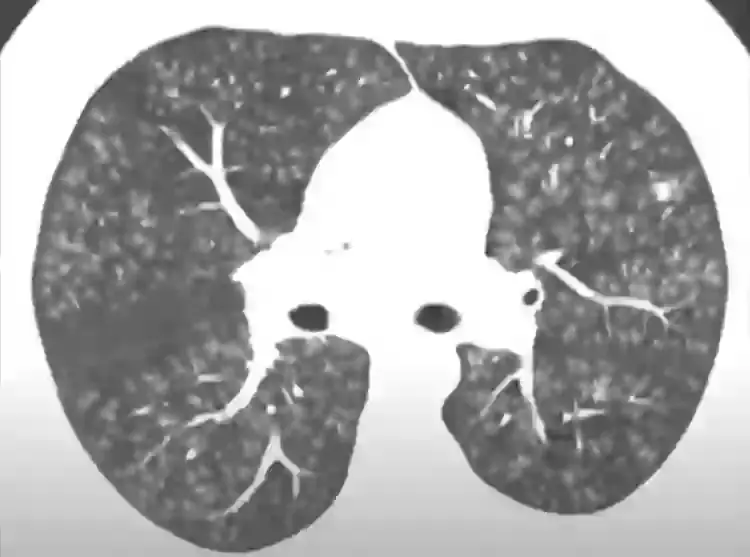
A simulation shows what happens if we regularly inhale Diacetyl in vapes, and it might be enough to put you off it for life.
You may develop a chronic condition known as bronchiolitis obliterans, also known as 'popcorn lung' after it was first discovered in a popcorn factory where workers we're spending too much time with the toxic element.
The simulation displays a buildup of mucus in the lungs and the damaging of the alveoli, which is the primary site of gas exchange between the blood and inhaled air.
Diacetyl is not illegal, though, so it regularly makes its way into the colourful universe of vape juices.
Interestingly, a 2015 study by the Environmental Health Perspectives revealed that out of 51 tested e-liquid flavours, 39 contained this problematic chemical.
Doctors widely believe that vaping may be slightly better than smoking proper old-school cigarettes, but the more we investigate vapes, the more similarities arrive.
Basically, nothing other than air should be entering your lungs' cilia, which are hair-like structures that move in wave patterns to keep out bacteria and other viruses.
But inhaling all sorts of chemicals can have a 'paralytic effect' on the lung cilia. It takes weeks to recover, leaving your lungs dangerously exposed to infection.
 Dan Seddon