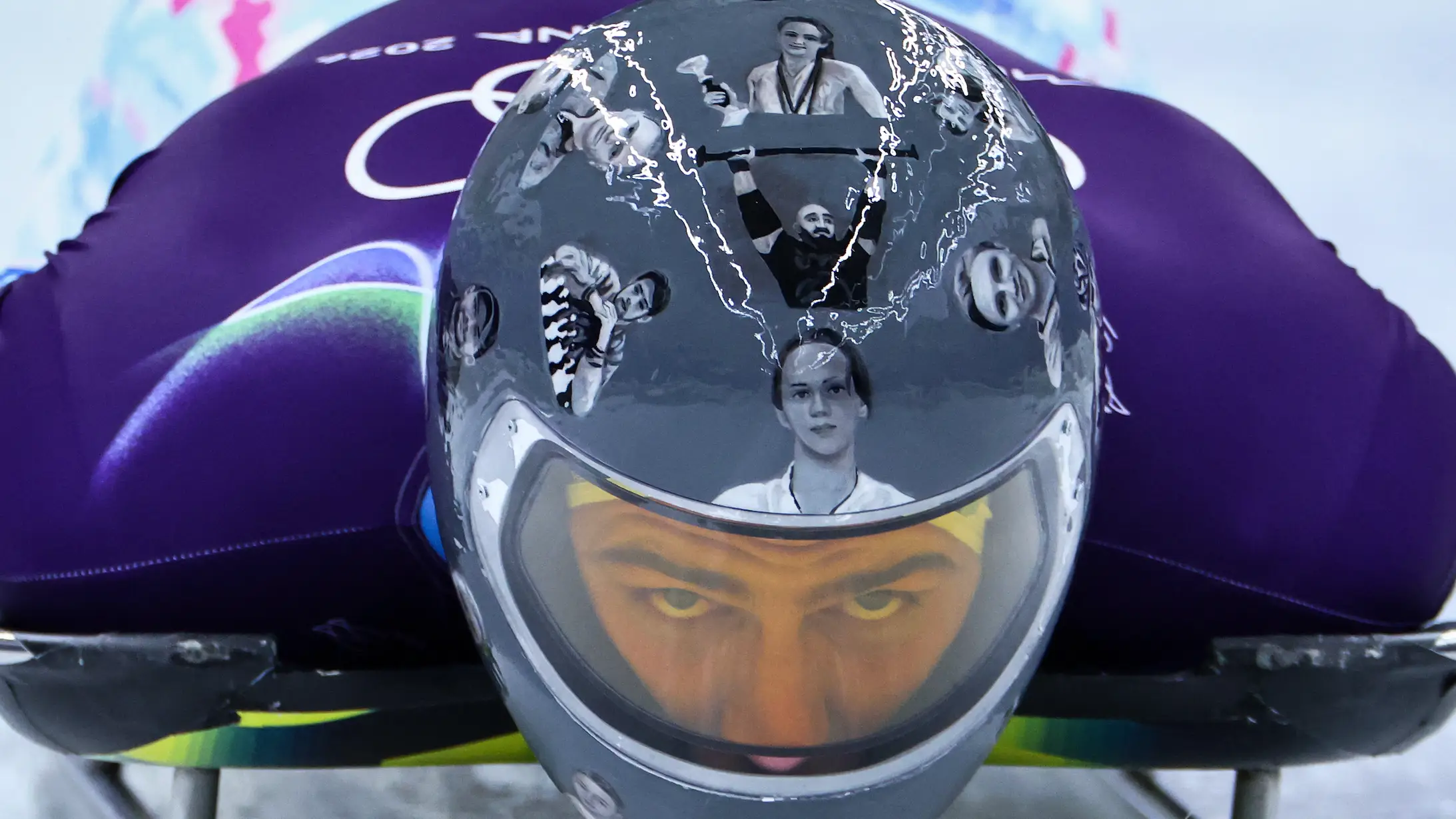
Ukrainian athlete disqualified from Winter Olympics over helmet tribute

A Ukrainian athlete has been disqualified from the Winter Olympics after refusing to stop wearing his helmet adorned with tributes to victims of Russia's invasion.
Skeleton racer Vladyslav Heraskevych said he wanted to 'honour' his fellow sportsmen and women who have died since the conflict began in February 2022 with his custom headgear.
His 'helmet of remembrance' featured images of teenage weightlifter Alina Perehudova, boxer Pavlo Ischenko, ice hockey player Oleksiy Loginov, actor and athlete Ivan Kononenko, diver and coach Mykyta Kozubenko, shooter Oleksiy Habarov and dancer Daria Kurdel, among others.
But the International Olympic Committee (IOC) have now banned the 27-year-old from competing at the 2026 Winter Olympics due to his refusal to take the helmet off.
Advert
Less than an hour before Heraskevych was due to compete in the men's skeleton event today (12 February), it was announced that he would no longer be participating in the race.
A statement from the IOC explained: "Having been given one final opportunity, skeleton pilot Vladylsav Heraskevych from Ukraine will not be able to start his race at the Milano Cortina 2026 Olympic Winter Games this morning. The decision followed his refusal to comply with the IOC’s Guidelines on Athlete Expression.
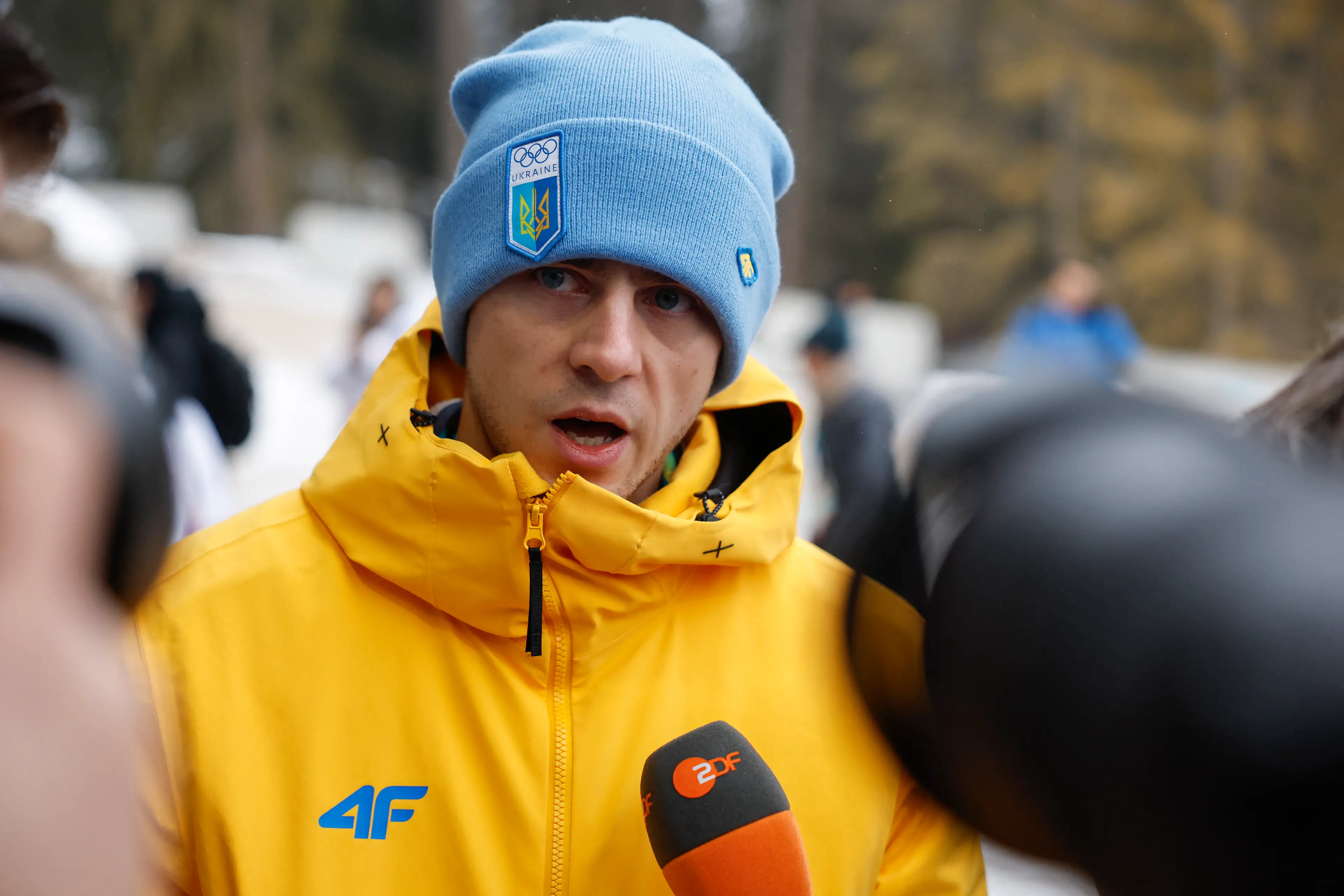
"It was taken by the jury of the International Bobsleigh and Skeleton Federation (ISBF) based on the fact that the helmet he intended to wear was not compliant with the rules," the statement explained.
"The IOC has therefore decided with regret to withdraw his accreditation for the Milano Cortina 2026 Games."
Heraskevych said he felt 'emptiness' after his disqualification and explained why he did not want to take up the IOC's compromise of instead wearing a black armband in tribute.
"It’s hard to put into words," the athlete told reporters. "Emptiness, some kind of," before explaining he had intended to 'honour [the] athletes pictured on this helmet'.
"I believe they deserve this moment," Heraskevych said. "Certainly I do not get my moment at this Olympics, despite I would say pretty good results in the training runs. I really believe we could be among the medallists today and tomorrow, but we will not be able to race. I believe we didn’t violate any rules.
"I see big inconsistencies in decisions, in the wording, in the press conferences of the IOC, and I believe it’s the biggest problem that it’s inconsistent. I believe strictly in the ISBF, and the IOC understands I’m not violating any rules. Also what [is] painful is that it looks like discrimination because athletes were already expressing themselves."
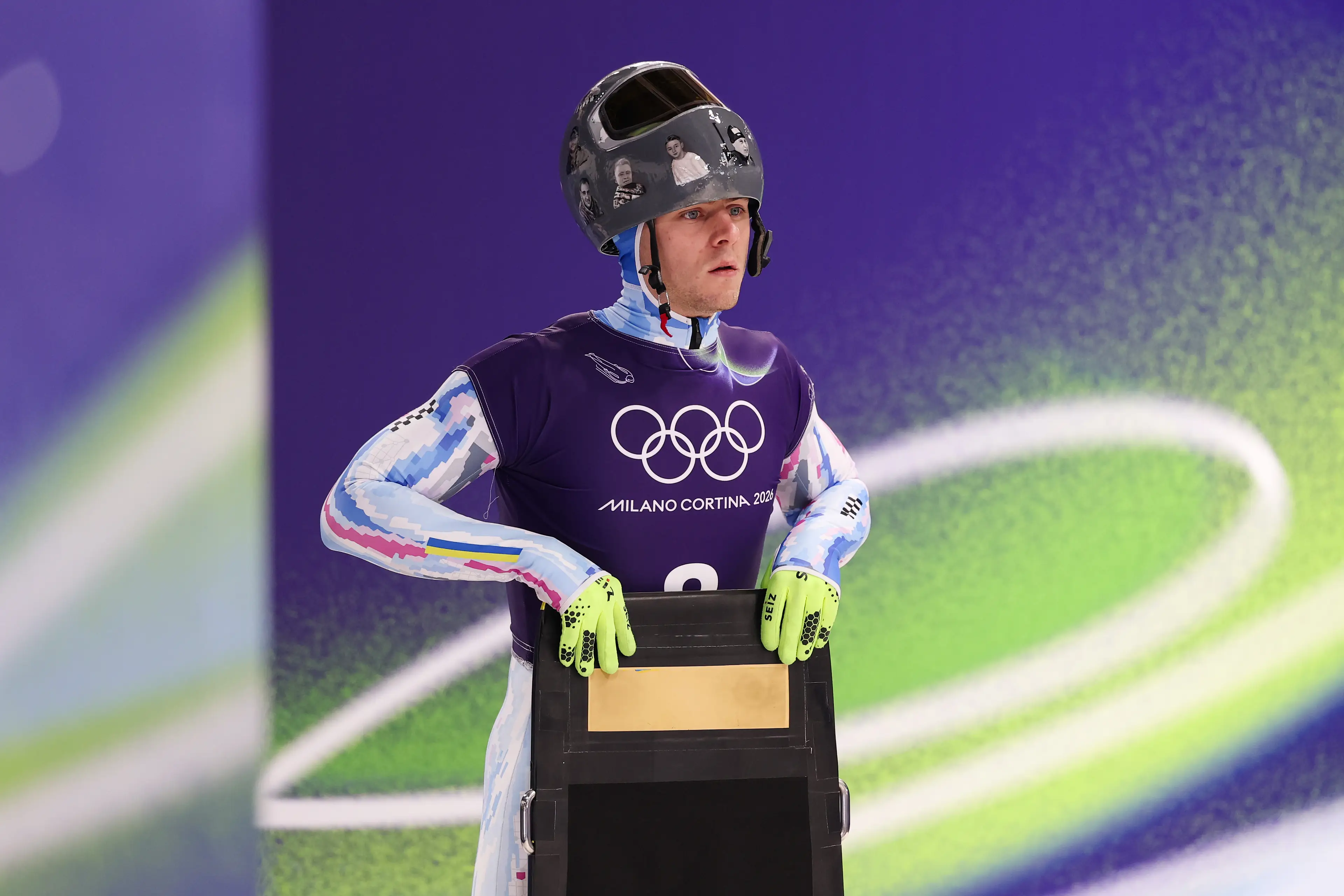
After the IOC announced earlier this week that the athlete was forbidden from wearing the helmet, Heraskevych said the stance taken by Winter Olympics officials 'simply breaks my heart'.
Taking to Instagram on Monday (9 February), Heraskevych wrote: "The IOC bans the use of my helmet in official training and competitions.
"The feeling that the IOC is betraying those athletes who were part of the Olympic movement, not allowing them to be honoured on the sports arena where these athletes will never be able to step again.
"Despite precedents in modern times and in the past when the IOC allowed such tributes, this time they decided to set special rules just for Ukraine."
IOC spokesperson Mark Adams earlier told a news conference in Milan-Cortina that the helmet went against Rule 50.2 of the Olympic Charter.
The rule states that 'no kind of demonstration or political, religious or racial propaganda is permitted in any Olympic sites, venues or other areas'.
“The IOC fully understands the desire of athletes to remember friends and colleagues who have lost their lives in that conflict, and in many, many other difficult conflicts around the world,” Adams said on Tuesday (10 February).
“It's fundamental that there are equal rights for all athletes and that the games need to be separated not just from political and religious, but from all types of interference so that all the athletes competing can concentrate on their performance. What we said is that this helmet contravenes the guidelines.
"But that being said, after the meeting, we also reiterated once again that we will in this case, as we do now more often, make an exception to the guidelines to allow him to wear a black armband during competition.”
Heraskevych said he intends to take his case to the Court of Arbitration for Sport, adding: "I believe we need to continue to fight for our rights.
"I told you from day one that I do not agree with what the IOC says to us, so probably we will prepare a CAS case and we will defend our rights in CAS."
Topics: Ukraine, News, World News, Sport, Winter Olympics
 Olivia Burke