France vs Iraq at risk of being abandoned just hours before game kicks off due to FIFA rule

The World Cup has flowed fairly smoothly despite the controversies attached to it but it seems as if one of today's fixtures is in serious doubt.
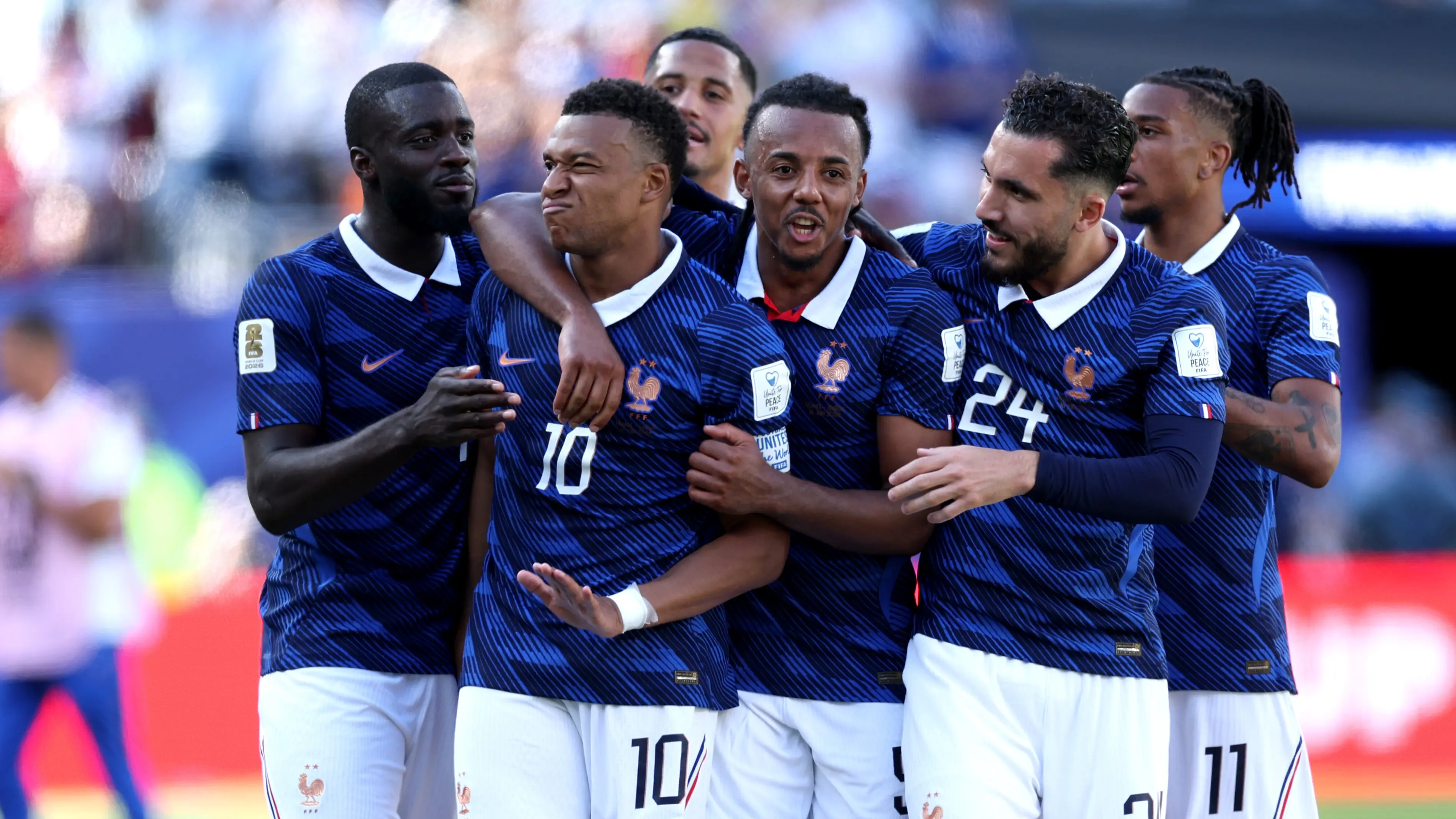
France are set to face Iraq in their second Group I fixture, after Kylian Mbappe's brace helped them to an opening game win against Senegal, with him becoming the nation's leading goalscorer in the process.
However, Les Blues now face an anxious wait ahead of their kick-off later today with storms currently forecast close to the Philadelphia Stadium (formerly Gillette Stadium).
Didier Deschamps' side are due to kick off at 5pm local time (10pm UK time) but could see their fixture rearranged for tomorrow under FIFA protocol, which would leave players, staff and fans devastated, especially given the huge amount of money they've no doubt paid to get there.
Advert
FIFA officials are already reportedly planning for the worst, with official protocol likely to be enforced if the storms do occur as feared.
The rules, based on local authority requirements set out by the National Oceanic and Atmospheric Administration (NOAA), state that a game must be halted or delayed if lightning strikes within eight miles of a stadium, with fans removed from their seats.

All players must be removed from the pitch and seek shelter before being allowed a short warm-up ahead of the resumption of the game once they are permitted to return to the field of play.
The match can only resume when there has been no lightning for a period of 30 minutes.
Official NOAA guidance states that activities must be stopped when "you see lightning", "you hear thunder", or "the skies look threatening".
Speaking to NBC10, Lauren Lambrugo, Chief Operating Officer of Philadelphia Soccer 2026, explained the protocol that will be followed should lightning occur.
“They'll start to evacuate the stadium to the main concourse and seek emergency shelter," she said.
“And then it has to wait 30 minutes before they bring everybody back onto the field.”
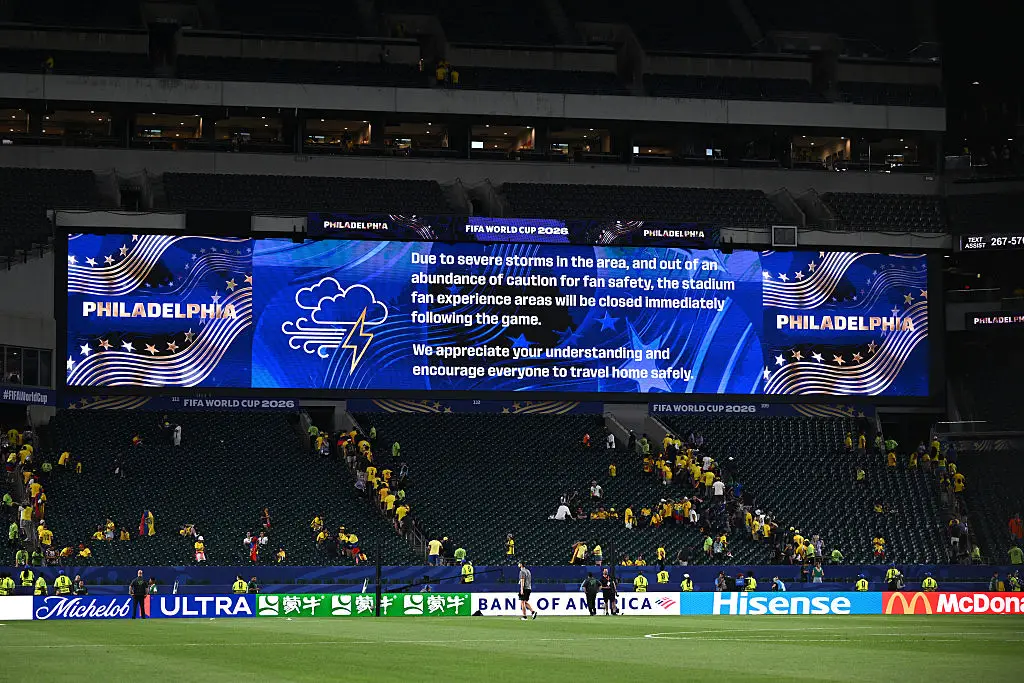
When asked if the match could be postponed, she replied: “They will make sure that the match is broadcast and played tomorrow.”
Although this tournament has already attracted a huge amount of criticism, namely due to the fans, staff members and referees who have missed it due to Donald Trump's travel ban list, it is perhaps the cancellation of a match which might cause the most uproar.
Even if it is arranged for tomorrow, it might well take the shine away from a certain other game on tomorrow, where Thomas Tuchel's side are looking to essentially secure top spot in their group with a victory against Ghana.
New rules for the FIFA World Cup 2026
This year, there’s been a whole host of rule changes, many of which are designed to speed up the game and penalise players who drag things out. Some of the new regulations are likely to prove controversial.
10-second substitution
Subbed players now have to get a move on and leave the pitch within ten seconds by the nearest exit point. If they haven’t, their replacement will get held up by one minute until the next stoppage of play, and until then, their side will have to play with 10 men.
5-second throw-ins and goal kicks
If a referee thinks a player is taking too long for a throw-in or goal kick, they’ll start a five-second countdown, by which time the ball needs to be back in play. If it’s not, for throw-ins the opposing team will get their own throw-in, or for a goal kick the other side gets a corner.
Injured players to remain off the pitch for one minute
An injured player treated by medical staff off-field has to stay off the pitch for one minute, leaving their side with just 10 players.
More VAR
VAR can now be used to review an incorrectly awarded corner kick; second yellow cards resulting in a red card; when a player is incorrectly awarded a yellow or red card for another player’s actions; and any attacking fouls that occur before the ball is in play.
Players can’t cover their mouths
Players who cover their mouths in confrontational situations will be handed a red card. It’s believed players might cover their mouths to guard against lip readers while racially abusing other players, which some suspect has happened in the past.
Red cards for players leaving the pitch
Any player who leaves the pitch in protest over a referee’s decision will be handed a red card, and if a team walks off and causes a match to be abandoned, they’ll forfeit the game.
 James Moorhouse