From Chasing Bargains In Thrift Stores To Opening A Vintage Fashion Studio


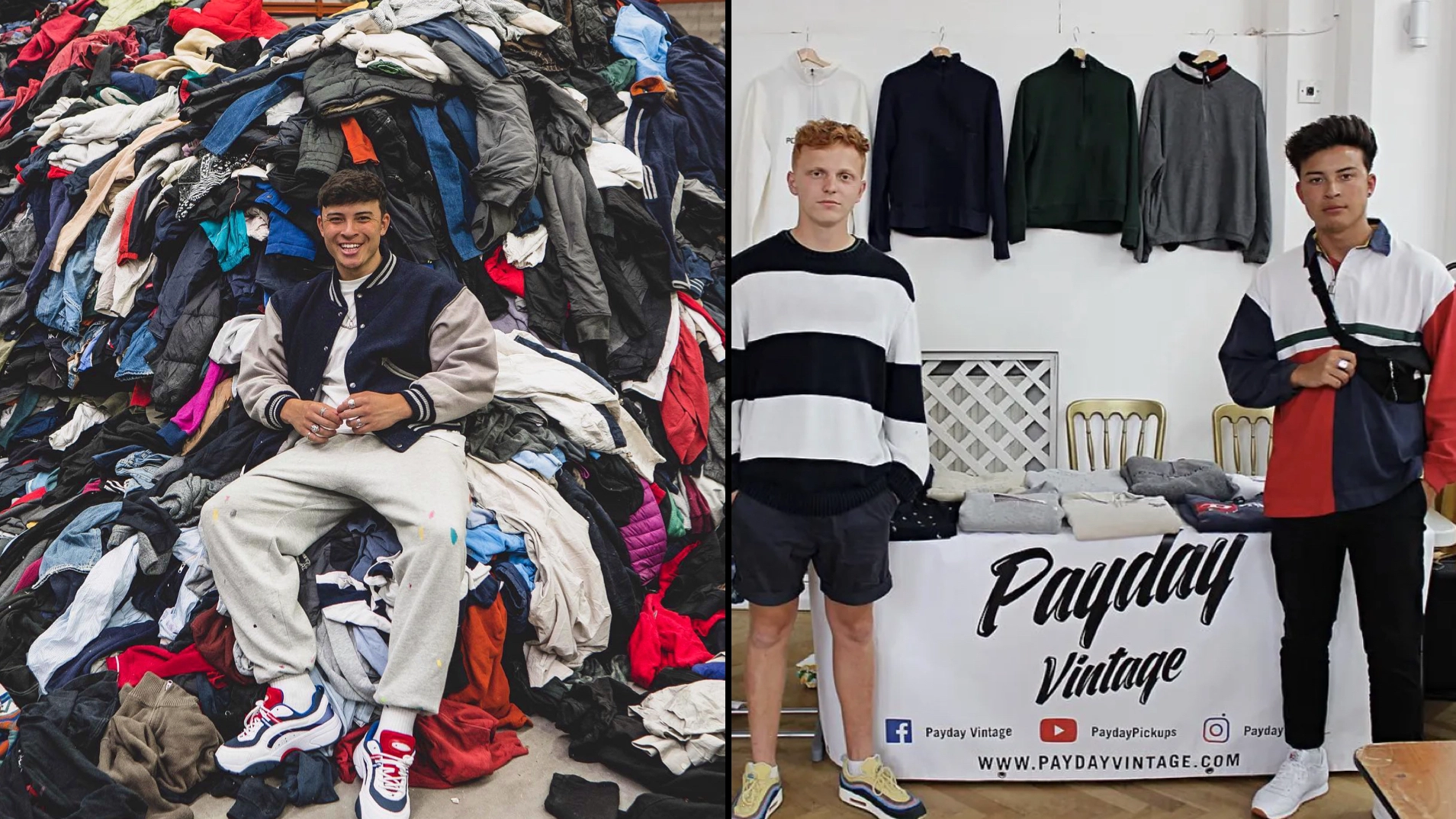
Dom Hadley is living his dreams. At just twenty-four-years-old, he runs his own vintage fashion house, selling chic sportswear to a huge network of online customers. We take a closer look at the unbelievable story of how Dom's passion for fashion, a stranger he met online, and the Coronavirus Lockdown all combined to make Payday Vintage a phenomenon.
Even as a teenager, Dom Hadley was well into fashion, and loved a bargain. He remembers during sixth form, he felt like he had to wear something new everyday, so began buying vintage second hand clothing.
“You remember those quarter-zip pullovers?” Dom asks me, proudly recounting the first designer bargain he ever purchased. “I got it for like three pound from a charity shop, but obviously they’re like eighty quid brand new!”
Advert
At first, Dom started making men’s fashion videos, showcasing how to style the clothes. The setup was minimal, with Dom filming himself alongside a clothing rail and a white wall. Nonetheless, not only did people watch, but they contacted Dom directly, who soon started selling the clothes he found. The quarter-zip pullover that only cost three pound, Dom remembers, sold for thirty pounds online.
“I started realising there’s actually a market for this. So it became a job or a side hustle,” Dom explains. “Then when I started making decent money from it, I was like: I want to set up a whole brand. That was kind of where Payday Vintage started.”
Before long, Dom was visiting thrift shops and kilo sales, buying branded clothing and building an inventory of stock to sell on online platforms. For storage space, Dom used his bedroom at his parents’ house in Chester, then the living room of his student flat in Leeds, which he remembers being packed with boxes. He would photograph the clothes against white sheets of paper, using a small camera and natural light from a window. “It was very low budget,” he says.
In 2018, while researching the competition, Dom stumbled across the profile of Alfie Biss, a teenager down in Norwich who was also selling second-hand clothes online. Alfie had secured suppliers for some excellent sportswear, according to Dom, but he had limited visibility online. Dom began helping to promote Alfie’s stock and after six months, the two young lads decided to start a business together.
“Mad, trusting some randomer on a website… I remember telling my parents about it and they were like: ‘What are you doing?’” Dom recalls, laughing at how crazy the situation was. “Someone who lives down south and we just spoke online and we were setting up a business together.”
Nevertheless, Dom and Alfie took the risk. They purchased a domain name and a template e-commerce website, then they invested in a bulk order for 150 articles of vintage sportswear. The clothes sold well, so they did it again. Then again.
For the first two years the business found its feet, selling between 20 to 30 items of clothing per week. Since Dom lived up in Leeds, and Alfie lived down in Norwich, they would each take turns to receive stock and handle orders. “The postal service made a lot of money out of us!” jokes Dom ruefully.
Dom says he learned to leave a trail of financial evidence for when things go wrong. With second-hand clothes it is inevitable that items either don’t arrive, arrive in a poorer condition than advertised, or - even worse - are dreaded fakes. One time, Dom purchased a bundle of designer shirts that turned out to be counterfeit, and the supplier refused to refund them. Dom used Visa chargeback to dispute the original payment, and get[CH1] his money back.
Things grew slowly-but-surely for Payday Vintage, until the Coronavirus lockdown in 2020 had unexpected ramifications. Trapped inside all day, with nothing to do, thousands of young people actively sought out comfortable clothes, and consequently Dom and Alfie’s second-hand sportswear business made a killing.
As demand soared, Dom and Alfie found themselves racing to scale up. They needed warehouse space - for sorting, steam-ironing, photographing and packaging clothes - so rented out a headquarters down in Norwich. Dom remembers buying an array of equipment to kit it out. “Six-foot two-tier hanging rails, swing tags, irons, shelving, desks, packing table, camera and tripod, box lights, flashguns, and a new steamer” - which Dom remembers arrived broken. “It was supposed to be new! I used Visa chargeback to contest it again.”
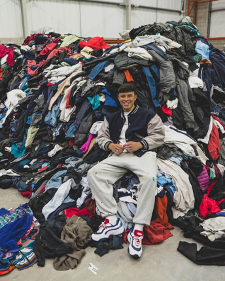
Today, on average, Payday Vintage has between 200 and 300 customers buying vintage clothing on its website every week. In addition to its Norwich headquarters, where Alfie is based, Dom is about to open a 700 square-foot studio in Manchester, something which he has long dreamt about.
“I’m sure it would be more cost-effective to bring everything under one roof in the future,” laughs Dom. “But he doesn’t want to move up North, and I don’t want to move down South.”
Four years on from his decision to go into business with the stranger he met on the internet, Dom couldn’t be happier. “Me and Alfie are mates now, but we weren’t beforehand. That’s why the dynamic has really worked,” Dom explains. “Because we’re not close mates, it forces us to keep working hard… We don’t get complacent.”
I ask Dom if he has any celebrity customers. He chortles and tells me about one order he received for thousands of pounds, to a Beverley Hills postcode. He wonders aloud whether it might have been for some very famous sisters. "I'm sure they must use fake names to keep their addresses private," he says with a smirk. "Either that or it could be a stylist..."
Since launching Payday Vintage, Dom is more passionate about fashion than ever before. Not only does he have a constant source of clothes to wear, film content with, and sell, but he has also learned to sew, purchased a sewing machine, and plans to use the studio to produce customised, or “upcycled” pieces to sell through Payday Vintage.
“That’s definitely the next move now, upcycling,” reveals Dom, nodding enthusiastically “With fashion, people just want a piece of clothing that no-one else has. By upcycling we can give someone a different piece of clothing at an affordable price… We want to repurpose items: give it a new life so it doesn’t just go to landfill.”
The main success, from Dom’s perspective, is that he and Alfie have both managed to make a full-time living from their side hustle. Last year they even took on their first full-time employee, to help with running the warehouse, and this year they hope to take on staff in the studio too.
“Especially for the age I’m at, I can’t really believe how big it’s become,” Dom gasps. “I knew it was going to do well, but I didn’t expect it to go so well, so quickly.”
Whether shopping online for a quarter-zip pullover, starting an e-commerce website, or renting out a studio for your fashion house, how you pay online matters. Visa helps protect your online payments meaning you can pay with confidence, and start building that side-hustle into something bigger.
VISA. A network helping to protect your online payments.
Topics: Fashion, Money, Environment
 The LADbible Team