Hottest May on record prompting 'illegal to work' temperature consideration from UK Government

In case you haven't noticed, it's a bit hot right now.
After a Bank Holiday spent basking in glorious sunshine, most of us have headed back to work today – only to find that our offices, worksites, podcast studios or home-office setups are feeling uncomfortably warm.
So naturally, as we all sit at our desks sweating uncomfortably, conversation has likely turned to the topic of 'at what point does it get too hot to work?'
To which I answer, there isn't an upper limit, for now.
What are the rules around working during a heatwave?
Unlike at school, where people would make up rumours such as 'if five people faint, you get to go home', the guidance is pretty straightforward when it comes to workplaces in the summer.
Advert

According to the government website, there is currently no minimum or maximum working temperature, meaning you can't go home if it's too warm or too cold.
"There is no specific office or work temperature threshold that entitles the workforce to stop working or relocate," Patrick Macken, Solicitor at Richard Nelson LLP told LADbible, adding that the only law to reference working temperature is the Safety and Welfare Regulations 1992, which he says is 'underwhelming and ambiguous'.
Instead, the government has several guidelines for making sure employees are comfortable for the eight or so hours they're at work, such as keeping the temperature at a comfortable level and providing clean, fresh air.
There is also a guideline for the minimum comfortable temperature, with the Health and Safety Executive (HSE) suggesting a minimum workplace temperature of 16 °C, or 13 °C for physically demanding work.
As things stand, there is no 'meaningful upper limit' as jobs in bakeries and certain factories regularly work in high temperatures.
Which means you can't use 'the office is too stuffy' as an excuse to go home.
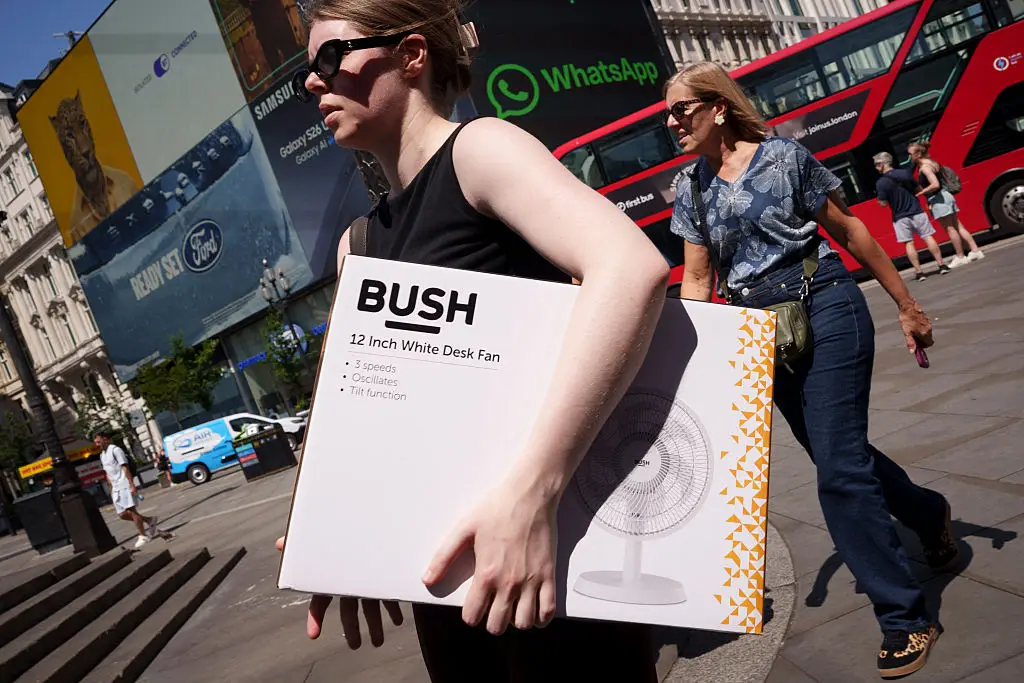
What changes has the government proposed for workplaces in the summer?
However, this could change.
Advisors from the Climate Change Committee (CCC) have suggested rolling out a maximum working temperature to protect employees during heatwaves, warning that the UK was built for a climate that 'no longer exists today'.
"We need to recognise that there are aspects of our British way of life which are now really under threat from climate," CCC chair Baroness Brown (Julia King) said.
Which sounds dramatic, I know, but sweltering days such as this could be happening more frequently, especially if the 'Super El Niño' warnings end up coming to pass.
"It's not rocket science - we know what to do [… but] we haven't yet seen a government that's prepared to prioritise adapting to the change of climate [... and] protecting the people and the places that we love."
The CCC did not suggest a maximum working temperature specifically, but did point to countries such as Spain, where it is illegal to work in a building warmer than 27 °C.
This is three degrees hotter than the maximum working temperature of 24 °C suggested by the World Health Organisation.
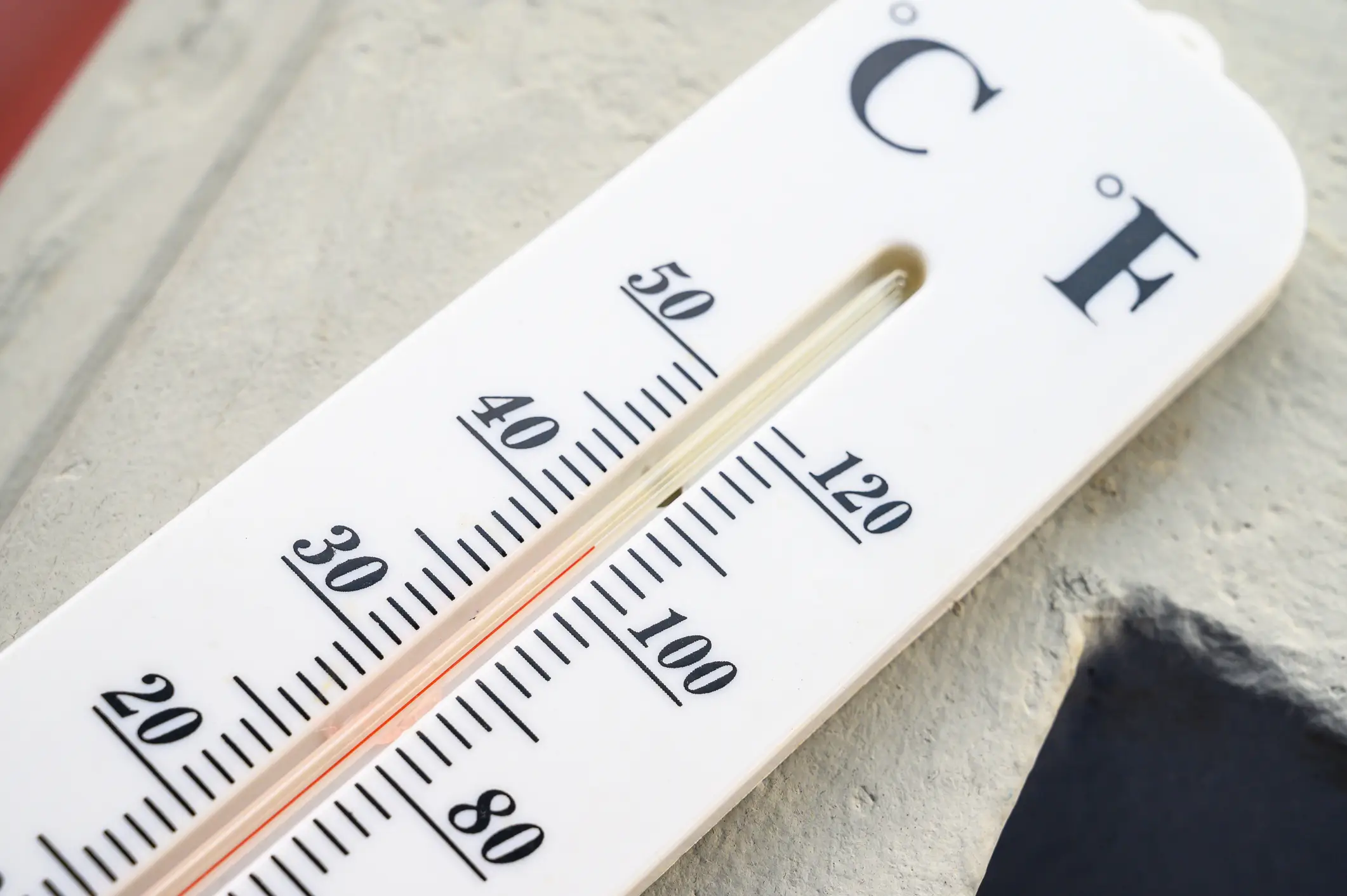
Meanwhile, ITV reports the Trade Union Congress (TUC) and UNISON are both pushing for a legal maximum indoor working temperature of 30 °C, reduced to 27 °C for strenuous work.
It could, however, be worse, as citizens of Montenegro have to wait until the mercury hits 36 °C before they're allowed to stop work.
What rights do I have if my workplace is too hot?
So your workplace isn't obliged to send you home during a heatwave. But they are supposed to make working conditions more bearable.
This includes recommendations such as:
- Providing fans or air conditioning
- Improving ventilation and allowing windows to open
- Using blinds or reflective film to block direct sunlight
- Moving workstations away from heat sources
- Supplying free cold drinking water
- Relaxing dress codes where safe to do so.
Employers are also advised to adapt working patterns to avoid the warmest parts of the day (particularly if employees work outside), allow further breaks if needed and make sure employees are aware of the symptoms of heatstroke.
"Employers ought to be mindful of health & safety measures, and avoid knee-jerk decisions to discipline or dismiss employees who take preventative measures, such as adjusting their uniform or opening doors, to stay safe in the heat," Macken added.
How to cool down in a heatwave
We’re all aware of the basics of keeping cool during the warmer weather, such as avoiding the sun between 11am and 3pm, staying hydrated, wearing light clothing, taking cold showers and avoiding physical activity, but have you tried these little-known hacks to beat the heat? (Thank us later).
The correct way to sleep with a fan on
A good night's sleep is almost never guaranteed during a heatwave, leaving many of us turning to our trusty fan to get through the night. However, it could be having a hidden impact on your health.
But rest assured, as Dr Anis Khalaf has explained how to overcome this, the correct way.
"The key is to not have any of the wind blowing on you,” he said. “So try facing it away from your body, and the air will still circulate around the room."
Though bear in mind that electric fans only tend to work when the temperature is below 35 degrees.
Drinking milk
Thanks to the sugars, proteins and fats in milk, Dr Natasha Fernando claimed that a glass of the liquid ‘may be more hydrating than water’.
She told Metro: “Milk also contains sodium which allows your body to hold onto water for longer, aiding hydration levels.”
The Egyptian sleep method
Forget the Military sleep method, because this hack claims to keep you cool as well as help you nod off.
Psychiatrist Alex Dimitriu, MD, told VeryWellMind: "The Egyptian sleep method involves sleeping under a damp sheet, which cools off from evaporation.”
Just make sure the sheet is damp and not drenched, and the room is well-ventilated.
Keeping windows shut during the day
While it may sound counterproductive, you’re essentially inviting the hot air inside by leaving them open. And since most houses in the UK are designed to keep the heat in, you could be making the situation a whole lot worse.
Instead, wait until temperatures have dropped (such as in the late evening) to open your windows to allow cooler air to circulate. Keeping your blinds and curtains shut can also help.
 Brenna Cooper