
The exact rules that decide if the UK joins the war against Iran

While Sir Keir Starmer 'does not believe in regime change from the skies', he said Iran's response to the US-Israeli strikes were 'outrageous'.
Donald Trump criticised the Prime Minister for deciding to not get involved in the initial stikes on Saturday (28 February) that killed the country's Supreme Leader Ayatollah Ali Khamenei.
"President Trump has expressed his disagreement with our decision not to get involved in the initial strikes, but it is my duty to judge what is in Britain's national interest," Starmer told MPs on Monday.
The following strikes on Sunday were considered 'a threat to our people, our interests and our allies', which prompted Starmer to allow British bases to be used to hit Tehran's missile infrastructure.
Advert
"To be clear, the use of British bases is limited to the agreed defensive purposes; we are not joining the US and Israeli offensive strikes," he added.
Who decides if the UK enters a war with Iran
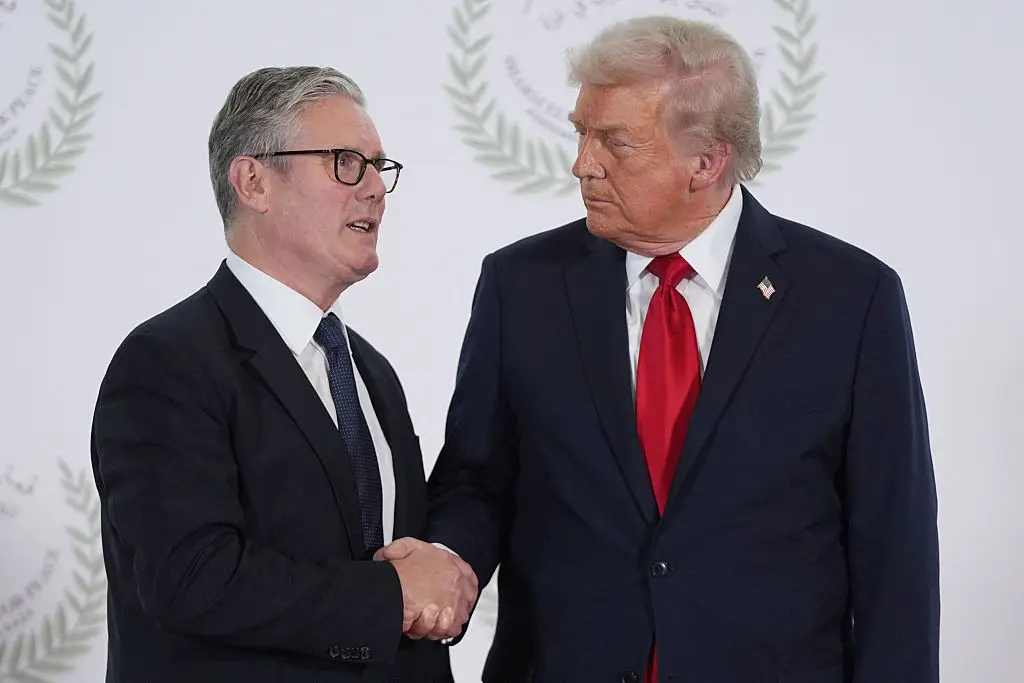
The government has the power to deploy armed forces under the Royal Prerogative. This means that the Prime Minister and Cabinet can legally deploy forces without a binding parliamentary vote.
Conventionally, parliament is consulted, which is when the House of Commons debates the action.
What happens if the UK is attacked
Military force should only take place under the United Nations law. Article 15 of the UN Charter states that if the UK is attacked, or is acting in self-defence, then military force is allowed.
Under NATO obligations, if a member is attacked, then Article 5 states that an attack on one is an attack on all.
But this also means that each member will ultimately decide what type of action it enforces.
Article 5 has been invoked just once after 9/11.
Why the UK rarely declares war
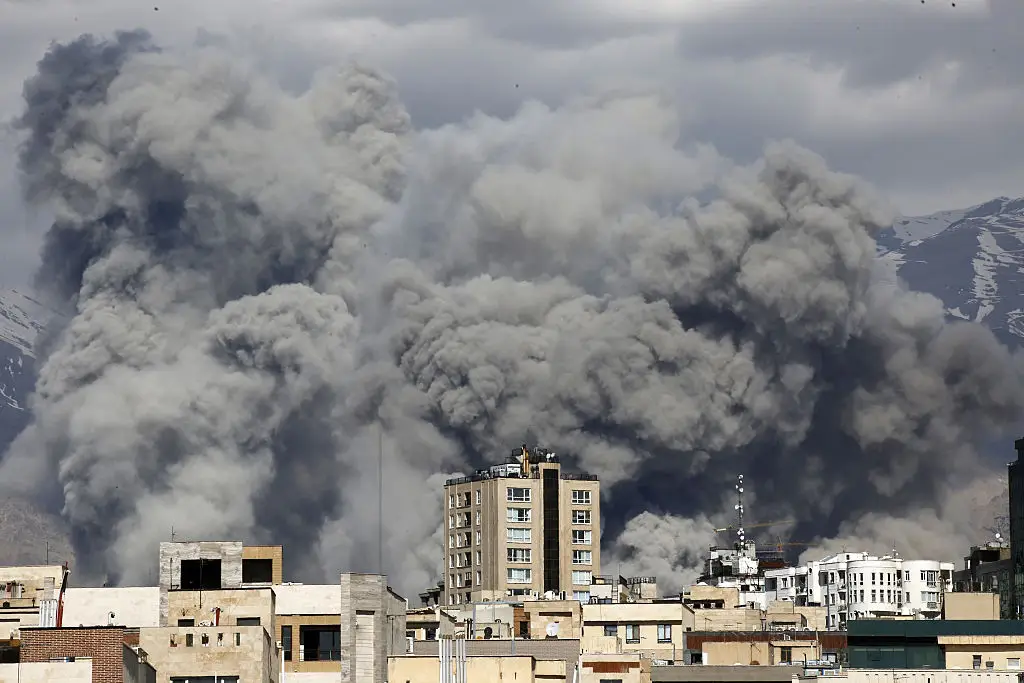
The UK has not issued a formal declaration of war in decades, as Starmer reminded MPs of previous conflicts.
"The lessons of history have taught us that it is important when we make decisions like this, that we establish there is a lawful basis for what the United Kingdom is doing," he said.
"That is one of the lessons from Iraq, and that there's a viable thought-through plan with an objective that can be achieved or has a viable prospect of being achieved.
"That is the principle that I applied to the decisions that I made over the weekend."
The UK's current position
The Prime Minister's Office said in a statement that the 'UK condemns in the strongest terms the Iranian regime’s reckless and ongoing indiscriminate attacks against countries in the region'.
It said that 'the UK has military assets flying in the region to intercept drones or missiles targeting countries not previously involved in the conflict'.
"The UK remains of the view that a negotiated solution should be supported, and that further escalation into a wider regional conflict should be avoided," it said.
Why the US and Israel attacked Iran
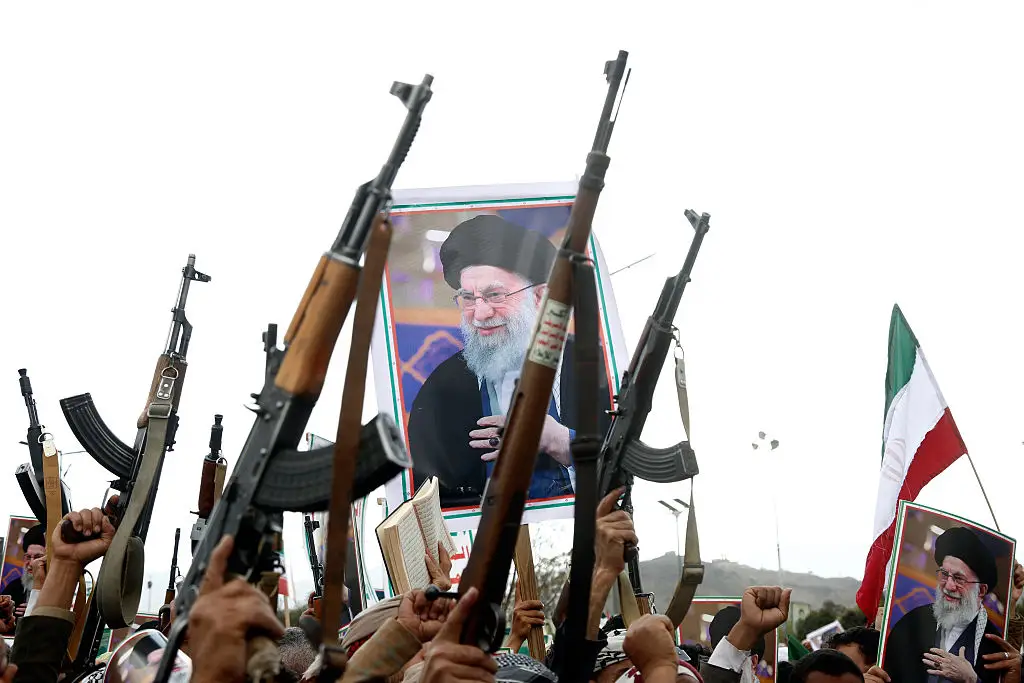
The US-Israel attacks on Iran stem way back to the Islamic revolution in 1979.
Iranian leadership has since called for Israel's elimination and said the US is its greatest enemy.
Following recent claims Iran was seeking develop a nuclear bomb, something Iran has denied, the US attacked Iranian nuclear and military sites last June.
Since the attacks, Israel has claimed that Iran has been trying to rebuild its nuclear programme.
After Israel's recent attack on Iran, the US said their involvement has been 'pre-emptive' of a response.
Iran, meanwhile, say the strikes are 'unprovoked, illegal and illegitimate', and has carried out widespread missile attacks in the likes of Qatar, Bahrain, Jordan, the United Arab Emirates (UAE) and Kuwait. A British military base in Cyprus was also struck by a drone.
The number of people killed in Iran has reached 787, according to the Red Crescent.
 Anish Vij