NHS explains why it is referring more people for bowel cancer tests

It is hoped that thousands more lives could be saved thanks to the NHS overhauling bowel cancer screening methods.
Following in the footsteps of Scotland and Wales, the detection threshold for a home testing kit is now being lowered for patients in England.
It means that loads more Brits will now be checked for signs of bowel cancer, which will hopefully mean hundreds of cases will be detected early.
Finding it early is crucial, as it drastically improves the chances of survival.
Advert
Last month, NHS England announced that from February, it would be increasing the sensitivity of screening tests and, in turn, more people would be referred for potentially life-saving follow-ups.
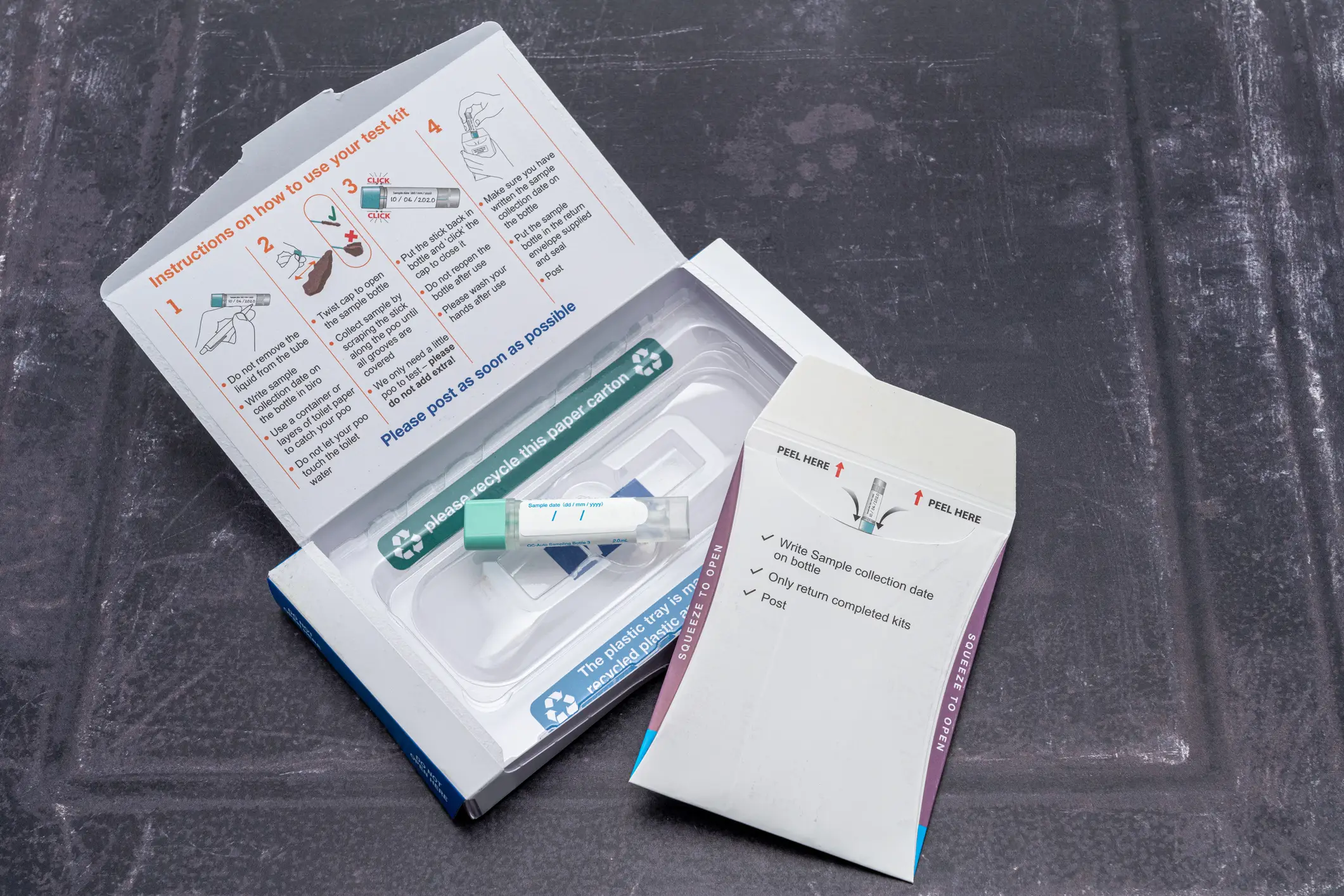
At-home screening kits - known as the faecal immunochemical test (FIT) - are sent out to people aged 50 to 74 every two years, as bowel cancer is one of the most common cancers in the UK.

How does a bowel cancer screening test work?
It works by picking up signs of blood in a stool sample, which is a common symptom of bowel cancer.
Brits simply put a sample of faeces into a tube while in the comfort of their own home, pop it in the post and the NHS then handle the rest.
The FIT test measures micrograms of human haemoglobin per gram of faeces, and if the level of blood in your poo is above a certain threshold, you are then referred for further tests to investigate.
"It can help find cancer early, and before you have any symptoms, which may mean it's easier to treat," the NHS says.
However, the threshold that patients in England needed to meet to trigger further investigations - such as a colonoscopy - was previously set at 120µg Hb/g, while it was only 80µg Hb/g in Scotland and Wales.
Now, the threshold has been lowered to bring it in line with these two places. In Northern Ireland, the FIT threshold will remain at 120µg.
'A better early-warning system for bowel cancer'
Peter Johnson, national clinical director for cancer at NHS England, said it marked a 'major step forward' in the fight against bowel cancer.
"This will help save hundreds more lives from this devastating disease," he explained. "Testing at a lower threshold will now provide a better early-warning system for bowel cancer, helping us to spot and treat cancers earlier, often picking up problems before symptoms appear.
"Earlier detection can mean less intensive treatment and ensures the best chance of survival, and in many cases people could avoid facing cancer altogether by having dangerous polyps removed before they cause harm.
"I would strongly encourage everyone who is sent a bowel screening test to complete it and return it as soon as possible - it really could make all the difference."
Bowel Cancer UK hailed the reimagined screening methods as 'great news', while Cancer Research UK also said it was a 'vital step' that will 'save lives'.
Currently, around two percent of people who take the FIT test need further investigation and it is believed that now the threshold is lowered, this figure could rise to three percent.
Health minister Zubir Ahmed also hailed the move, adding: "After 20 years of frontline NHS experience, I know how vital it is that cancer is caught early to give patients a fighting chance.
"I am delighted we are making bowel cancer screening more accessible and sensitive to catch and prevent thousands more cases earlier than ever before."
Once fully implemented, testing at the lower threshold is expected to cut late-stage diagnoses and deaths from bowel cancer in England by around six percent.
It could save the NHS a whopping £32 million each year, while it is hoped that at least 600 bowel cancer cases could be caught early.
It is thought that there will be around 34,000 more colonoscopies carried out each year to help diagnose or rule out bowel cancer.
If you’ve been affected by any of these issues and want to speak to someone in confidence, contact Macmillan’s Cancer Support Line on 0808 808 00 00, 8am–8pm seven days a week.
Topics: Bowel cancer, Cancer, Health, NHS, UK News
 Olivia Burke