Millions switching to plant-based milk and cheese could be putting their health at risk, study finds

Drinking plant-based dairy products could result in someone having deficiencies in certain nutrients, according to a new study.
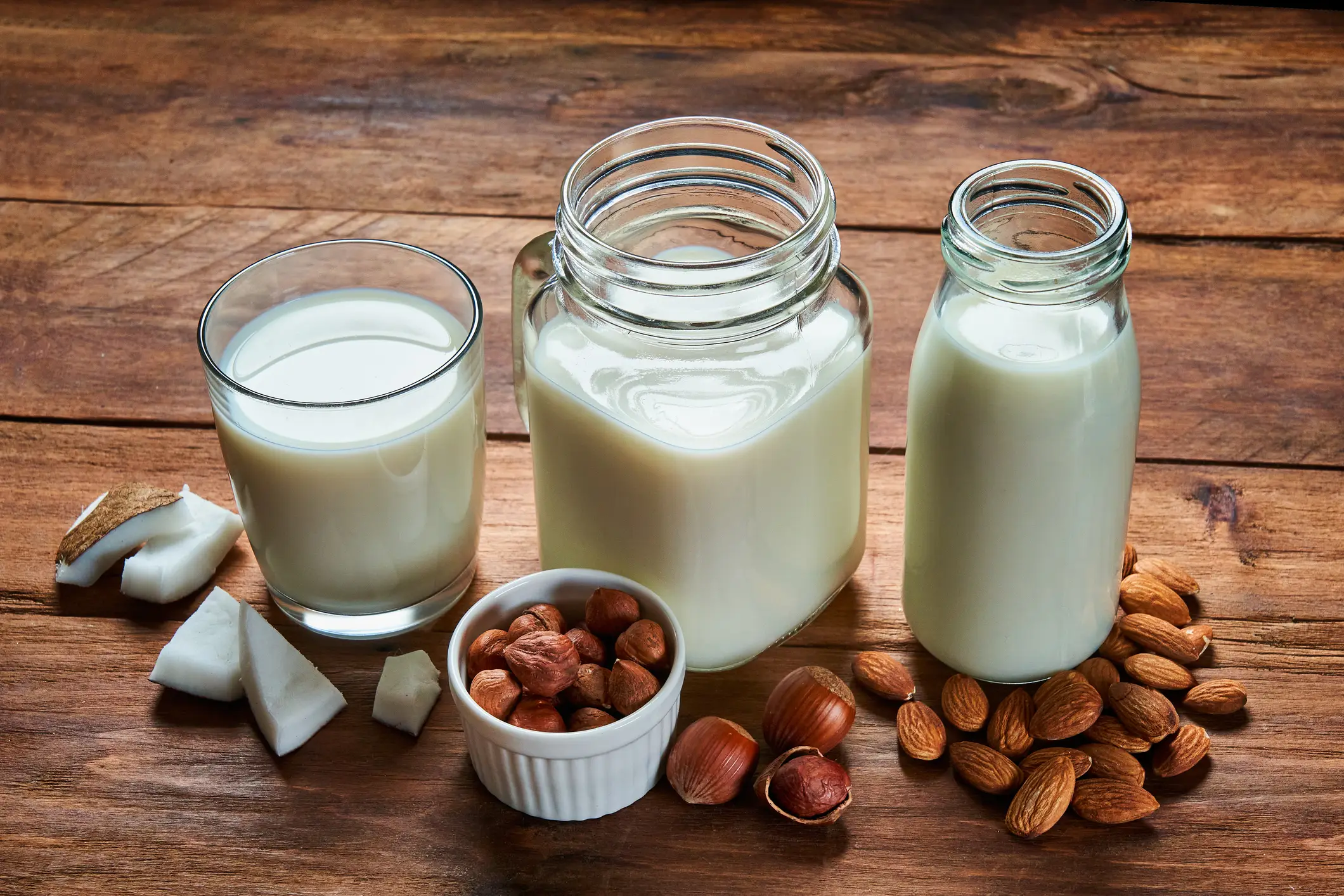
Plant-based milks have seen an explosion in popularity as people move away from dairy, with options such as oat, soy, almond, or even hemp becoming available for vegans or for people who are moving away from dairy.
However, researchers have found cutting out or even reducing dairy intake can be factor in lower levels of iodine, calcium, riboflavin, and vitamin B12, unless the substitutes have been fortified.
Iodine is the biggest factor, with this being an element in very small quantities which the thyroid gland uses to support brain development, growth, and regulate the metabolism.
Advert
The group which appears most affected by this is teenage girls, with more than half of teenage girls in the UK having an inadequate intake of iodine, something which the study says could be made worse by cutting down dairy between a fifth and a third, The Guardian reports.
The report says that replacing between one fifth and one third of dairy with a plant-based alternative could see idoine deficiency in this demographic rise from 54 percent to 62 percent.
Meanwhile, in women between 19 and 49 it could rise from 32 percent to 42 percent, with the study modelling how this could look based on the market levels of fortification in these products.
Dr Sarah Bath is an associate professor in public health nutrition at the University of Surrey, and said: “There are known health effects of iodine deficiency and that’s why we want to raise awareness of this.
“The population groups that seem to be at risk and have the lowest intakes were the young women and women of childbearing age, and that’s the key life stage where iodine is particularly important.”
The popularity of plant-based alternatives has seen a rise in recent years, with more alternatives also becoming available for people to try out.
In the UK there is also not a requirement that dairy-free milks and cheeses are fortified with the micronutrients.
Over the course of their study the researchers examined 146 non-dairy milks, as well as 67 cheeses and 76 yoghurts.

Out of these just 12 percent had been fortified with iodine and 19 percent with riboflavin, though 61 percent had fortified them with calcium and 46 percent with vitamin B12.
Crucially, the study, which was published in the Lancet Planetary Health, did find that while there is a risk of an increase in iodine deficiencies from switching to dairy-free options, this could be mitigated by requiring manufacturers to fortify their products with the micronutrients.
Nonetheless, while the study found that there is an increased risk, dietitian and spokesperson for the British Dietetic Association Nichola Ludlam-Raine said that this does not mean that someone is guaranteed to have these deficiencies if they switch.
“For anyone choosing plant-based milk, I’d recommend checking the label and choosing one fortified with iodine, such as Alpro,” she said.
“Organic drinks aren’t fortified with added nutrients, so they’re unlikely to provide iodine. White fish such as cod or haddock, as well as eggs and yoghurt and kefir for those who consume them, can also contribute iodine."
She added: "I wouldn’t recommend relying on seaweed or kelp supplements as an iodine source, as the iodine content can vary widely and may be excessive.”
Topics: World News, Health, Food And Drink
 Kit Roberts