
UK government targeting loophole under 18s are using to access adult websites

The UK government is looking for more ways to keep kids safe online, and that might just see a popular loophole banned.
In an increasingly online world, it can often be dangerous for inexperienced internet users to navigate their way safely, especially in a time where certain social media sites are broadcasting sexualised images for all to see.
For quite some time, teenagers and those even younger have had access to inappropriate content which can often spark health and addiction issues in later life, with porn addicts in particular regularly admitting that they first witnessed adult content before they'd even hit puberty.
The labour government took a huge step towards amending that last year when the Online Safety Act was introduced, making it impossible to access adult websites such as Pornhub without providing a form of identification that proved you were over the age of 18.
Advert
Despite it facing a lot of backlash from adults who wanted to keep their identities private, it was easy to see the thinking behind the plan, with porn websites told that they would face hefty fines if they did not adhere to the new rules introduced.
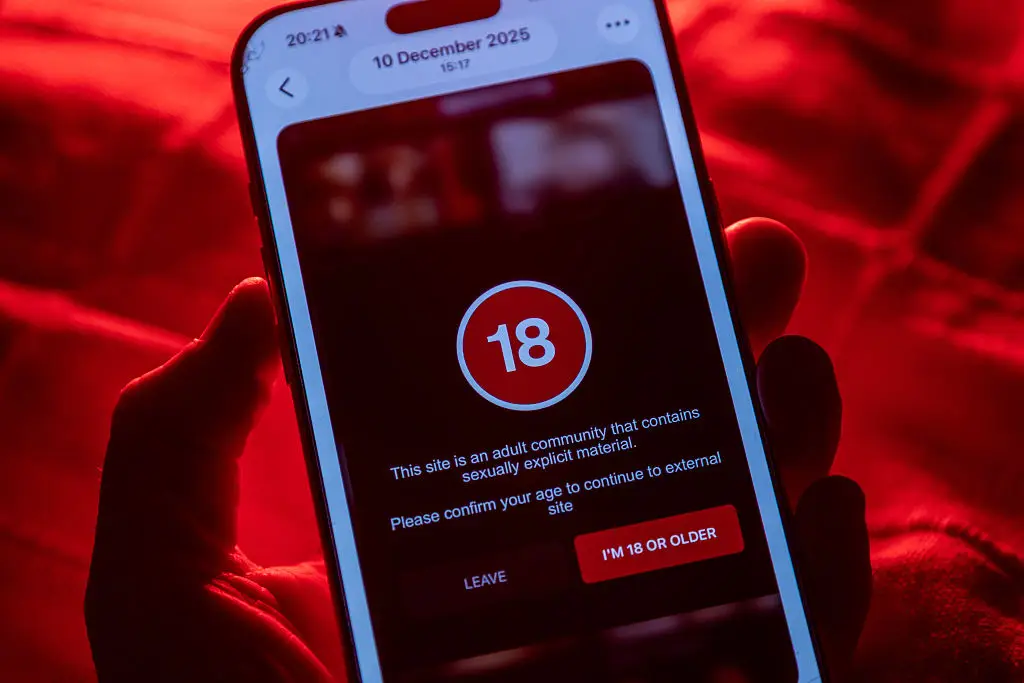
However, one particularly easy loophole was quickly discovered, as the use of virtual private networks (VPNs) allows users to simply select a country where the ban isn't in place, and the browser would then be convinced they were from that country, allowing them to bypass the UK rules.
VPNs were designed as a way of keeping people safe online, as it masks the user's IP address and by creating a secure, encrypted tunnel for internet traffic.
As a result, Liz Kendall, the UK Secretary of State for Science, Innovation and Technology, has suggested that the UK government will now look at VPNs as part of a three-month consultation to explore 'further measures' to improve online safety for children.
Ministers will consider action to address concerns that VPNs are being used to 'get around important protections', and conversations with tech companies, young people, parents and safety organisations are expected between now and April.
Labour MP Andrew Cooper supported the decision and highlighted the 'risk' of children being driven into 'less well-regulated spaces and into virtual private networks', but fellow Labour member Lord Jim Knight pointed out the positives of VPNs.
He acknowledged that VPNs could 'undermine the child safety gains of the Online Safety Act' but warned that age-gating the apps could be 'extremely problematic'.
He said: "My phone uses a VPN, following a personal device cyber consultation offered by this Parliament. VPNs can make us more secure, and we should not rush to deprive children of that safety."
Other major plans could include banning social media for under-16s, preventing companies from harvesting children's data without consent, introducing overnight curfews, and promoting solutions to curb 'excessive doomscrolling'.
Topics: Social Media, Technology
 James Moorhouse