Four contaminated wet wipe brands to avoid after six deaths linked to outbreak

Brits are being urged to avoid certain brands of wet wipes that are contaminated with a deadly bacteria that led to the deaths of six people.
It's a good idea to have a rummage through your first aid kits and medicine cabinets to check you don't have any of these lying around, as inadvertently using them could lead to fatal consequences.
The UK Health Security Agency (UKHSA) and the Medicines and Healthcare products Regulatory Agency (MHRA) both issued fresh warnings about 'an ongoing risk of infection associated with their use' last month.
Officials explained that testing discovered four types of non-sterile wipes were contaminated with a bacteria known as Burkholderia stabilis (B. stabilis).
What is B. stabilis?
This bacteria is found naturally in the environment, including in soil and water - but it can cause quite the commotion if it infiltrates your body, especially if you've got a weakened immune system.
Advert
People undergoing chemotherapy, organ transplant recipients, or those with conditions that affect immune function or cystic fibrosis are also at higher risk of complications if they are exposed to it.
How can a person become infected?
According to the UKHSA, infections typically occur through 'contact with contaminated products on broken or damaged skin', or through 'introduction of bacteria through medical devices such as intravenous lines'.
What are the symptoms B. stabilis?
Symptoms of a Burkholderia stabilis infection include redness, swelling, increased pain, warmth around a wound or break in skin, and pus or other drainage from the area.
In the most serious cases, it can lead to sepsis, which is a life-threatening reaction to an infection.
How many cases have there been of B. stabilis?
There have been 59 confirmed cases of Burkholderia stabilis infections in the UK between June 2018 and February 2026.
Tragically, five of these patients died, along with one probable case, according to a study published in Eurosurveillance.
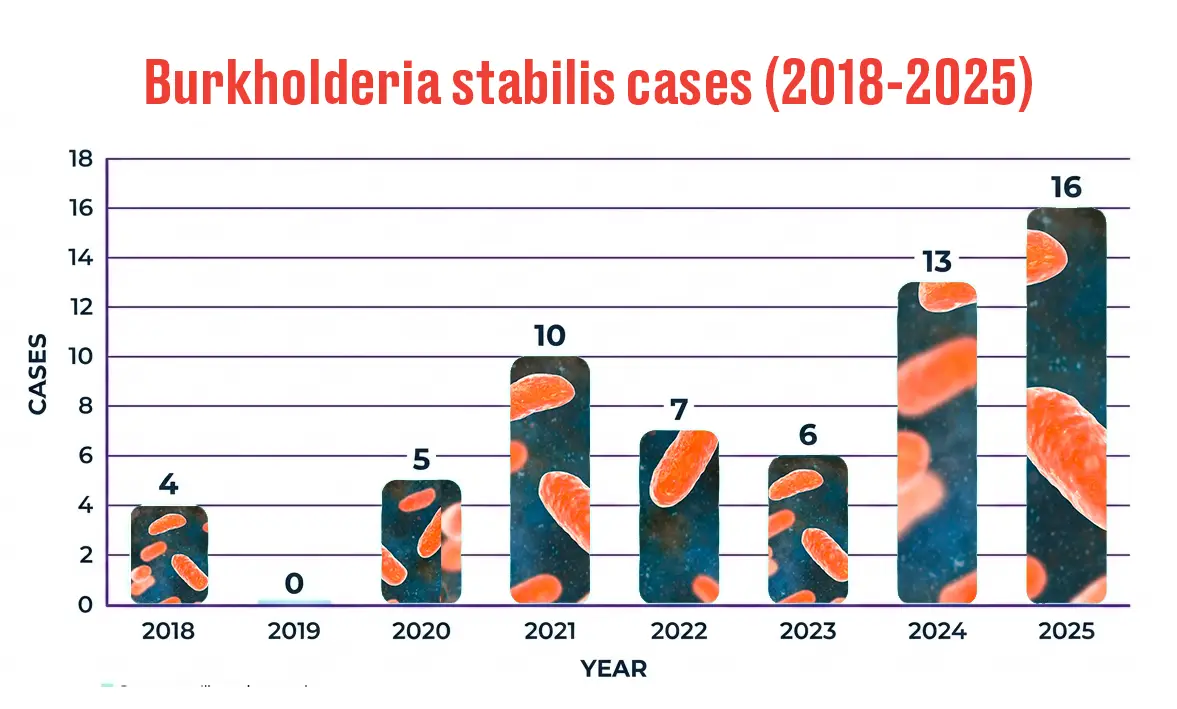
The UKHSA said in February: "There have been 59 confirmed cases in an outbreak of Burkholderia stabilis identified in the United Kingdom from 2018 and up to 3 February 2026, associated with several non-sterile alcohol-free wipe products. These have included some serious infections in addition to the attributable death.
"These products, which may have been used for ‘skin cleansing’ and cleaning in or around wounds have been withdrawn from sale, but may still be found in some first aid kits and in people’s homes."
The brands of wet wipes that have been contaminated
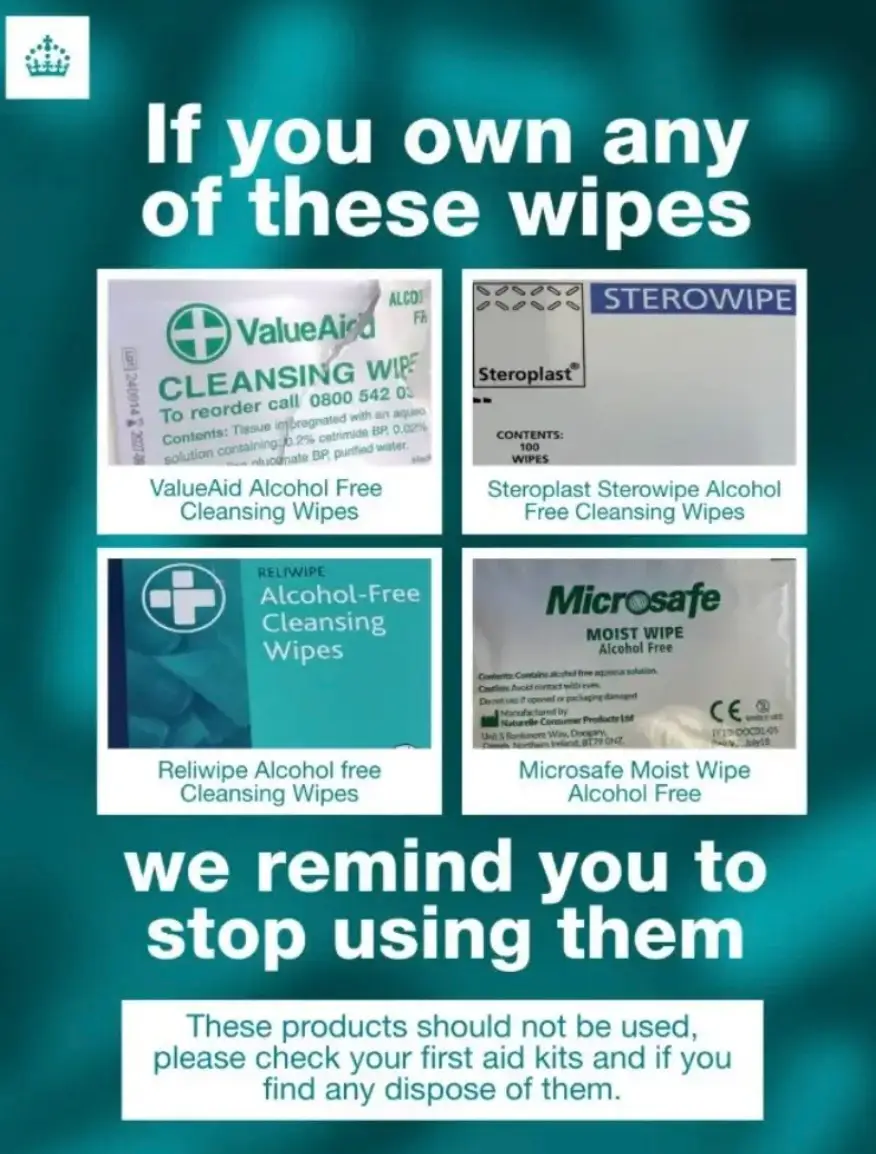
Four brands of non-sterile wet wipes were 'found to be contaminated with Burkholderia stabilis', the UKHSA said.
These are as follows:
- ValueAid Alcohol Free Cleansing Wipes
- Microsafe Moist Wipe Alcohol Free
- Steroplast Sterowipe Alcohol Free Cleansing Wipes
- Reliwipe Alcohol Free Cleansing Wipes
Non-sterile alcohol-free wipes such as these should not be used for first aid purposes anyway, and should not be applied on broken or damaged skin, or used to clean intravenous lines.
If you find any wipes manufactured by those aforementioned brands in your first aid kits or cupboards, the UKHSA say you should stop using them immediately and dispose of them in standard household waste.
These contaminated wipes were withdrawn from sale in July last year after the MHRA issued notices to the sellers.
According to the UKHSA, the products were 'not marketed as general use wet wipes or as baby wipes'.
Although testing revealed that Reliwipe Alcohol Free Cleansing Wipes were tainted with Burkholderia, experts say it was contaminated with another strain that was not related to the outbreak cases.
Officials first sounded the alarm over the wipes in August last year.
Last month, Dr James Elston, a consultant in epidemiology and public health at UKHSA, said: "We are reminding the public not to use, and to dispose of, certain non-sterile alcohol-free wipes which have been linked to an outbreak of Burkholderia stabilis. The overall risk to the public remains very low, and affected products have been withdrawn from sale.
“However, we are continuing to see a small number of cases in vulnerable patients, and we are now aware of one associated death. UKHSA uncovered the link to this outbreak through testing of wipes used by those affected and worked quickly to notify health professionals through a patient safety alert in June 2025. We have provided a further update to reinforce infection prevention and control guidance.
“When treating injuries or cleaning intravenous lines, it is important to follow NHS advice."
Who else is spending their evening reorganising their medicine cabinet and first aid kit, then?
 Olivia Burke