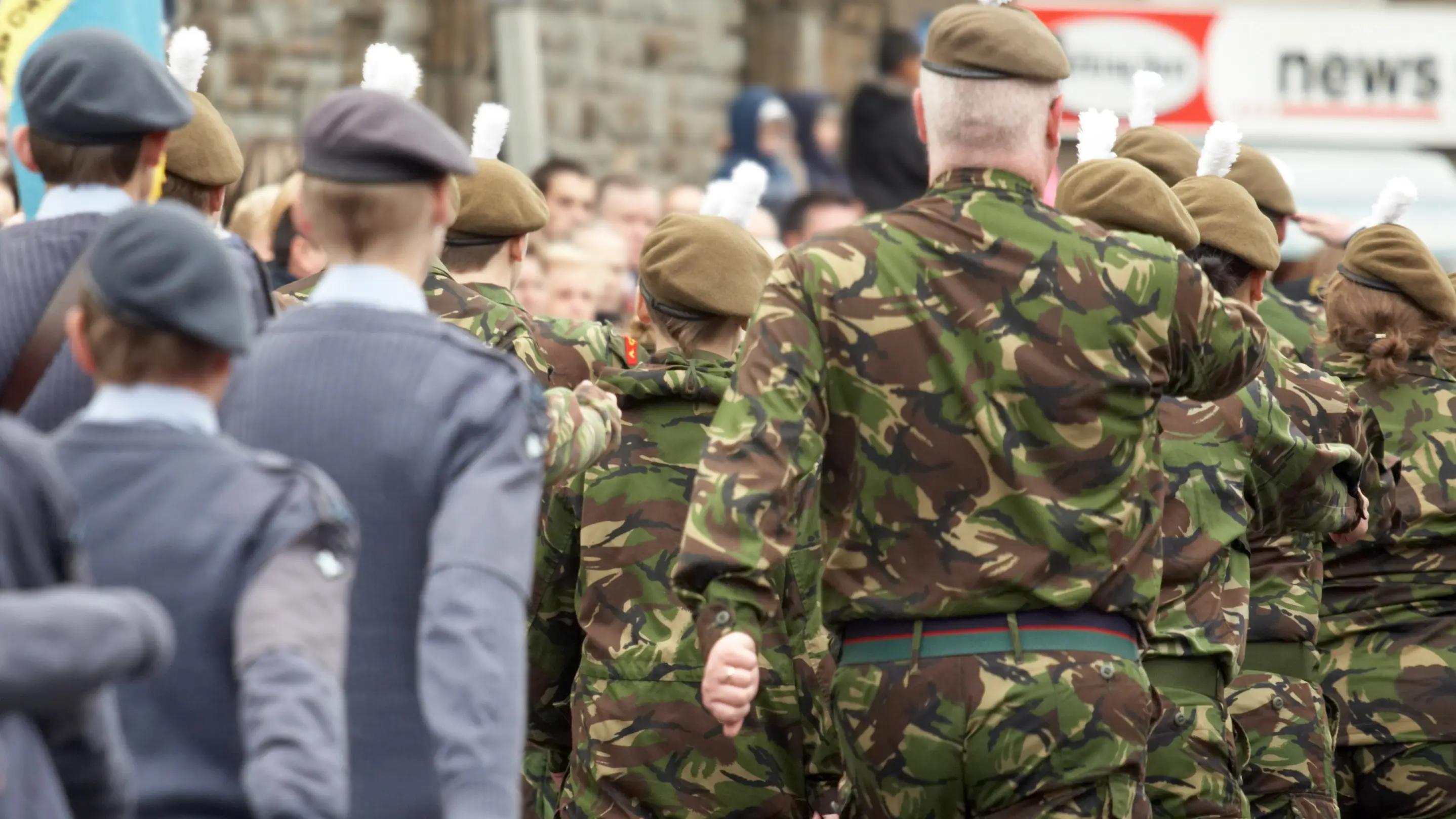
What could happen if you refused conscription as only five specific job types safe from being called on

Let’s be honest, it’s been a frightening few years and global tensions are continuing to increase.
With Russia making chilling warnings to us Brits, the UK government was previously reported to be ‘rapidly developing’ ways to prepare for conflict.
And so, the worries surrounding conscription still loom over us.
Now, the Government has said the country isn’t considering conscription and senior ministers have explicitly ruled out introducing mandatory military service. But it was of course in place during both the first and second World Wars.
Advert
So with fears of global conflict continuing to trouble many of us, it’s not totally irrational to fear the introduction of conscription – some experts have even called for it to be put in place. And therefore, plenty of us are already thinking about what we can do to avoid it and what would happen if, well, we just said no.

What is conscription?
Put simply, conscription is introduced when a military needs people to fight in a war, but there aren't enough volunteers for the army. Essentially, it means that legally, if you are able to fight, you have to.
First introduced in the lead-up to World War II, single men in the UK aged 20 to 22 were required to participate in six months of military training, with 240,000 being called up.
When war was declared by Adolf Hitler, the range was changed, becoming 18 to 41, though exemptions were made for men who were unfit medically.
As for right now, Sir Richard Knighton, Chief of the Defence Staff, has said he 'cannot see conscription returning in the short term' and there were 'no plans' to bring it in, but warned that 'the situation in the world may deteriorate very significantly'.
Which jobs could be exempt from conscription?
Throughout history, jobs which have been able to avoid conscription are usually linked to food and healthcare.
So, those who worked as bakers, farmers, doctors, nurses and engineers were exempt from these measures, as these jobs were vital to supporting war efforts behind the scenes.

What would happen if you refused conscription?
A YouGov poll found that several young people wouldn't want to fight, even if Britain were to be invaded.
In fact, 38 percent of those under 40 said they would refuse to serve if WW3 broke out, with 30 percent even claiming they wouldn't serve in the face of an 'imminent invasion'.
Back during WW2, those who objected to conscription were taken to court, with many given jobs to contribute to the war in other ways.
Essential jobs such as farming, hospital work, civil defence or forestry were given to individuals, while others were given non-combat military roles.
If they chose to refuse all war-related work, they would be thrown in prison, though most contributed to vital services.
Not to fear, though, as former PM Keir Starmer said back in March that 'nobody is talking about conscription' with the proposal not even a thought for his government.
 Joshua Nair