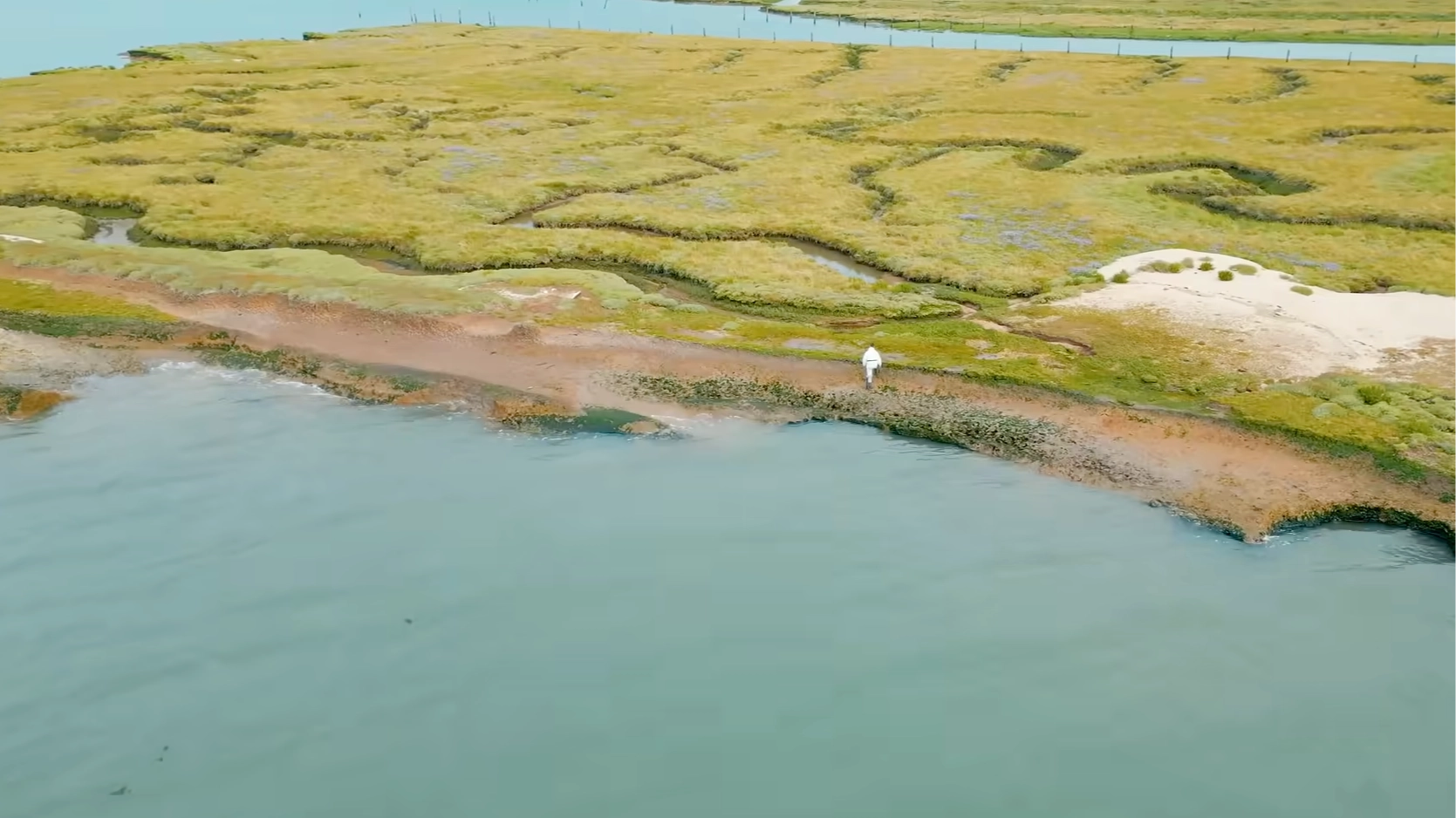
Deadman’s Island: Truth behind UK’s ‘most infected island’

Dead Man's Island may be dubbed the 'world's most infected island' but that isn't true despite all the bodies buried there.
The island, near the town of Queensborough, in Kent, has got an interesting yet haunting past which soared into the UK's public consciousness in 2016 when the reported remains of more than 200 bodies were discovered there, though a survey confirming an official figure could not be found.
These corpses are said to be those of convicts who died on prison hulks, which were decommissioned ships used to house prisoners back in the 18th and 19th centuries.
Conditions on these hulks were seriously tough going with overcrowding and poor sanitation leading to the rampant spread of disease. Naturally, many deaths followed.
Advert
And after the convicts died, their bodies were buried in unmarked graves on the likes of Dead Man's Island.
However, as the years have gone by, erosion and tidal movements have exposed these graves, revealing bones and other remains scattered across the island's muddy surface.
Understandably, a tonne of myths and legends have grown around Dead Man's Island, but here is the truth.
Everything you need to know about Dead Man's Island

Dead Man's Island is a part of a group known as the Medway Islands, named after the Medway River in which's estuary - named the Swale - they reside, in Kent.
Other islands in the group include, Hoo Fort, Fort Darnet, St Mary's Island, Burntwick Island and the Saltmarsh Islands.
While it's is called an island, it is more of a mudflat and is small in size. Understandably, it's completely uninhabited (who would want to live there?) and is typically off limits for ordinary public access.
That's because it's a protected Site of Special Scientific Interest (SSSI) due to the birds that call it home, making it a safe site for our feathered friends to nest and breed.
Dead Man's Island is owned by Natural England, a public body sponsored by the Department for Environment, Food and Rural Affairs.
It was used as a burial ground for men and boys who died in the prison hulks in the late 1700s and 1800s, with erosion going onto expose coffins and disarticulated bones.
The island is also subjected to rising sea levels, with the sea around Medway and Swale rising by more than 10cm since 1990. While the wider area does have a 10-year coastal programme in place, there is no specific scheme to protect Dead Man's Island.
The Environment Agency's current policy for the Medway islands is 'no active intervention', so nature is going to be allowed to take its course, with erosion and flooding to continue.
The policy, which covers 2025-2055 and then 2055-2105, says that: "Where there are no buildings, infrastructure or protected sites at risk and no defences are present. There is no requirement or intention to introduce defences."
While the island has been labelled the 'most infected island' on the planet, it is an unofficial online nickname stemming from the uncovered remains.
In actual fact, the Health and Safety Executive states that infection risk from exhumed remains is usually negligible as the majority microorganisms on corpses die after about six months.
YouTuber visited Dead Man's Island
In 2024, YouTuber Dara Tah visited the island - something that isn't typically allowed - and uploaded a video on his channel, giving the world a glimpse of the eerie grounds covered in bones and quicksand.
"I spent the night on the island full of human skeletons," he explained.

"I have visited Dead Man's Island once before. It is a small marsh island in the south of England that was used as a mass dumping ground for possibly thousands of skeletons infected with the Black Plague but this time we're spending the night.
"I found out about an area on the island called Coffin Bay which is almost always submerged underwater but during this time of year there is a small window to find it and search it.
"Since it's so incredibly tough to access this area it's thought to be packed with historical artefacts that have washed up and been exposed with the coffins.
"Our window was at midnight, meaning we would be stranded on the island for the night as the tide went out and surrounded the island in a deep quicksand."
The area is not officially named 'Coffin Bay', there is no evidence that those who were buried on the island died from the 'Black Plague', and Tah's claims in the video that he saw 500-year-old coffins does not match up to the established timeline of burials from prison hulks, which started around 250 years ago.
 Anish Vij