Donald Trump's power move fails when meeting Chinese president Xi Jinping

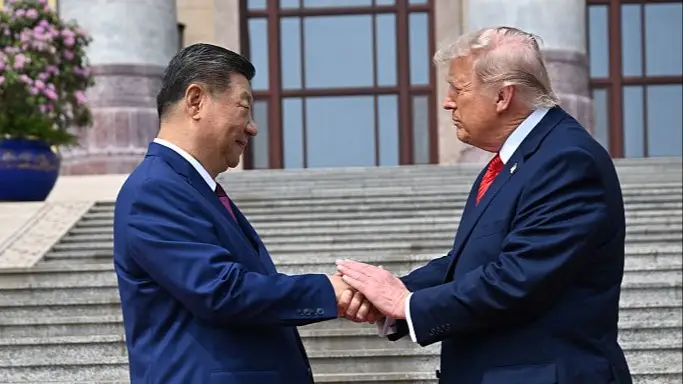
Donald Trump and Chinese president Xi Jinping shared a historic handshake ahead of their talks in Beijing.
The US president was greeted with a fancy arrival ceremony as the world leaders stood shoulder-to-shoulder outside China’s Great Hall of the People on Thursday (14 May).
While overlooking Tiananmen Square, Trump and Xi's handshake marked the seventh face-to-face meeting between the pair since 2017.
Footage shared by the White House, however, showed the pair shaking hands for almost 15 seconds, with Trump placing his hand on top of Xi's.
Advert
People at home were left trying to work out what was going on, as some thought Trump was trying to replicate his power move with King Charles.
Watch below:
'President Xi has the upper hand'
This time, Xi appears to have flipped the power dynamics, according to body language expert Inbaal Honigman, on behalf of Covers.
"President Xi has the upper hand, literally and figuratively, when the two shake hands. His palm is over Trump's palm, and the more dominant person is the one who gets to be on top of the handshake," Honigman told LADbible.
"It is worth noting, that taking the lower position in a handshake, is kind of a Trump special. Across many handshakes over his presidency, Trump is seen proffering his upwards-raised palm, in an intentionally submissive gesture, designed to show his deference to the person whose hand he is shaking.
"He's most recently been seen shaking the King's hand in the same way, and his body language is identical with Russian leader Putin, Israeli Prime Minister Netanyahu, and his former advisor Elon Musk. (Notable exception is French President Macron, to whom Trump refuses to capitulate and take the lower handshake position.)"
It's 'the Trump way'
During the meetup, Trump called Xi 'a great leader' and said it was 'an honour to be your friend'.
Honigman says the intention seems genuine based on the handshake, while the world leaders try to avoid conflict over Taiwan.
China considers Taiwan part of its territory and has said it would use force if Taiwan formally declared independence or moved permanently out of Beijing’s reach.
America, meanwhile, follows a 'One China' policy, but also supports Taiwan militarily and politically under the Taiwan Relations Act.
"As the two shake hands, Trump pats president Xi's hand reassuringly," Honigman explains.
"This is a friendly gesture, which creates a human connection between them, more personal and less professional, elevating the handshake from a 'hello' to a 'how are you?'.
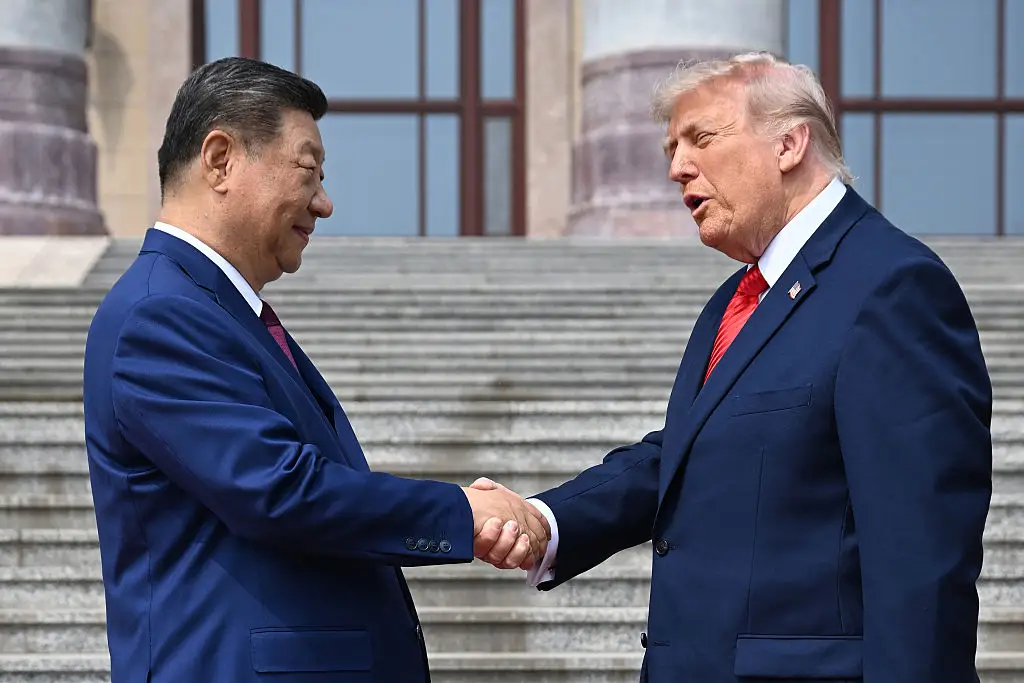
"Again, this is often the Trump way. And as the two leaders chat and shake, President Trump does the hand-tap again, and then again.
"He is keen to form a bond with President Xi, as it would appear that the American has a bit of a man-crush on his Chinese counterpart."
'More than a handshake'
"Donald Trump and Xi Jinping's warm, lengthy handshake is truly the stuff of legends. It lasts forever, and during the handshake the two participants chat, smile, mirror each other's body language, and maintain eye contact," the expert added.
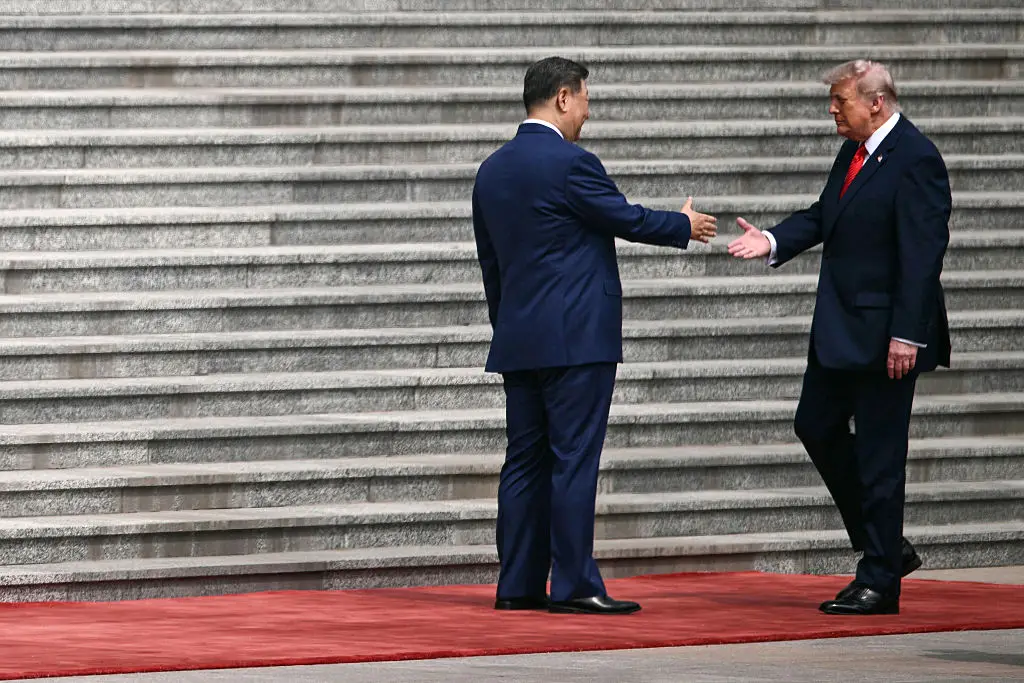
"This is more than a handshake, it is a hand-hug. Even before the American President has reached him, President Xi raises his hand high in readiness. This sends Trump the message that his Chinese counterpart is ready to welcome him, as the hand is extended well in advance. This move is a show of respect as well as friendship, President Xi is indicating how keen he is to welcome President Trump.
"However the hand gesture is not the only mark of happiness present, as President Xi also wears the facial expression of pride and delight as he welcomes Donald Trump.
"As Trump approaches him, President Xi's whole chin is raised while smiling, which is a move of pride. It also cements the Chinese president's dominance, and along with the direct eye contact, it represents President Xi's power."
Topics: Donald Trump, China, US News, Politics
 Anish Vij