The moment Elon Musk lands gaff over Trump renaming AI 'super-intelligence'

US President Donald Trump has attempted to rebrand AI as Super Intelligence but if Elon Musk’s recent slip-up is anything to go by then it might not catch on.
On Tuesday (29 September), the POTUS signed an executive order declaring that all US executive branch departments and agencies use the term ‘super intelligence’ rather than the more familiar Artificial Intelligence.
The executive order says that the new moniker is a better descriptor for the technology claiming that it can do ‘much more than imitate or automate discrete aspects of human intelligence’.
The order states: "The Order directs all departments and agencies to use the terms ‘Super Intelligence’ and ‘SI’ in official correspondence, public communications, policy documents, and non-statutory documents within the executive branch and to no longer acknowledge the terms ‘Artificial Intelligence’ or ‘AI’."
Advert
It continues: “As these capabilities continue to improve, they increasingly represent not merely artificial intelligence, but a new era of Super Intelligence,” the order reads.
“The terminology used by the Federal Government should reflect the transformative capabilities of these technologies and the limitless opportunities they create for the American people.”
Speaking to reporters, Trump said: “It’s not artificial, we all agree on that.”
However, it seems as though the name might not catch on as the president hoped with SpaceXAI owner Musk managed to forget it almost immediately.
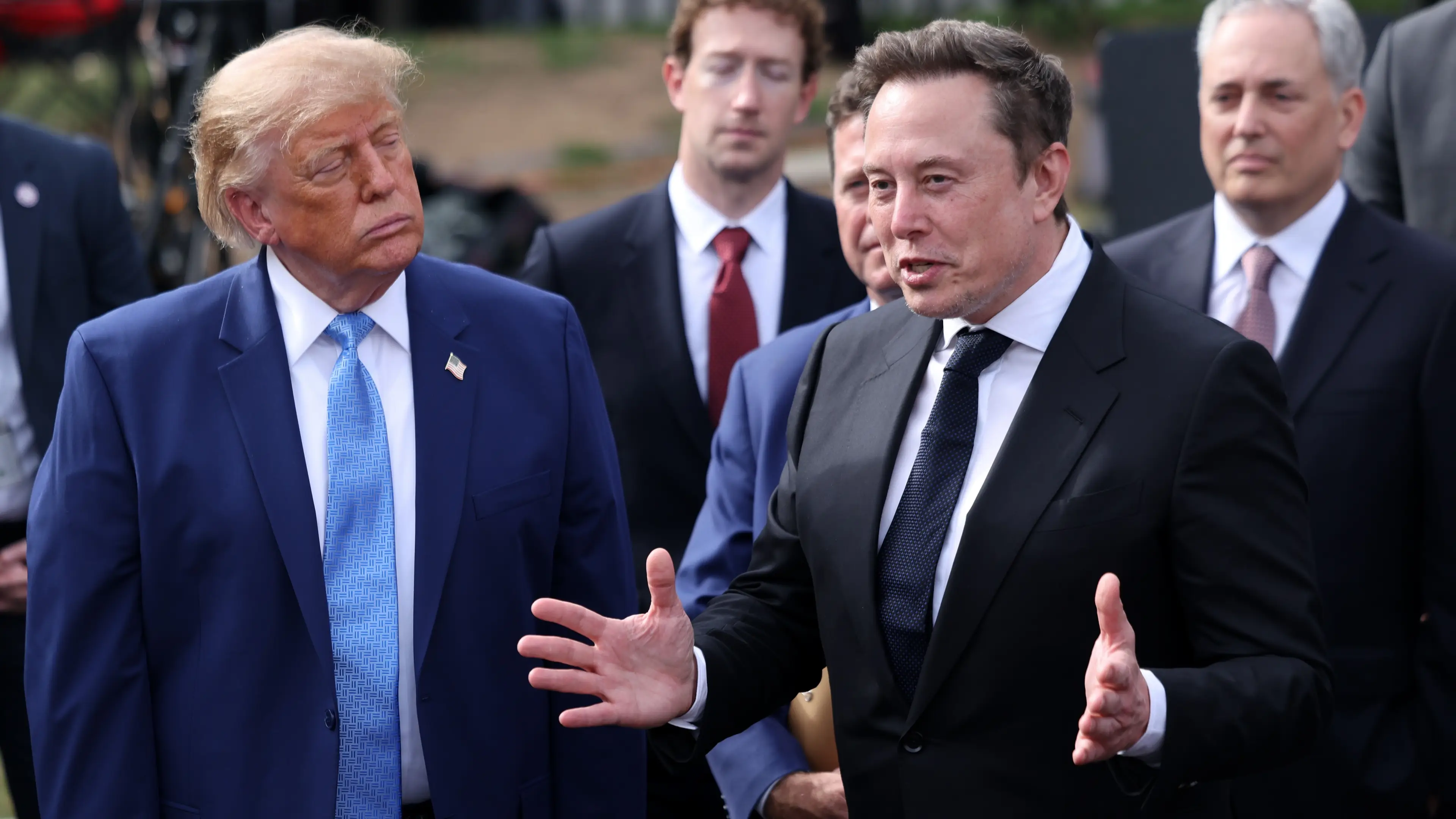
Standing alongside the president, Musk said: “I think it is worth highlighting the positive benefits of AI…” but then realised his mistake and added: “SI… pardon me. Super Intelligence.”
After he made the hasty correction, Trump patted his arm and said: “Thank you.” before both men let out a chuckle at the potentially awkward gaff.
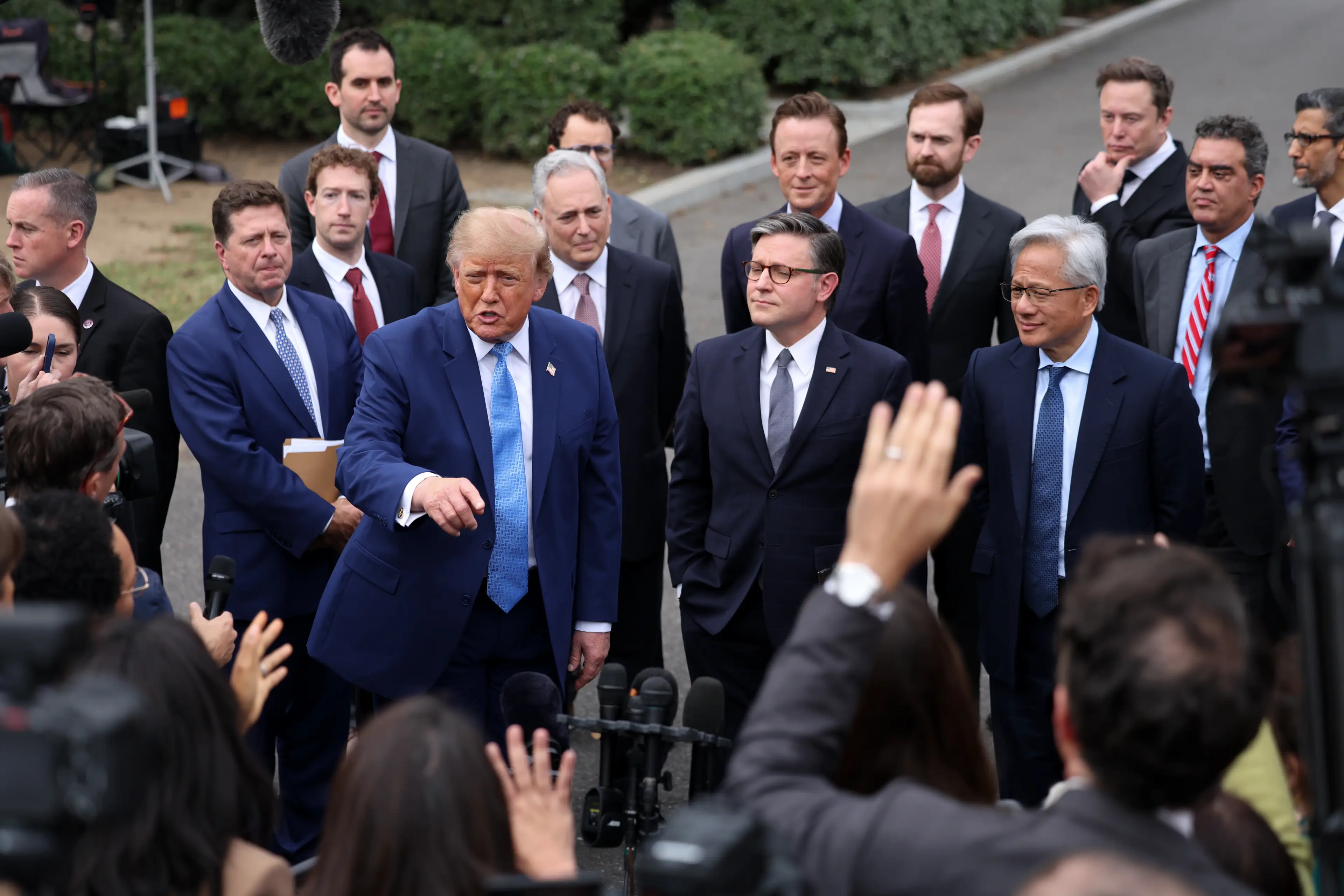
Trump’s rebrand of the AI name comes as he joined the leaders of several major AI companies - including Musk, Anthropic CEO Dario Amodei, and president of OpenAI Greg Brockman - to sign a voluntary accord that will include internal and external reviews of the technology.
The one-page document, titled White House Accord on Super Intelligence: Joint Commitment on Frontier Responsibilities, was signed by six of the CEOs.
“It’s almost like a constitution in a way,” Trump said.
“The biggest people in the world signed that, and I signed it as president, and it really is a form of protection… I think it’s morally binding.”
He also told reporters that there had been widespread agreement on ‘self-regulation’ by the AI developers.
He said: “I think I’m seeing tremendous self-policing.
“And they understand that they have to self-police.”
Earlier on Tuesday, Trump promised that the US government would not limit the development of AI, nor would he support calls for ‘guardrails’ or other restrictions.
“I will never stifle the growth of a technology that will be bigger than the industrial revolution,” Trump said at the unveiling of an AI chatbot, America.gov, intended to help Americans navigate government services.
“We can’t stifle it, and we’re leading by a lot.”
On the same day as the meeting, OpenAI chief Sam Altman said in a television interview that the company is increasingly focused on safety. The day before, his company halted the rollout of a new model over safety concerns.
“We are pacing our progress, which includes sometimes not training a model,” he said on CNBC. “We have to do these in a way where we can make very confident safety cases and claims, so that people don’t have a bunch of anxiety.”
Topics: US News, Donald Trump, Elon Musk, AI
 Claire Reid