
Nolan Wells cause of death finally confirmed as drowning

The cause of death of 18-year-old Nolan Wells has now been confirmed by a grand jury in the US - but his family say this has left them 'with more questions than answers'.
The teenager's body was tragically found off the coast of Mississippi on 6 July, two days after he disappeared during a boat trip with a group of friends.
His relatives raised questions about the circumstances surrounding his passing, with civil rights attorney Ben Crump insisting that Nolan 'knew how to swim' and that the details of the case were 'not adding up'.
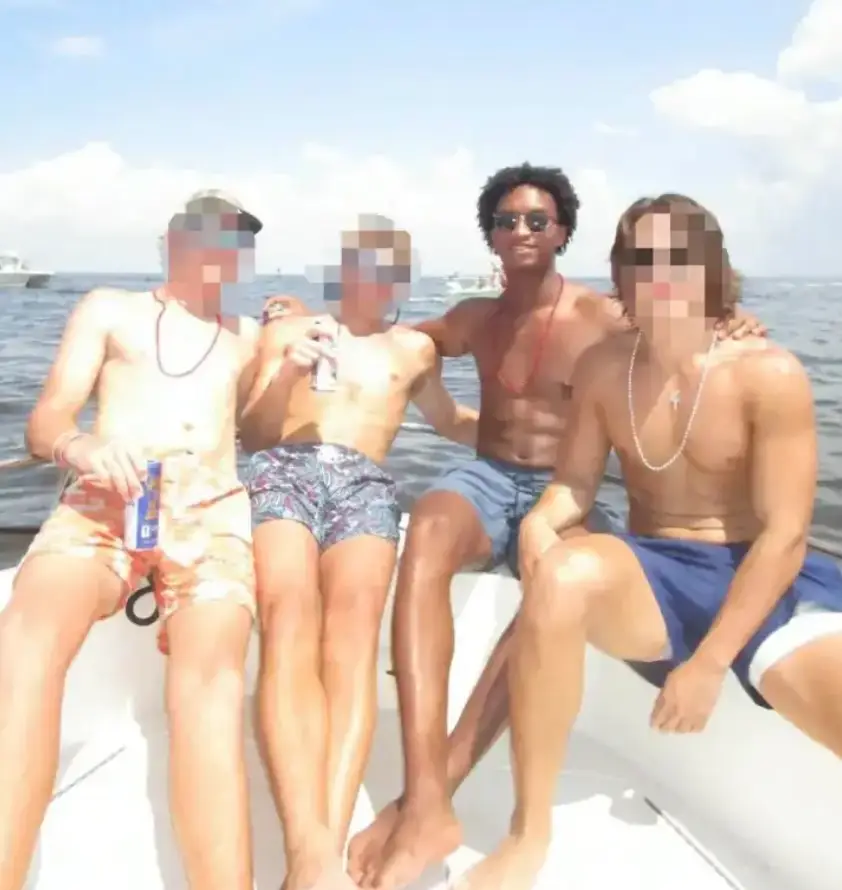
Nolan headed on a boat trip to Horn Island with a group of friends to attend a 300-person Fourth of July party earlier this year, but he never returned.
Advert
He was found 'face down' and 'fully clothed' in the water near the northwest end of Horn Island on 6 July.
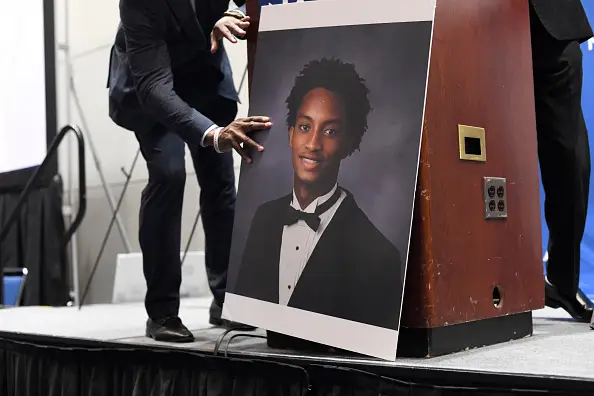
His loved ones conducted an independent autopsy after his body was returned to them without his throat and lungs following an initial post mortem that was carried out by authorities.
Detailing some of the preliminary findings in July, the family's lawyer Crump told a press conference that Dr Roger Mitchell could not rule out foul play, despite not finding any fractures or deep tissue injuries on his body.
He then called for the case to be presented before a grand jury, who would also be tasked with determining whether any criminal charges were warranted in this case.
The circumstances surrounding the college football player's death prompted a lot of speculation both in the community and online.
It was suggested that Nolan's race could have been an important element in the case, while Crump also queried why Nolan did not have his phone with him.

A report by the Jackson County Grand Jury, which was made up of 23 people, was finally released on Monday (21 September).
The 13 men and ten women - consisting of '12 Caucasians, five African Americans, one Asian, two Hispanics, two Native Americans and another who described themselves as 'other' - unanimously declined to indict anyone in connection with Nolan's death, while concluding that they believe he drowned.
The report states that the 'position of, condition of, time of discovery, and location' of the teen's body was 'consistent with drowning'.
"Both the State of Mississippi Chief Medical Examiner and Dr [name redacted] opined that the cause and manner of Mr. Wells' death is undetermined and that drowning is a diagnosis of exclusion," it said.
The members of the grand jury noted that they understood that forensic experts did not rule out accidental drowning as a cause of death.
In a video statement, Jackson County District Attorney Angel Myers McIlrath said there was 'absolutely no evidence' to support the allegations that Wells' disappearance and death were racially motivated.
The report also said: "The grand jury finds no credible evidence to support the public allegations that any persons who rode to or from Horn Island on July 4, 2026 on the Triton, the Palm Beach, or the Tideline engaged in any criminal conduct related to the death of Mr. Wells."
Crump condemned the grand jury's report and claimed it was an attempt to 'close the chapter on Nolan Wells’ death without getting to the truth'.
Wells family response
He told CNN that the ruling 'leaves us with more questions than answers', citing unexplained bruising on the teenager's head and body.
The grand jury's report referenced bruising on the back of Nolan's head - which was described as 'not a fatal injury' - although the cause of this was not determined.
"The cause of those injuries and their contribution to Nolan’s death remain unexplained," Crump said. "Nolan’s family will not rest until we know what happened to him, and neither will we."
He called for the state’s medical examiner’s full autopsy report to be released and the investigation into Nolan's death to remain open.
In the report, the grand jury stated that if evidence emerges that 'suggests Mr Wells’ death was non-accidental', it 'should be represented to the Jackson County Grand Jury for further consideration'.
In Mississippi, there is no statue of limitations on homicide cases.
 Olivia Burke