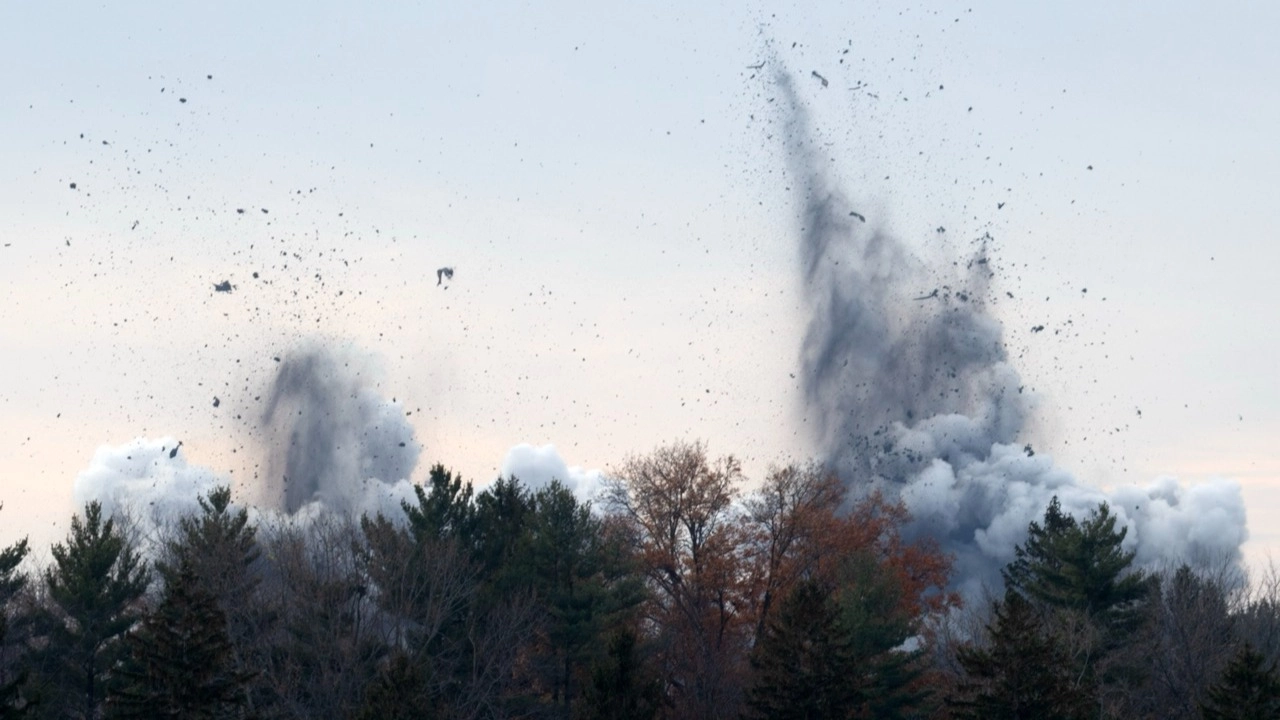
US Army blows up 4,500kg of chemical explosives as toxic dust cloud feared over parts of US

The US Army has detonated nearly five tons of toxic explosives in Iowa, despite public health and safety concerns.
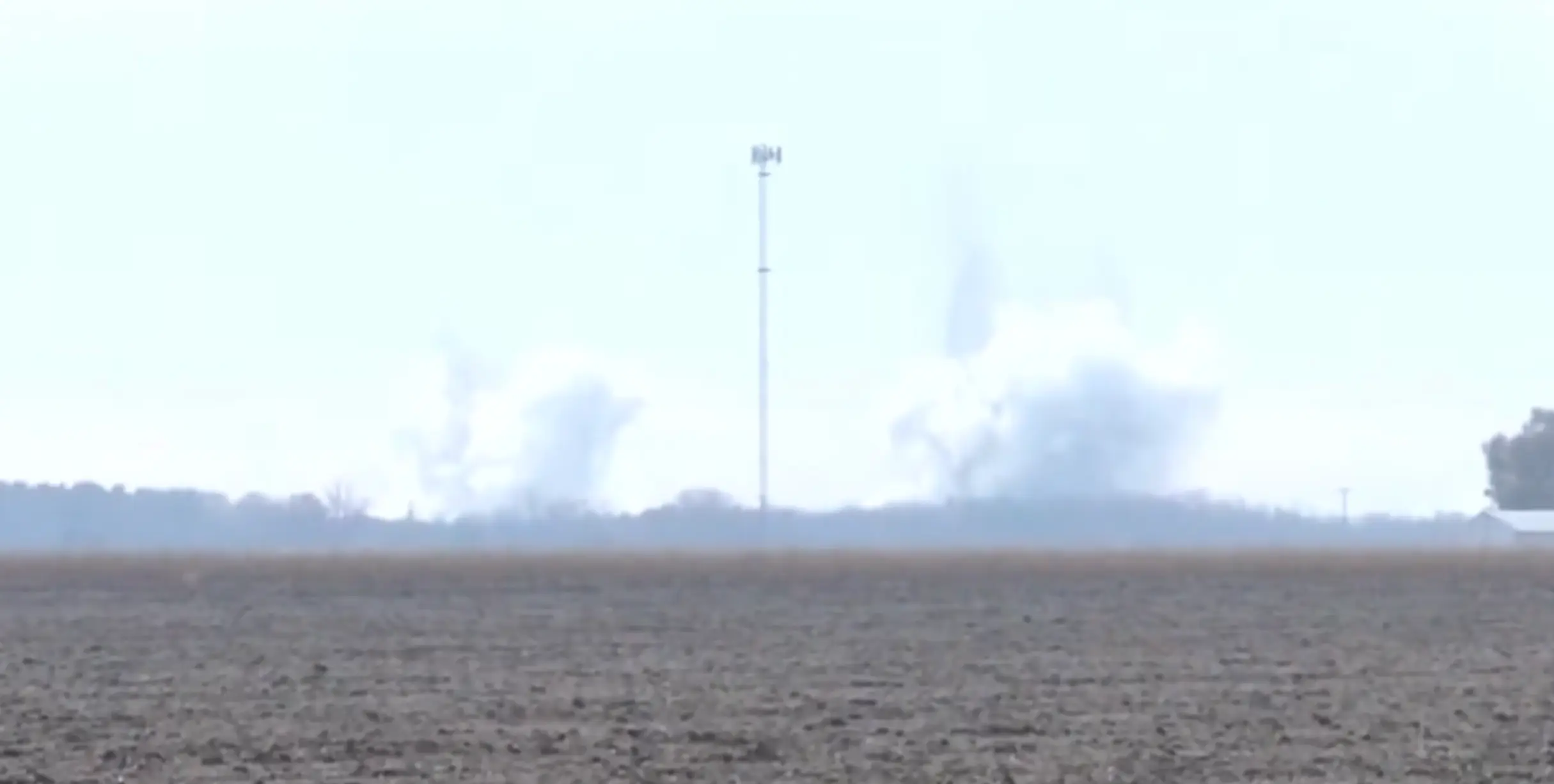
The controlled explosion took place at around 10am local time (3pm GMT) on Wednesday (25 November) at the Iowa Army Ammunition Plant in Middletown, Iowa.
A routine safety inspection identified severe degradation and crystallisation affecting 68 barrels containing more than 9,700 pounds (4.54 metric tonnes) of lead azide, a highly sensitive explosive used in military ammunition.
Military officials said the deteriorating condition of the material made transporting or chemically neutralising the explosives too dangerous, leaving an on-site detonation as the only viable option.
Advert
“The barrels of lead azide have deteriorated rapidly over the past eight months,” said Colonel Aaron Teller, commander of the 71st Explosive Ordnance Disposal group.
US President Donald Trump backed the controlled detonation on Monday but initially ordered the military to delay the operation until a federal appeals court and Iowa's incoming governor, Rob Sand, had given their approval.
Writing on Truth Social, Trump said the controlled explosion was the safer option and warned of potentially devastating consequences if the unstable explosives were left in storage.
“I feel the proper course is to get rid of this longterm problem,” he said on Truth Social.
“Inaction is no longer an option,” added Major General Eric Shirley, commanding general of US Army Sustainment Command.
However, the operation has sparked widespread concern over the potential release of toxic lead particles into the atmosphere.
Lead is a powerful neurotoxin that can cause permanent damage to the brain and nervous system, with young children and pregnant women particularly vulnerable to exposure.
Forecasts published ahead of the explosion suggested airborne particles could travel up to 100 miles southwest of the facility, potentially reaching communities in northern Missouri.
"Lead azide is a very sensitive primary explosive. It's very sensitive to heat, shock, and friction," said Robert Cekada, the Bureau of Alcohol, Tobacco, Firearms & Explosives (ATF) director.
"Everyone that we've spoken to, through their experience, has determined that this is the only safe path forward for not only the surrounding community of Middletown and the surrounding areas, but also the personnel that are tasked with mitigating this threat here on base. Lead azide is a very, very dangerous explosive, and what we're concerned with now, the fluctuation in temperatures is just as dangerous as the freezing temperatures. It's just a matter of time when we have an uncontrolled detonation."
 Anish Vij