Expert explains why your house feels so cold even if the heating is set to 20 degrees

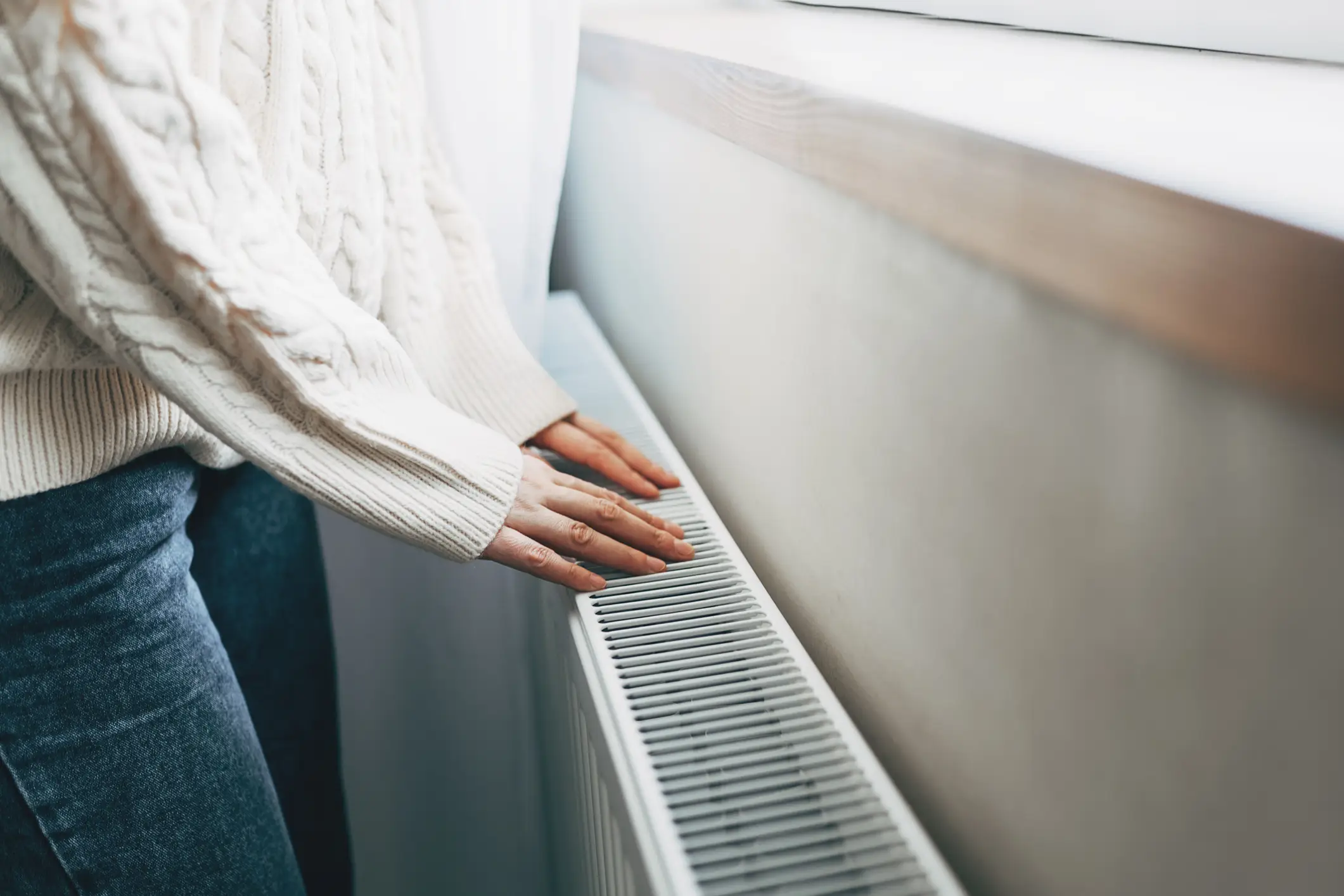
Although the cost of energy and heating keeps going up, it's that time of year when you can't really avoid putting the radiator on.
As overnight temperatures are expected to dip below 0°C in December, British Gas reckons most indoor spaces should be kept between 18°C and 20°C, but how come is still feels cold?
Kevin Pennington, owner of Lancashire Air Conditioning, tells LADbible that the 'main reason a house can still feel freezing cold when the thermostat says 20 degrees comes down to how thermostats actually work'.
"A thermostat only measures the temperature of the air in one spot, and in the UK that is unfortunately usually in the hallway," Pennington, who has installed more than 1,000 air conditioning units in British homes and is a member of the Institute of Refrigeration, said.
Advert
He added: “It does not measure the temperature of the actual surfaces in the room you are sitting in. In building physics we look at something called radiant heat loss. If you are sitting in a lounge with cold brick walls, uninsulated floors, or big cold glass windows, your body actually radiates its own heat straight towards those cold surfaces.”
Draughts and humidity also play a part during the colder months, when households tend to keep windows closed and dry clothes indoors.
Pennington said: “You can have the heating blasting, but if cold air is sneaking in through letterboxes, keyholes, under doors, or down an unused chimney, that moving air creates a wind-chill effect on your skin.”
“Because modern houses are sealed up so tightly to keep heat in, moisture from cooking, showering, and especially drying wet clothes on radiators gets trapped indoors. Damp, clammy air feels much colder against your skin than dry air does, and it takes a lot more energy to heat up.”
If you want to feel more comfortable at home without forking even more money out, Pennington recommends tackling cold surfaces, cleaning radiators and preventing heat escaping through windows.

He advised: “Closing heavy thermal curtains as soon as it gets dark stops you losing body heat to the freezing cold glass, just make sure you tuck them behind the radiator or rest them on the windowsill so you aren’t trapping the heat against the window.”
He also highlighted inexpensive draught-proofing measures and radiator reflector foil as potential improvements.
Pennington said: “Draught-proofing strips for the loft hatch, keyhole covers, and a chimney balloon for an open fireplace all cost next to nothing and stop that cold air movement straight away.”
For longer-term savings, he recommends efficient air-to-air heat pumps, which can warm individual rooms rather than an entire property.
He added: “I use air conditioning to heat the rooms I spend my time in, which lets me leave the central heating off and saves a fortune on gas.”
 Anish Vij