Interrogation expert Chase Hughes explains how to tell if someone is lying to you

A former US Navy chief who authors manuals on human behaviour has revealed how to really catch a liar.
But finding out someone isn't telling the truth can be tricky, and Chase Hughes says we’re often looking for the wrong signs.
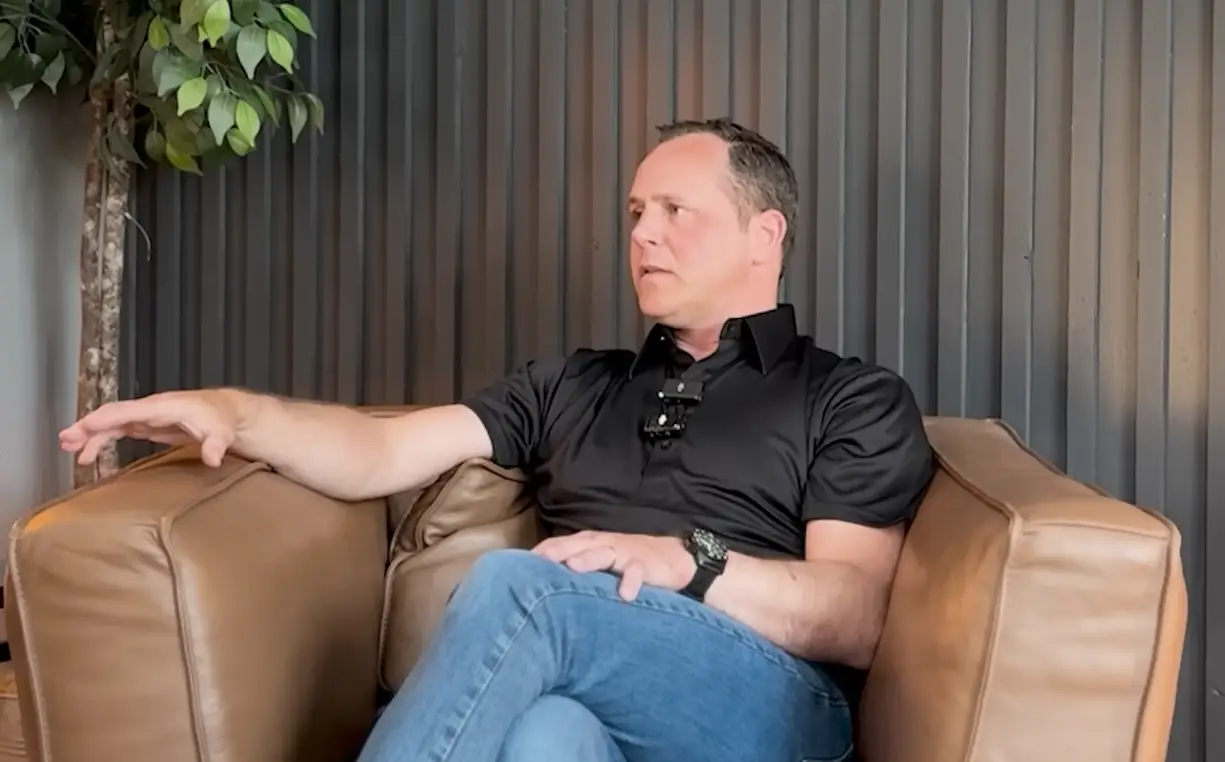
Speaking to Morgan Nelson on the Dream Out Loud podcast, the educator explained that instead of memorising individual signs of lying, try to focus on changes in a person's normal behaviour.
"What's really important is being good at detecting change," Hughes said during the 2024 episode.
Advert
"I'm looking for changes to their behaviour. Are they answering questions the same way that they were a few minutes ago?
"Are their eyes moving the same way? Are their fingers doing the same thing? Are they breathing at the same speed?
"Looking for changes is more important than knowing what behaviors to look for.
"If I see a big pile of changes, I can be almost certain that this person is being deceptive without even knowing what I'm really seeing. Getting good at changes is the first and most important thing."
On the importance of context and body language, Hughes points out that the person crossing their arms might just be feeling the cold, rather than it being a sign of defensiveness.
"One behaviour never indicates deception by itself. It never should," the public speaker, who now works as a communication trainer, adds. “You should always see a cluster of behaviour.
"Somebody scratched their nose or they touched their face, they're lying, or they looked away for a minute, they're lying. One behaviour never indicates deception by itself."
When it comes to asking the right questions, being particularly vague can actually work to your advantage.
"It's not just about behaviour. It's about, can you ask good questions?" he said.
"One of the best questions in the world is called a bait question. The only time that you will get nervous is if you were there. The more vague, the better it is."
He explained that adults react 'the same way to that question because it's emotional'.
"If I did it, I have images of it happening," Hughes said.
"I'm visually playing it out in my head. If I'm focusing on it, I'm going to feel it.
"Now if you're raising the stakes... I'm visualising if I get caught. It's gonna make me right — I'm freaking out."
Topics: Lifestyle
 Anish Vij