
Experts discover sign of ‘secret’ entrance to Giza pyramid following scan

A team of researchers scanning the pyramids of Giza believe they may have found a 'secret' second entrance in one of the structures.
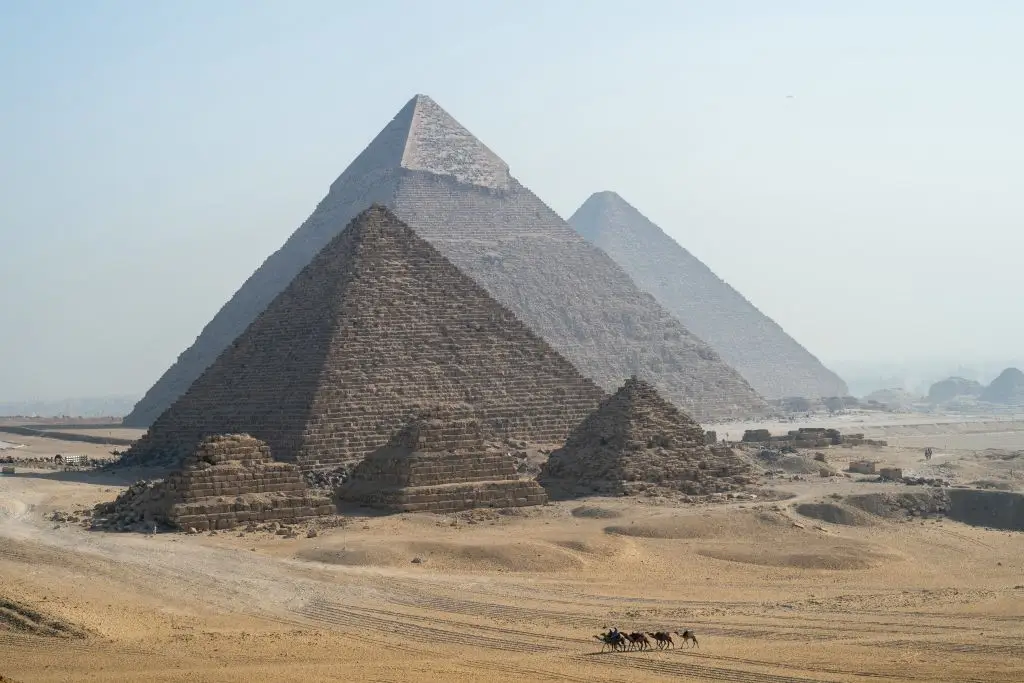
Built between 2700 and 2200 BC, the Great Pyramids of Giza remain a symbol of humanity's enduring fascination with ancient history.
And over 4000 years later, it would seem there is still plenty more to learn about these fascinating structures.
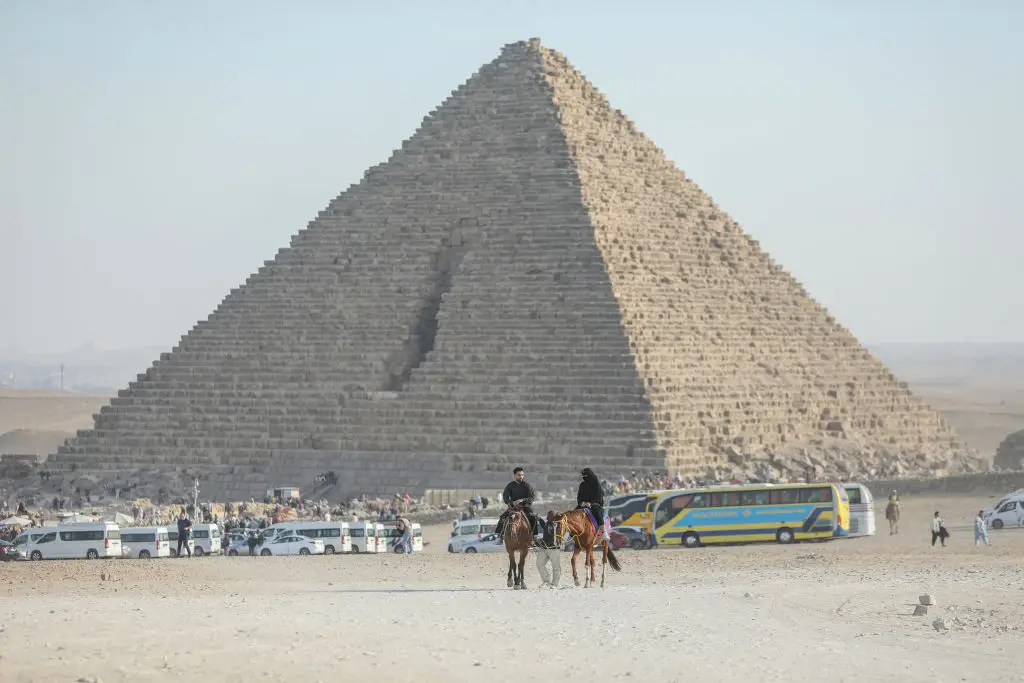
According to a study undertaken by Egypt's Cairo University and the Technical University of Munich, researchers who recently took part in the ScanPyramids project, a second previously unknown entrance may have been located in the Pyramid of Menkaure.
Advert
Completed in the 26th century BC, the pyramid is the smallest of the three main structures at the Giza site and served as a tomb to Pharaoh Menkaure, who ruled during the Old Kingdom of Egypt.
The only known entrance to the pyramid is found on the structure's northern face; however, researchers have long believed there may be another way inside, pointing to a series of polished granite blocks on the eastern side.
It now appears that this hunch has been proven correct, with the results of high-tech radars and ultrasound scanners unveiling two 'air-filled' voids that lie underneath the eastern facade.
One of the cavities measures 3.2 feet high and 4.9 feet wide, while the other is 3 feet tall and 2.3 feet wide, which isn't huge but certainly big enough for a person to climb through.
READ MORE:
ARCHAEOLOGIST'S DISCOVERY UNDERNEATH PYRAMIDS CHANGES EVERYTHING WE KNOW
Both of these chambers lie between 4.6 and 3.7ft underneath the surface.
Further testing is needed to confirm the existence of a hidden passage definitively; however, the discoveries of the voids and the polished stones on the outside have certainly piqued researchers' interest.
This isn't the first time the methods have been used to uncover hidden secrets of the pyramids; ScanPyramids previously uncovered a hidden corridor inside the Pyramid of Khufu in 2023.
After the significant discovery of an unknown chamber in the Pyramid of Khufu in 2023, ScanPyramids has once again succeeded in making an important discovery in Giza," said Technical University of Munich professor Christian Große of the project, which has been published in the NDT&E International journal.
"The test methodology developed by us allows very precise conclusions to be drawn about the condition of the interior of the pyramid without damaging the valuable structure," he continued.
"The hypothesis of a further input is very plausible and our discoveries bring us a big step closer to confirming it."
It just goes to show that there is plenty more to uncover about the Ancient Egyptians and everything they left behind.
Topics: History, World News, Science
 Brenna Cooper