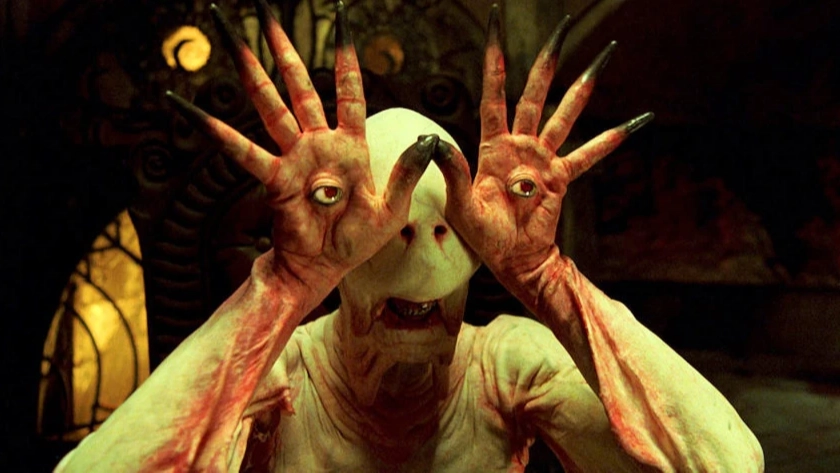
Pan’s Labyrinth’s terrifying Pale Man has a disturbing backstory people can’t get over

When it comes to villain's from horror movies, there are few that are as traumatising as the Pale Man from Pan's Labyrinth.
Although many of us who want to sleep soundly at night manage to steer clear of the particularly scary pieces of cinema like Sinister, there are always some disturbing characters who sneak through in more family-friendly films and shows.
There's a disturbing truth about the child catcher from Chitty Chitty Bang Bang, who scarred various generations of children, while there's always some aliens or monsters from Doctor Who who will have kept our younger selves up at night. If you're anything like me, you'll still keep your eyes wide open every time you pass by an angel statue.
One of the worst for many is undoubtedly the Pale Man, who was depicted by actor and contortionist Doug Jones in Guillermo del Toro's 2006 fantasy war film.
Advert
During his fateful meeting with Ofelia, we see the villain emerge from his dinner table before placing his eyes in his hands, creating his iconic look.
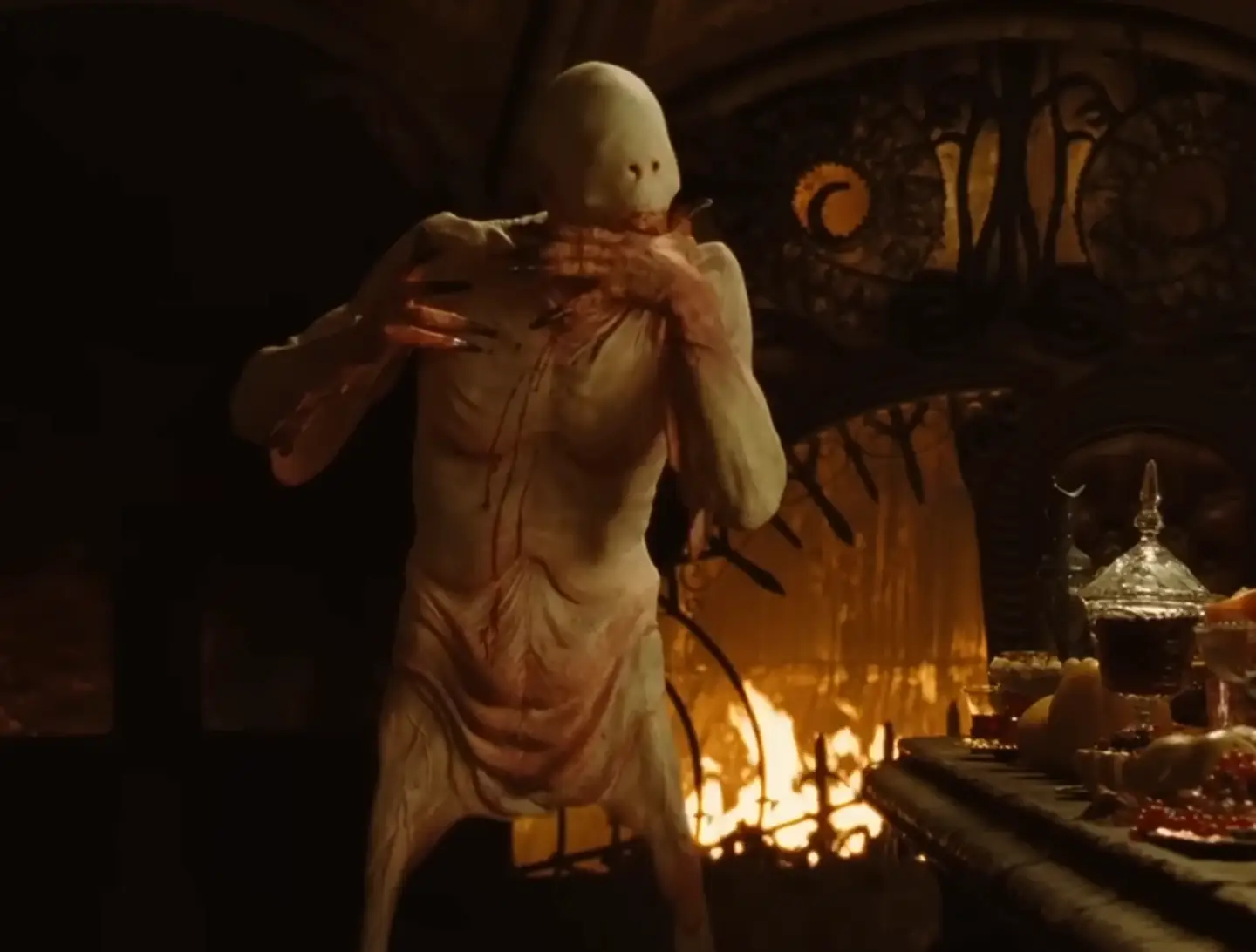
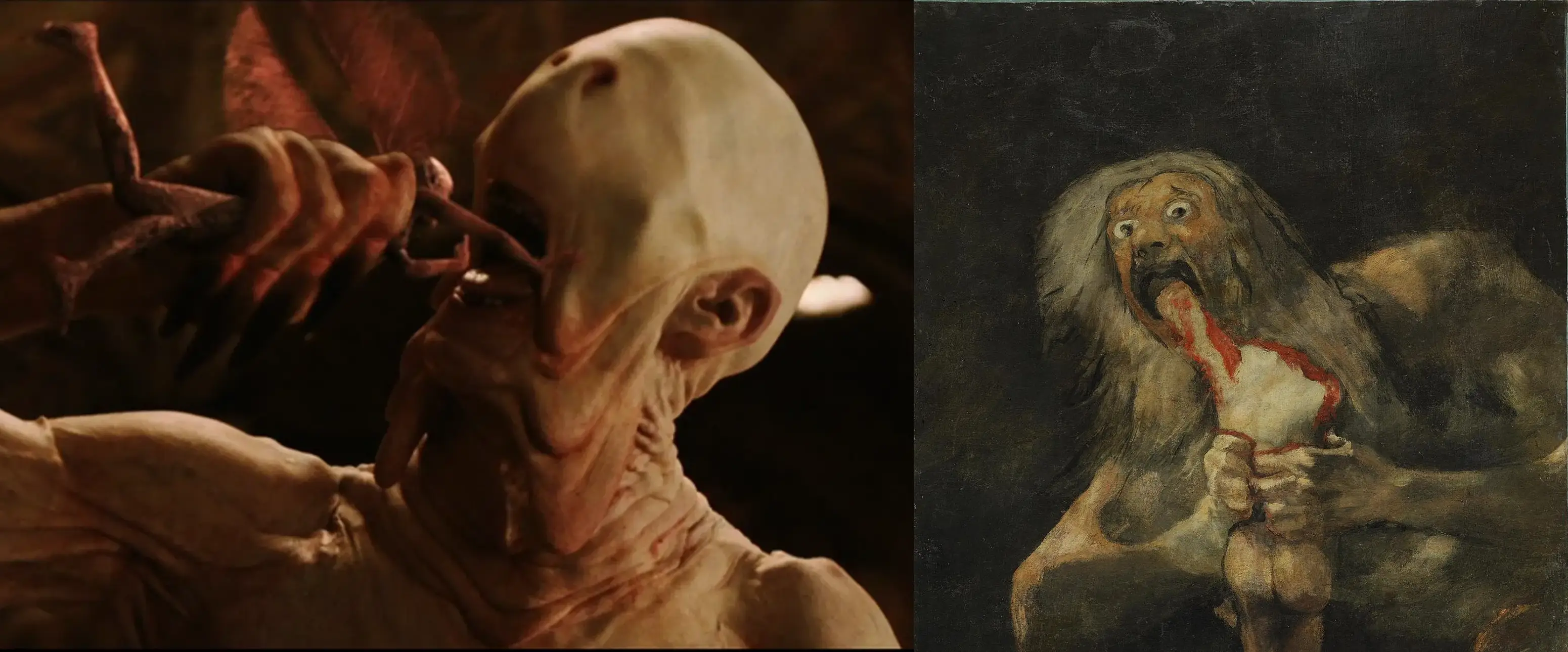
He then brutally eats two of the fairies which are travelling with Ofelia, showing that his physical disadvantage doesn't affect his reactions too much, and del Toro later confirmed that the terrifying moment had a particular inspiration.
For a Guardian article back in 2006, the Mexican director wrote: "Goya was an obvious reference, specifically with regards to the character of the Pale Man. There is a scene in which the Pale Man bites the heads off the fairies. That comes straight from Goya's painting of Saturn devouring his son."
Saturn is the Roman depiction of Kronos, the king of the titans, who devoured his own children in an attempt to prevent a prophecy which warned that his children would overthrow him.
However, when his wife Rhea gave birth to Zeus, she instead gave Kronos a rock to eat. When Zeus grew older, he overthrew his father and forced him to throw up his godly children, including Poseidon, Hades, Demeter, Hestia and Hera.
Mythology is often used as an inspiration in films, just look at Christopher Nolan's The Odyssey, which was arguably the biggest film of 2026, but few will have expected the Pale Man to have been derived from Goya's painting depicting such a crucial part of Greek and Roman mythology. Of course, the concept of a labyrinth is also taken from mythology, since it was Daedalus' creation as a prison for the minotaur.
Another horrifying realisation from the film is that Ofelia actually drops a piece of her magical chalk, which gives the villain a potential exit into the real world.
Speaking more about his beloved dark fantasy, del Toro said: "I think that all fairytales have a grim setting. Hansel and Gretel is essentially about a famished family who send their children into the woods to die. Cinderella is about a child being tortured.
"You can go right up to the Narnia stories, which take place against the bombing of the second world war, or Harry Potter being an unloved orphan. Fairytales pit harsh circumstances against a fantasy world. Pan's Labyrinth is no different."
 James Moorhouse