Bryan Kohberger's rare brain condition 'visual snow' explained as Netflix release new documentary

Bryan Kohberger’s horrific quadruple homicide is now the focus of Netflix’s latest hit true crime documentary, which reveals that the killer had a rare brain condition.
Kohberger is serving four consecutive life sentences for his crimes, and revealed earlier this week that he was seeking to retract his guilty plea.
The killer thought he had committed the ‘perfect murder’ but was caught out after leaving the sheath to his knife at the scene of the crime, something covered in Netflix’s new documentary.
The Netflix doc, titled The Idaho Murders: A College Nightmare, speaks to the family and friends of his four victims Madison May Mogen, Kaylee Jade Goncalves, Xana Alexia Kernodle, and Ethan James Chapin.
Advert
Despite this heavy focus on the victims and honouring their memory however, the documentary of course still gives new details about the killer who stabbed the four college students to death, including Kohberger’s rare brain disorder ‘visual snow’.
What is the rare brain condition ‘visual snow syndrome’ and what causes it?
Visual snow syndrome is a health condition that effects just 2-3% of people worldwide and occurs when people see ‘snow’ or ‘static’ everywhere they look.
This happens regardless of whether their eyes are open and can also lead to palinopsia, where you can see objects trailing after the actual image is gone.
It can also present as having vision troubles at night, light sensitivity, and even other symptoms such as tinnitus, depression and irritability, depersonalisation, or even insomnia.
At the time of writing researchers don’t actually know what causes visual snow syndrome other than identifying that it’s a neurological condition, with some theories suggesting that it happens when parts of your brain become hyperactive.
The Visual Snow Initiative write on their website: “Affecting an estimated 2-3% of the global population, VSS is a legitimate neurological condition that impacts vision and sensory processing.
“Although “visual snow” was described in clinical reports in the U.S. as early as 1944, the condition was ignored by the medical community, often dismissed as unreal, mistaken for a structural eye problem, or misattributed to psychiatric causes, leading to widespread misinformation, misdiagnosis, and mistreatment of patients of all ages worldwide.”
Bryan Kohberger suffered from ‘visual snow’ according to blog posts he said he had to 'constantly battle his demons'
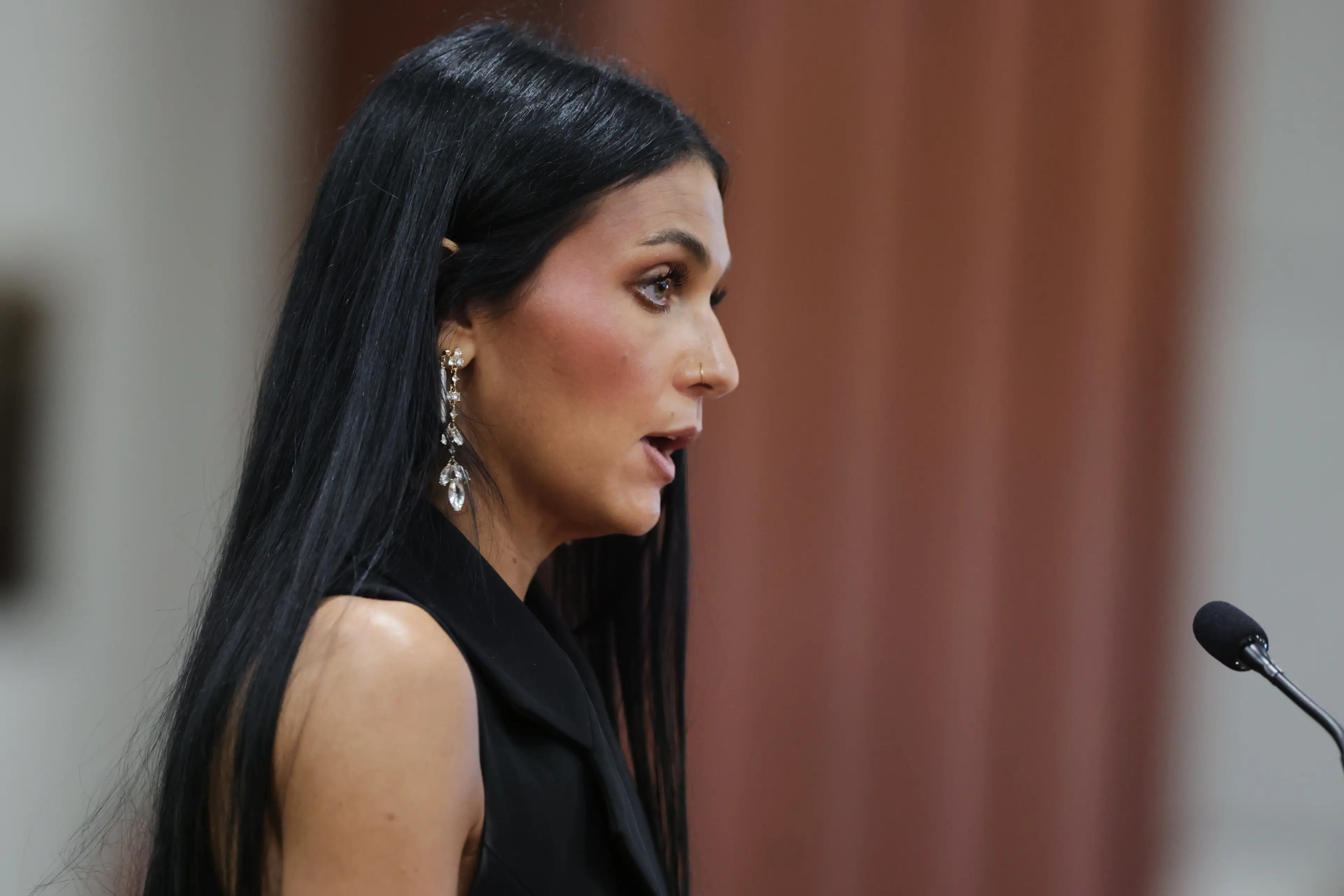
Speaking in the Netflix documentary Alivea Goncalves, sister of the victim Kaylee, reveals that after Kohberger’s arrest she did a deep dive on his online history.
As part of this she found a blog post from the killer describing his visual snow, with Kohberger posting that he was ‘stuck in a void of nothing, feeling completely no emotion’ and stating that he could not see people well.
The blog posts also imply that Kohberger’s visual snow caused him to struggle to ‘feel what it was like to be in the real world’, and he posted saying he had to ‘constantly battle his demons’.
In addition to this, Alivea found a survey he had posted on Reddit was aimed at criminals and sought to ‘understand how emotions and psychological traits influence decision making when committing a crime.’
The documentary focuses heavily on Kohberger’s criminology classes, taking a master’s at DeSaille university where he studied a ‘mind of a serial killer’ class.
What is not included in the documentary, however, is that earlier in the year prior to his quadruple murder Kohberger applied to work with a local police force. In court documents it is revealed that the at-the-time 28-year-old applied for a police internship, saying: “Kohberger wrote an essay when he applied for an internship with the Pullman Police Department in the fall of 2022. Kohberger wrote in his essay he had interest in assisting rural law enforcement agencies with how to better collect and analyse technological data in public safety operations.”
The Idaho Murders: A College Nightmare is available to stream on Netflix now.
Topics: True Crime, Netflix, Bryan Kohberger, TV and Film, Documentaries
 Michael Slavin