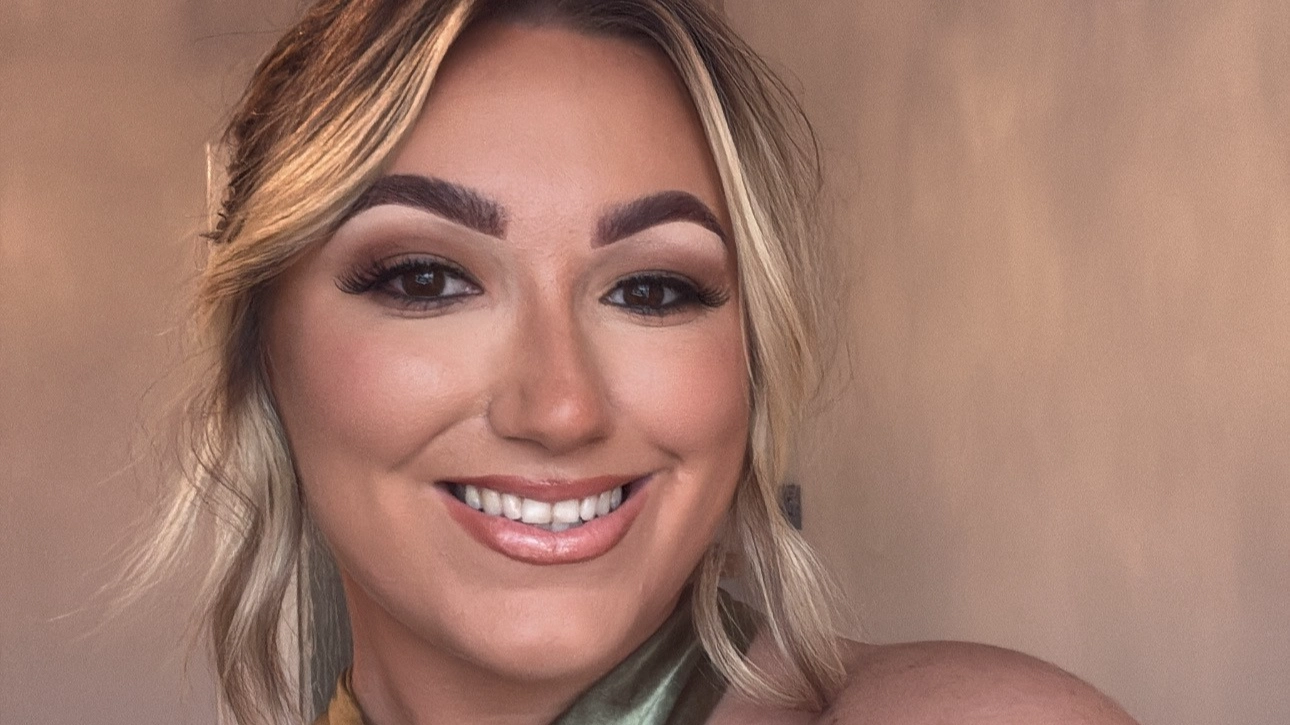
Woman diagnosed with cancer at 21 had symptoms dismissed as tonsillitis

Chloe was diagnosed with cancer shortly after turning 21, having been assured by her doctor it was just a bout of tonsillitis.
It's been three years since Brit was told she had Hodgkin Lymphoma, after noticing a large lump growing on her neck.
She described telling her parents the news as 'the hardest phone call I've ever had to make', but they supported her in all ways possible in the months afterward.
But among the tough decisions that came with dealing with cancer at such a young age, Chloe, from Aberdeen, Scotland, bravely admits: "Almost everybody goes through some hard stuff in their lives. I’ve just been through mine young. That’s the way life is."
Advert
Speaking to LADbible, Chloe revealed that doctors continually told her that her symptoms were a sign of tonsillitis and nothing really to worry about.
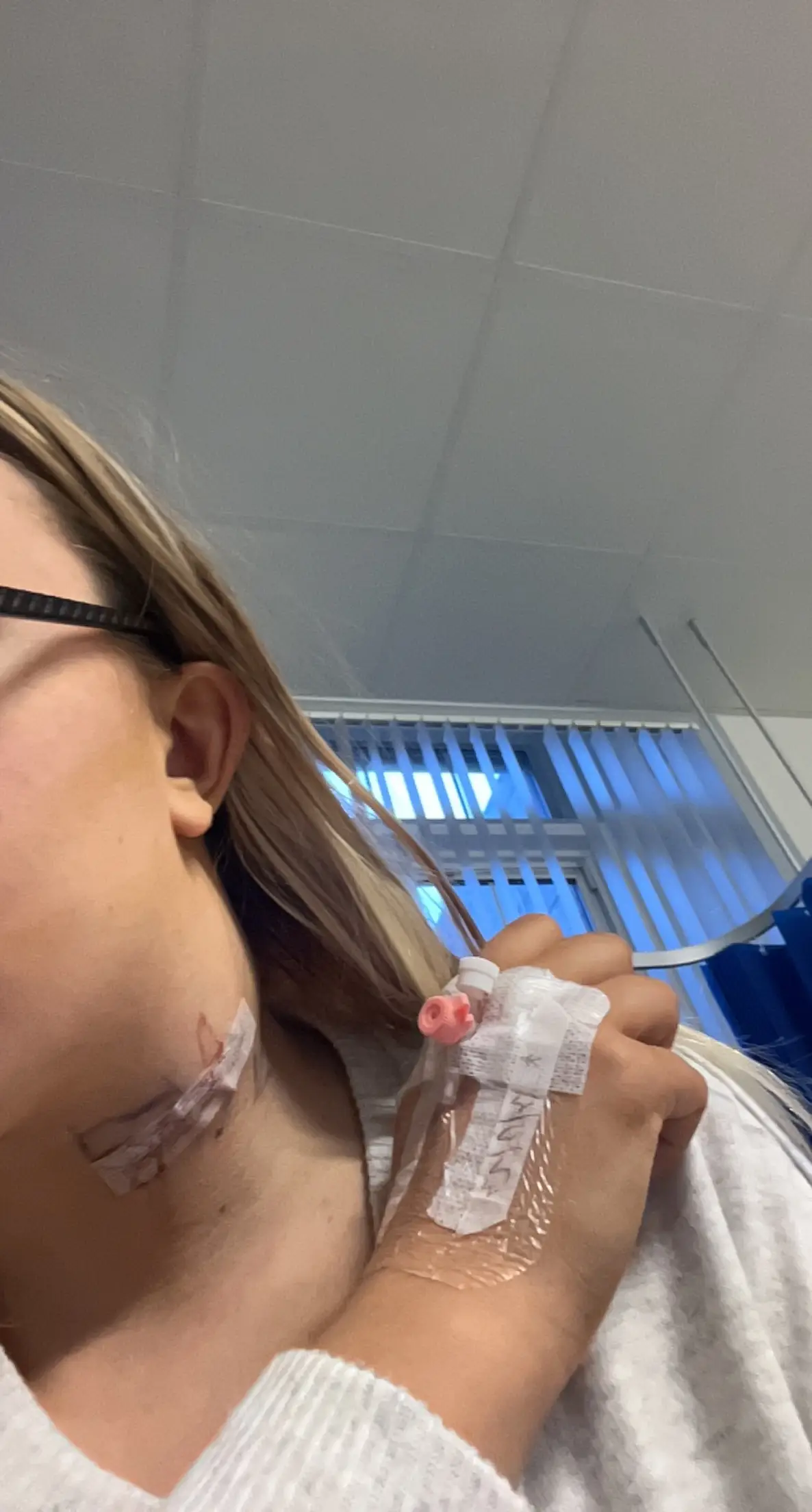
"I always kind of suffered with throat problems, like the swollen glands, multiple times a year," Chloe explains, adding that she had it 'every two to three months' while growing up.
Recalling what doctors told her at first, she says: "When they said it to me, obviously it didn't really raise any red flags, it was like it was the same problem.
"But then, a big lump on my neck came up, and then it was like, 'Oh, I've never had that with it', but they said it could be lateral (to one side of your throat)," Chloe says.
"When you're young, you believe whatever the doctor's telling you - you're not going to dispute them.
"But the more time went on, the more I kind of thought, 'Well, maybe it's not that'."
Chloe ignored it, but the lump persisted for around four to five months before being diagnosed.
Acknowledging that people at work were 'edging her towards' considering something more serious, Chloe admits: "When they said it, I think I knew in my head it could potentially be that (cancer), but when they say it to you and it finally sinks in, you're like, 'This is real, this is serious', so it was quite a shock."
Adding: "By the time I was diagnosed I also developed more tumours on my collarbone and under my armpit."
Speaking more about receiving the diagnosis, Chloe says it was strangely positive.
"The moment I got my diagnosis I felt like a weight had lifted at the time because months of waiting for test results I just wanted to know what was going on," she tells us.
"It was an awful situation to be in waiting for a diagnosis was the hardest part, because you picture the worst and for me unfortunately it was the worst.
"For my parents, I know how much it broke their hearts to see their child going through this awful disease.
"They always wanted to help me in any way they could but at the time there’s not much you can do to take that pain I was going through away."
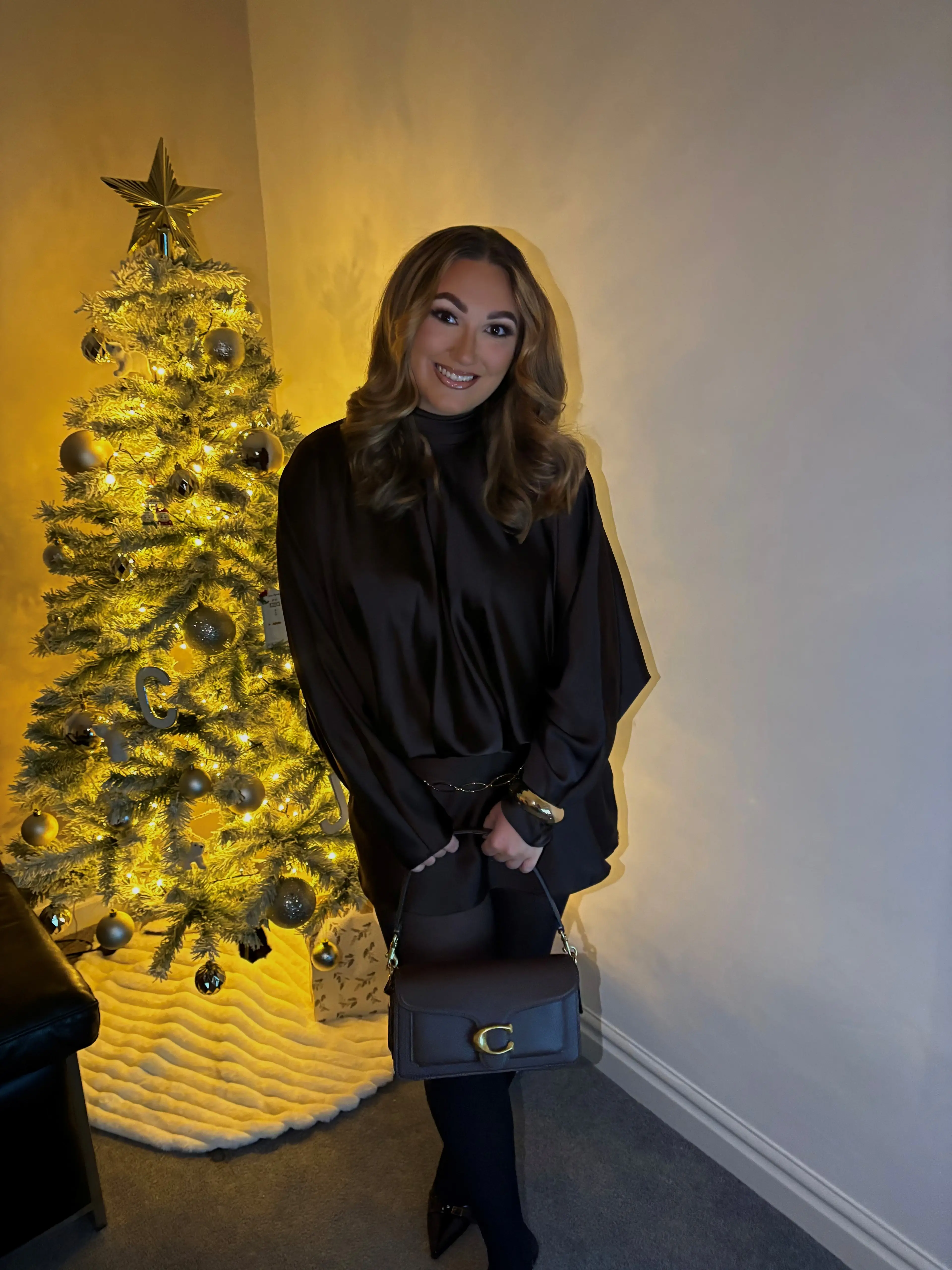
Having worked in a hospital, Chloe knew what was coming as soon as she was referred for a cancer risk, and took precautions just in case - one being to freeze her eggs.
"I knew the infertility struggles that people have when it comes to cancer treatments, especially the trials that cancer research comes up with, because there's no real long term data," she tells us.
While her doctor tried to assure her the chances of becoming infertile were 'really slim', Chloe didn't want to take any chances as there were no 'guarantees'.
"It wasn't until I actually sat down in the chair in the room to have the chemotherapy that I started just sobbing, like, this is real," she recalls.
Chloe would undergo chemotherapy for five months, involving eight sessions in total.
"The thoughts I had when going through treatment was awful, I only had what I’d seen on tv as references for what was going to happen to me throughout my chemo, like losing my hair, gaining weight, being weak, losing myself all together," she explains.
"But I had to do it to get better because there was no other option, I had to fight."
Other side effects of the treatment saw her hair fall out, to the point where she needed to shave it off, while steroids caused her to gain weight, as Chloe recalls: "For a while it felt a bit like I lost myself during cancer.
"I think I sat very, very level headed throughout the whole process of the diagnosis and getting along the lines of what treatment I was going to get, but I found that thinking about everything, was a distraction and a way of coping with it."
Chloe admits that prior to her diagnosis, she never thought about her own mortality, and even when she was given the news, she felt that 'it won't be that bad', as she was just 21.
"I think, now, there are so many young people who are being misdiagnosed or missed, like certain symptoms that could have helped them get a quicker diagnosis, I could have been diagnosed a lot sooner than when I was," she reflects.
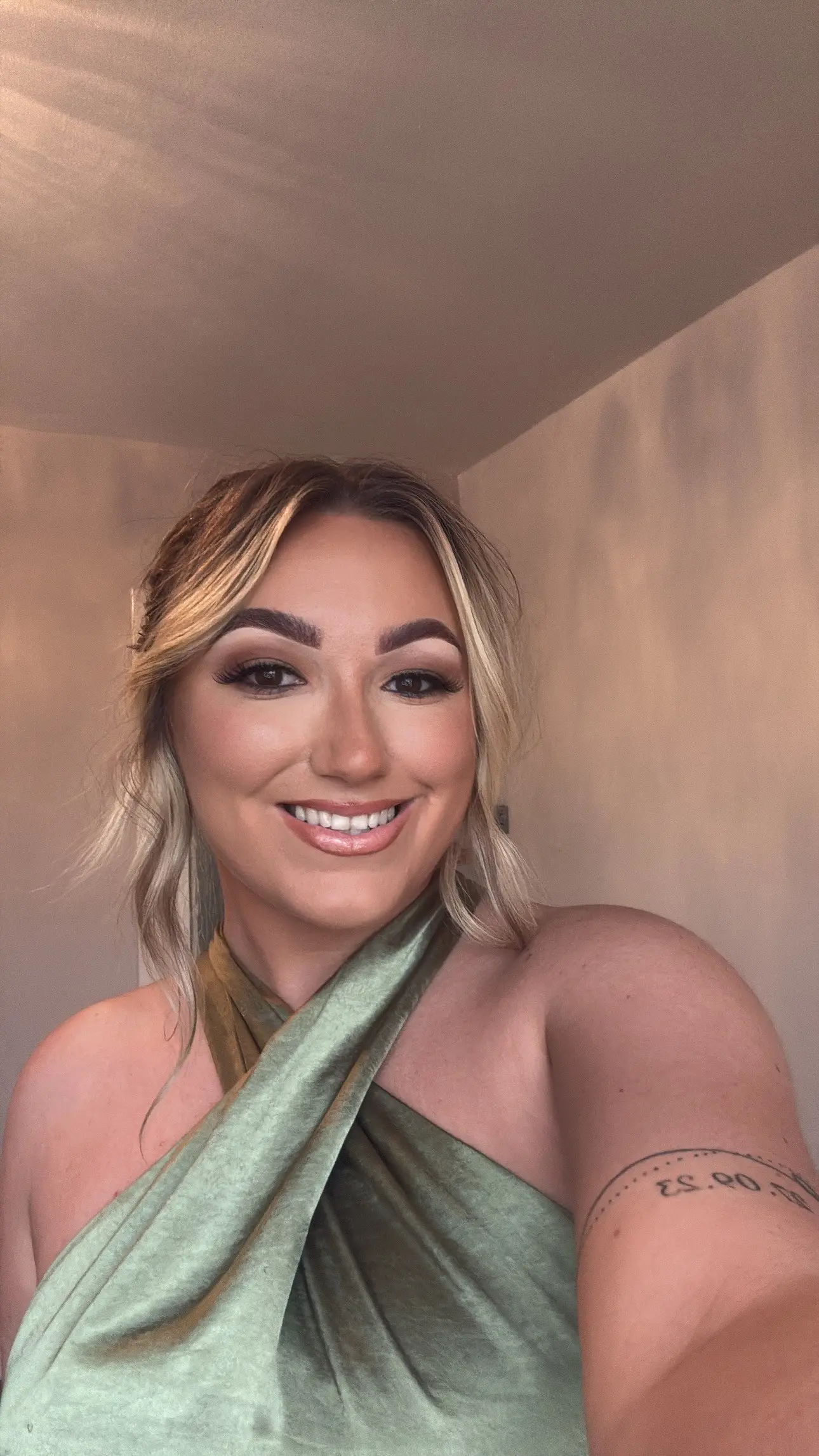
Chloe was grateful to her parents too as while the treatments were on the NHS and therefore free, they took care of her on 'the lifestyle side' of things.
She was told she couldn't get on public transport, meaning her parents would drive her around and due to a hospital being a 'high infection environment', she couldn't work either.
"For a year, I had no wages coming in. I had a flat at the time, so I had to pay my rent and everything, and the only option I had was to go to my mum and dad - I'm lucky that I'm in a position where they could support me financially," Chloe says.
She also revealed that there are 'loads of grants' from the likes of the government, Macmillan, and other charities which help those in the tough situation.
Now in remission, she adds: "I would say that the person who goes through it all, is not going to be the person that comes at the end of it.
"It's a total storm that you have to weather yourself, no-one can do it by themselves, accept the help that's around you and just persevere because it does get easier," she told others battling cancer.
Amy Hirst, health information manager at Cancer Research UK, tells LADbible: "Most cases of cancer are in people aged 50 and over, but cancer can affect anyone. It might be tempting to put unusual changes down to something minor or another health condition. But if you notice anything that’s not normal for you or isn’t going away, the most important thing you can do is listen to your body and speak to your doctor.
"Even if you’ve been to see them before, if your symptoms continue or get worse your doctor will want to hear from you. In most cases it won’t be cancer, but if it is, spotting it at an early stage can make a real difference."
Chloe is supporting Cancer Research UK’s Race for Life. All In against cancer. All in to help fund life-saving research. To sign up, visit raceforlife.org
If you’ve been affected by any of these issues and want to speak to someone in confidence, contact Macmillan’s Cancer Support Line on 0808 808 00 00, 8am–8pm seven days a week.
 Joshua Nair