
Dad diagnosed with colon cancer after health check had no symptoms and felt ‘bulletproof’

A dad was given a shock colon cancer diagnosis after a routine health test despite feeling 'bulletproof' and in 'tip-top' condition.
Nigel Chesterton, 56, discovered that he was suddenly anaemic when he was turned away from giving blood.
The dad from Bedfordshire, who works as head of quality for a pharmaceutical company, said he had been donating blood annually for 30 years without any problems until he was told he had low iron.
Deciding to 'work out what’s going on' Nigel did a full health MOT on December 19 and received the results by the end of the month.
Advert
Scanning over them, Nigel noticed his qFIT test, which detects traces of blood in a stool sample, was flagged as a red warning.

Dr Martin Thornton, chief medical officer at Bluecrest, said: “Nigel’s qFIT result was above 400, so it was very high – a result below 10 is generally considered normal.
“A high result doesn’t necessarily mean cancer, but it does show that blood has been detected in the stool and needs further investigation.”
Nigel booked an appointment with his GP to review the full results on 5 January this year and his doctor referred him for an urgent colonoscopy, but said it was likely just polyps.
Later that month, the doctor performing the colonoscopy identified a likely cancerous tumour on his colon mid-procedure and relayed as much to Nigel, who said it came as 'massive shock' to him.
An MRI on 1 February confirmed to Nigel and his family that he had stage one colon cancer. The right side of his large intestine was partially removed in surgery a month later and by May 20, Nigel was told he was cancer-free.
Nigel explained: “An early diagnosis made all the difference for me. Even though I was getting to a certain age, I felt I was bulletproof before my diagnosis.
“So, it just shows that having detailed checks is worth it.”
Nigel described himself as a 'healthy person' before his cancer diagnosis. He had run two London Marathons, did not smoke and drank only in moderation.
So when he brought Connie with him to donate he said it was 'a bit of a shock' to go through the pre-screening test and be told he could not give blood because he was anaemic.
For peace of mind, Nigel did a private Vitality health assessment through Bluecrest Wellness for £100 on 19 December and wanted to run 'the full gamut' of tests.
On 30 December, Nigel got the results and said there was 'nothing particularly worrying' until he came across the red result for the qFIT test.
“As soon as I got that, I thought, ‘crikey, I’d better go to the doctors’,” Nigel said. “Even then, cancer was the furthest thing from my mind,” Nigel said.
“I had no history of any sort of cancer within the family.”
During the colonoscopy in January, Nigel said the doctor turned to him and told him there was a mass on his colon that he was 'pretty certain' was cancer.
Nigel said one of the most difficult moments was telling Connie and Imogen about it.
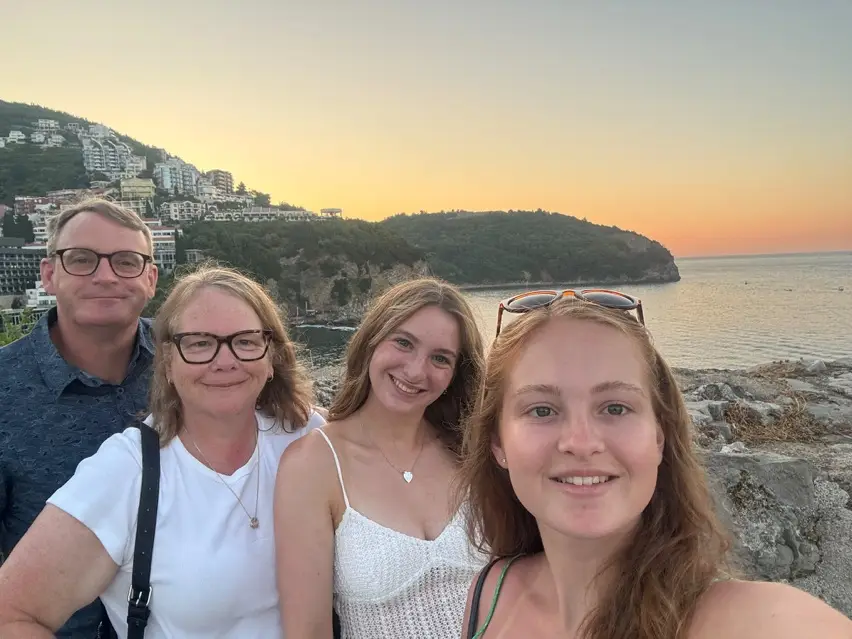
"It was a massive shock and I remember coming out to my wife in the waiting room and saying I’ve got cancer," he explained.
“It was the hardest conversation I have ever had with them. They both agreed that we would fight it as a family, whatever the outcome.”
In March, Nigel said he was 'terrified' to undergo a four-hour surgical procedure at Bedford Hospital to remove the partial right side of his colon.
But after waking up from the surgery, doctors told Nigel it had 'gone very well' and they were 'fairly confident' they had successfully removed all of the cancer.
The lymph nodes doctors had removed during the surgery showed no signs the cancer had spread, so he did not need chemotherapy.
He was discharged and told he was cancer-free, before he is due to have a routine follow-up scan in November.
Thanking his wife and daughters for the support they gave him throughout his cancer journey, Nigel said: “It was only afterwards that I truly realised how profoundly a diagnosis like this affects not just the patient, but the people closest to them.”
"I feel lucky to be alive. If there are any other nasty surprises relating to my health, I want to diagnose them as early as possible.”
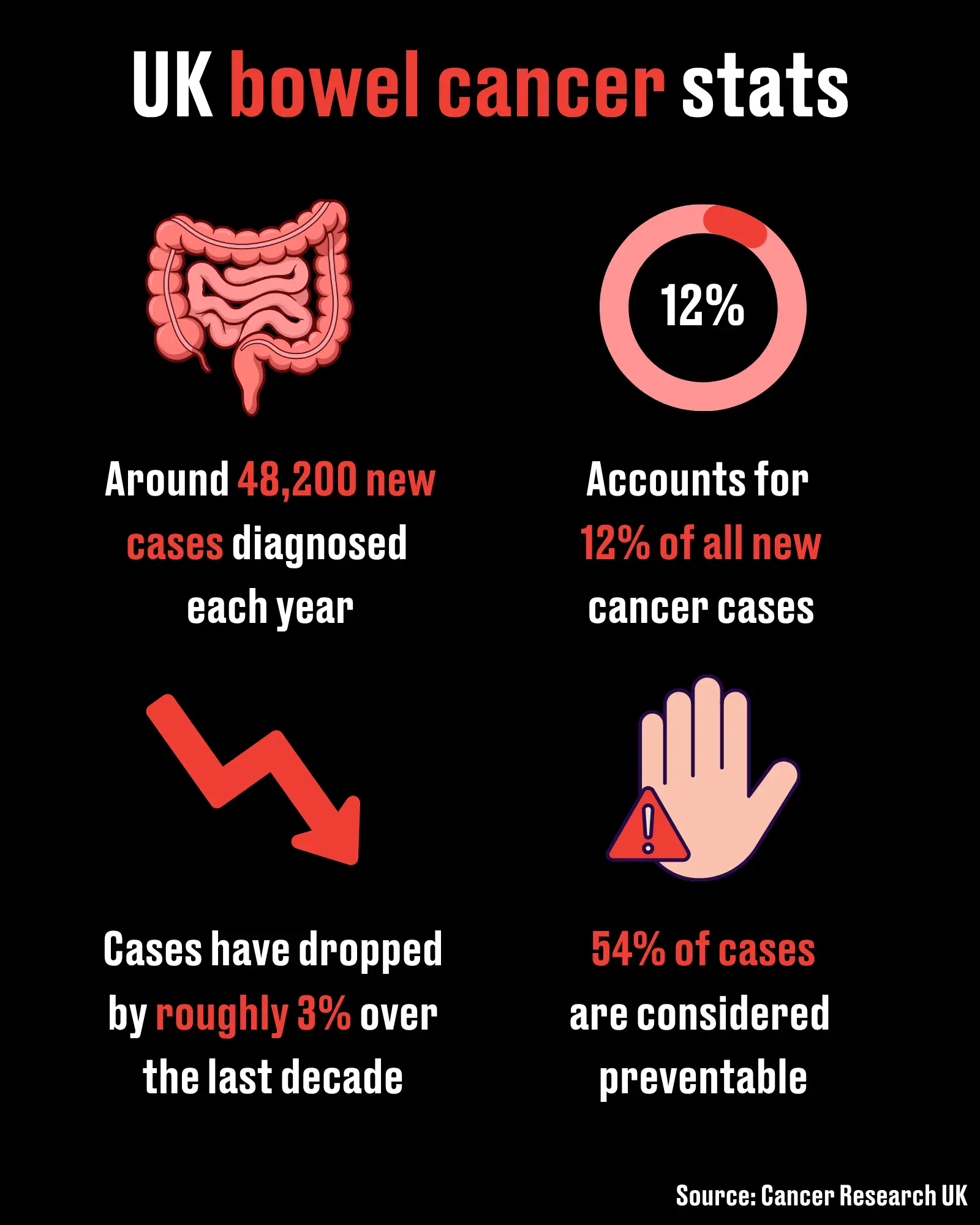
Bowel cancer is the fourth most common cancer in the UK, with more than 48,000 people diagnosed every year.
According to the NHS, it is found anywhere in the large bowel, which includes the colon and rectum.
Typical symptoms can include changes in stool, changes in frequency of movements, bleeding, tummy pain, bloating and losing weight without trying.
Dr Thornton said: “Nigel had no obvious bowel symptoms and no reason to suspect he had cancer. His experience shows just how important early detection can be, particularly when the disease might otherwise go unnoticed.”
 James Holt