
Man who had penis removed due to cancer opens up on intimacy with girlfriend after she helped design new one

A man who had his penis removed due to cancer has bravely opened up about a major reconstruction that used skin from his arm.
Paul Lucas, 37, was diagnosed with penile cancer and had to undergo a total penectomy after his wife forced him to go to the doctor and get it checked out.
He had been 'peeing at a right angle' for months and said he knew something was seriously wrong but had chosen to ignore it.
Paul finally saw his GP, when he was told the organ would need to be completely removed.
Advert
But since then, he has undergone a number of other procedures to reconstruct his manhood - and his wife has even had some input in its design.

Appearing on the This Morning couch, Paul explained: “In the summer of July 2022, I was peeing at almost right angles.
“I just left it and left it, as you do, and tried to bury my head in the sand. Then a growth started appearing.
“That got bigger and bigger. I bought medication from the internet to avoid the doctor, because you know what men are like we get embarrassed.”
'I felt overriding guilt'
After getting a penile cancer diagnosis, Paul said: “It was almost the relief of knowing what it was, because at least it had a name and I could go right, it's penile cancer, and yes it's rare, but at least I know what it is and I could get my head around it and was in the system being referred.
“Luckily it was diagnosed very quickly.”
Paul told of how he feared the operation to remove the penis could cost him his sex life and marriage with partner Nicky.
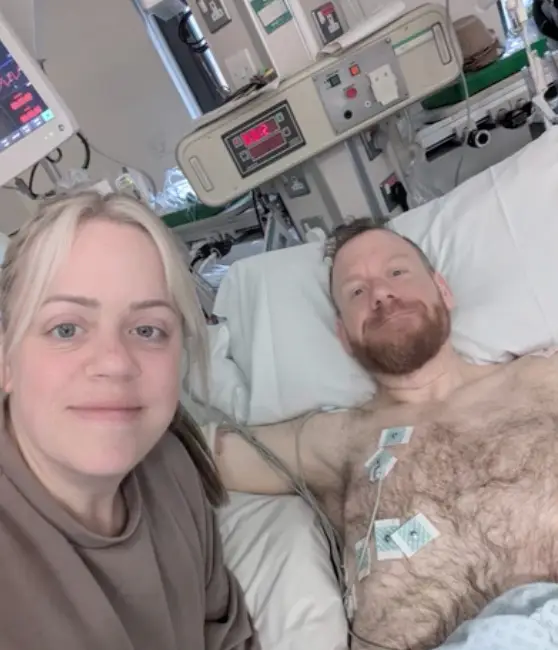
“I felt overriding guilt,” he said. “Because we were quite young, and you always think that a man is what is in between your legs.
“It took me a while to realise it actually has little impact. I did give my wife the chance to leave, I thought I was doing her a favour.”
But Paul underwent the procedure to save his life, and has since had major operations to reconstruct his penis using skin and tissue from his arm.
“The first surgery was a total penectomy, which means the total removal of my penis,” he said. “I didn’t actually know I had a full removal until 24 hours after my operation.
“You know your body, and you know something isn’t quite right.
“My other two operations were lymph node operations to check if the cancer had spread. It meant I didn’t need any more chemotherapy.”
Paul has now had what he called a 'sci-fi' surgery, which is complex and involves the reconstruction of his phallus and urethra. Several nerves from his arms were lifted and joined to penile nerves.
The second and third parts of the reconstructive surgeries, as confirmed by Urology surgeon Wai Gin Lee, are cosmetic to create glans and then insert an erectile device which makes the penis functional in an intimate setting.
Wife Nicky admitted she also was involved in the design of Paul's new penis, explaining: “When it came to the size measurements, we said why not go a bit bigger if possible, so that’s what we did.”
Paul added: “I’ve got a designer phallus, and there’s not many wives can say that.
“The awkward nature of it is that because there's no erectile tissue, it is always the size it is which can be a bit awkward.”
Symptoms of penile cancer
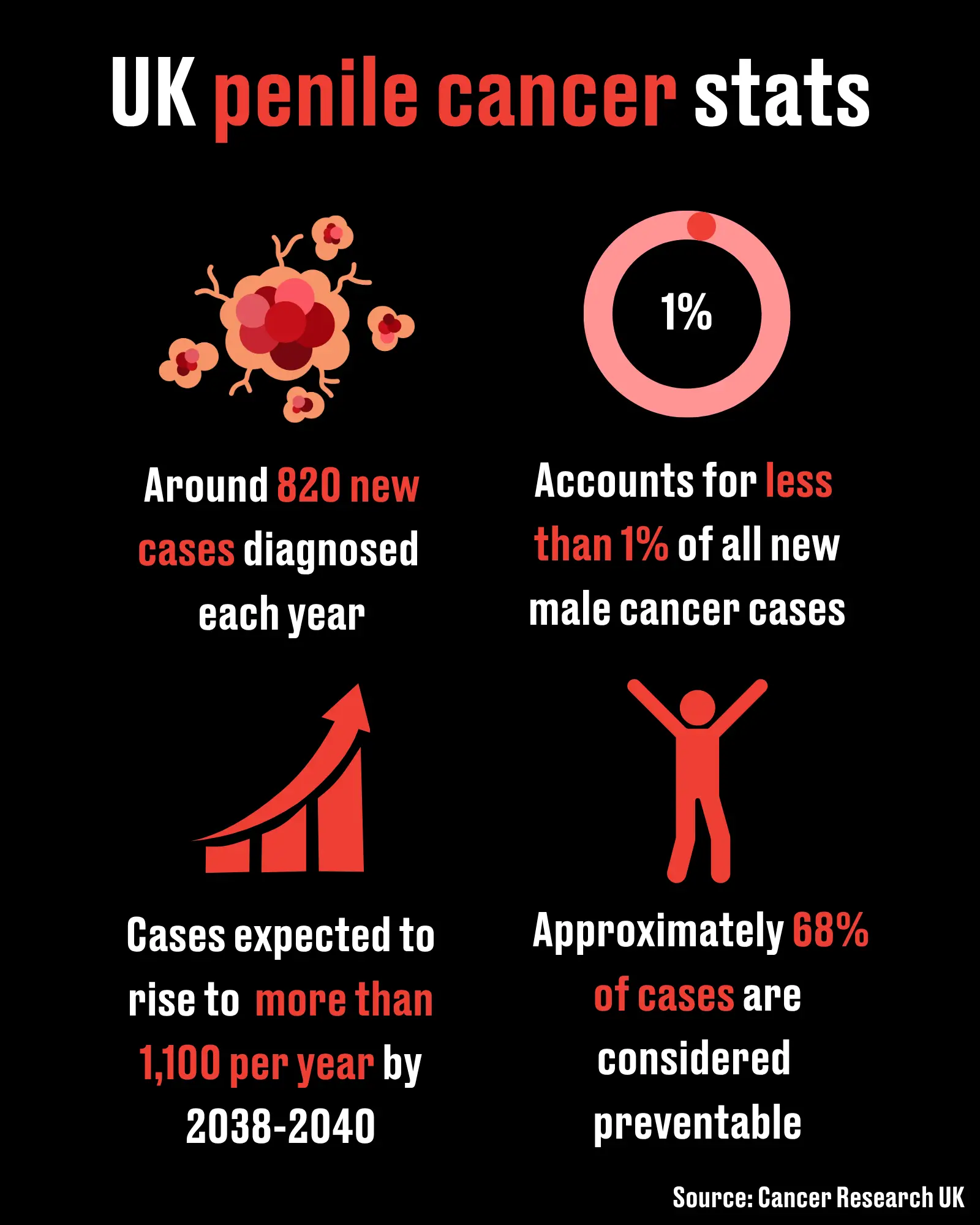
According to Cancer Research UK, penile cancer is rare. It can develop anywhere on the penis but is most common under the foreskin in men who haven’t been circumcised or on the head of the penis.
It is when abnormal cells in the penis start to divide and grow in an uncontrolled way.
The symptoms of penile cancer include a growth or sore on your penis and bleeding.
Other symptoms include bleeding or a foul-smelling rash, difficulty pulling back the foreskin, a change in colour of the penis, swelling or irritation in the head of the penis and the thickening of skin.
There are no UK-wide statistics available for penile cancer survival by stage. Treatments can vary depending on the size of the cancer and whether it has spread to other parts of the penis or lymph nodes.
It can include chemotherapy creams, laser therapy and glans resurfacing surgery if it is in the top layers of the skin. For cancer which has grown deeper into the glans, the foreskin may be removed along with other parts of surrounding tissue affected.
For invasive penile cancer that has grown deeper into the penis, treatments can include removal of the full or part of the penis, and internal or external radiotherapy.
If you’ve been affected by any of these issues and want to speak to someone in confidence, contact Macmillan’s Cancer Support Line on 0808 808 00 00, 8am–8pm seven days a week.
Topics: Health, TV, This Morning, Lifestyle, UK News
 James Holt