
Expert's warning to anyone using drug taken by millions as research finds worrying side effects

A nutritionist has warned that people taking the popular drug omeprazole are running the risk of missing out on important parts of their diet, while some studies have warned the medication could be associated with a higher risk of dementia.
Typically taken to deal with conditions like acid reflux, stomach ulcers and heartburn, omeprazole is a proton pump inhibitor (PPI) which reduces the amount of acid in a person's stomach.
Some kinds of omeprazole can be bought over the counter in pharmacies, while others are prescribed by doctors, and in 2022-23 there were 35 million prescriptions in the UK.
It's a widely used medication, but nutritionist Reece Mander warned that people taking omeprazole regularly could end up suffering from a range of problems because of it.
Advert
"Do you take omeprazole every day and are you extremely tired? Do you suffer from memory issues, do you get numbness, tingling, do you get muscle cramps, twitchy eyes, or do you have osteoporosis?" he asked.

He explained they were all typical signs of using omeprazole on a long term basis, as the vast majority of the nutritionist's clients had been on omeprazole.
The nutritionist said the PPI suppresses stomach acid, meaning it's less effective at 'cleaving away minerals from your food', which had the unfortunate consequence of making someone 'deficient in certain minerals'.
One of these was iron, which Reece said left people with 'really low energy and low thyroid', which meant the body was much less adept at losing weight.
A drop in magnesium would lead to muscle twitches and cramping, he warned, along with a drop in Vitamin B12, which he said could result in 'memory issues, numbness, tingling'.
On top of that, the suppressed ability for the body to collect minerals from what you're eating could leave you low in calcium, which is bad for your bones.
However, despite his warnings, he urged people who were thinking about ditching the omeprazole due to the possible consequences he'd just listed to avoid it.

"Don't do that, because then you're more likely to get oesophageal cancer," the nutritionist warned.
"You're not stuck between a rock and a hard place of omeprazole or no omeprazole, what you need to do is get to the root cause of your underlying problem which is what's causing the acid to be in the wrong place.
"You don't have too much acid, you have acid in the wrong place. It should be in your stomach and it's now in your oesophagus. You have to figure out why."
In his experience there were three main causes, h pylori which is a common stomach infection that can cause ulcers, yeast or not having a gallbladder.
His advice to people was 'do not stop your drugs while you try to figure out the root issue'.
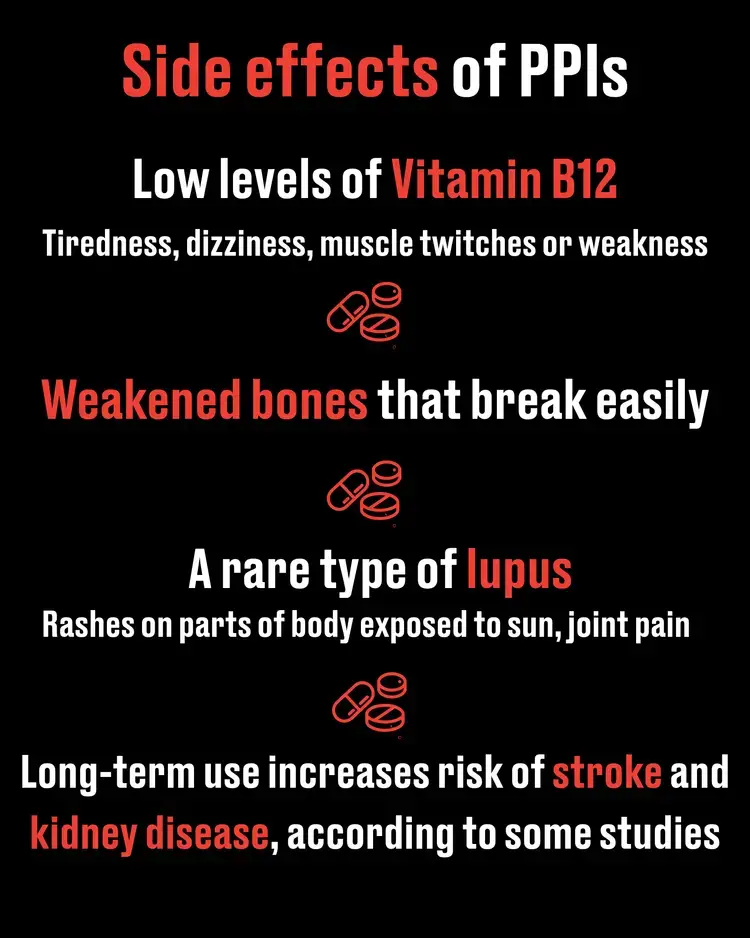
Some studies in recent years have warned there may be an association between omeprazole usage and dementia, as a group of researchers in 2023 published a study indicating that people taking PPIs in the long term had a 33 percent higher risk of developing dementia.
However, the scientists said there would need to be further studies conducted to better investigate the potential link between taking PPIs for several years and a higher risk of developing dementia.
Other researchers in 2022 said their analysis had found 'no clear evidence for an association between PPI intake and the risk of dementia', but they said 'some risk of dementia by PPI use cannot be ruled out'.
Like the other group of scientists they said more evidence would be needed before coming to a conclusion.
 Joe Harker