
Expert compares all side effects of weed and alcohol to find out which is worse for you

Alcohol and cannabis are amongst the most commonly used substances in the world, but one may be a lot worse for you in the long run.
The Institute of Human Anatomy (IOHA) has done a breakdown on the key differences by using real human cadavers to show how the substances travel through your organs and change your brain chemistry.
When you have a drink, it spreads quickly throughout your body because it is easily dissolvable in water and crosses cell membranes quickly.
THC, the psychoactive ingredient in cannabis, behaves differently because it is fat-soluble, allowing it to build up in fatty tissues such as the brain and stays in the system much longer.
Advert
A recent video posted on the IOHA YouTube channel explains that smoking delivers THC to the bloodstream within minutes, whereas edibles pass through the liver first, making them feel more intense and longer lasting.
Alcohol, meanwhile, follows a relatively 'predictable absorption route' through the stomach and small intestine.
Alcohol destroys organs while THC alters brain function

“With alcohol, the effects tend to show up as direct progressive damage to organs over time,” Jonathan Bennion, IOHA director of education, explained.
“Alcohol slows brain activity and over time is more likely to cause direct progressive damage to the organs, especially the liver and has a clear relationship with cancer risk.
“THC, on the other hand, changes how signals are processed in the brain and tends to have effects that are more functional rather than structural.
Alcohol blackouts are more dangerous than cannabis brain fog
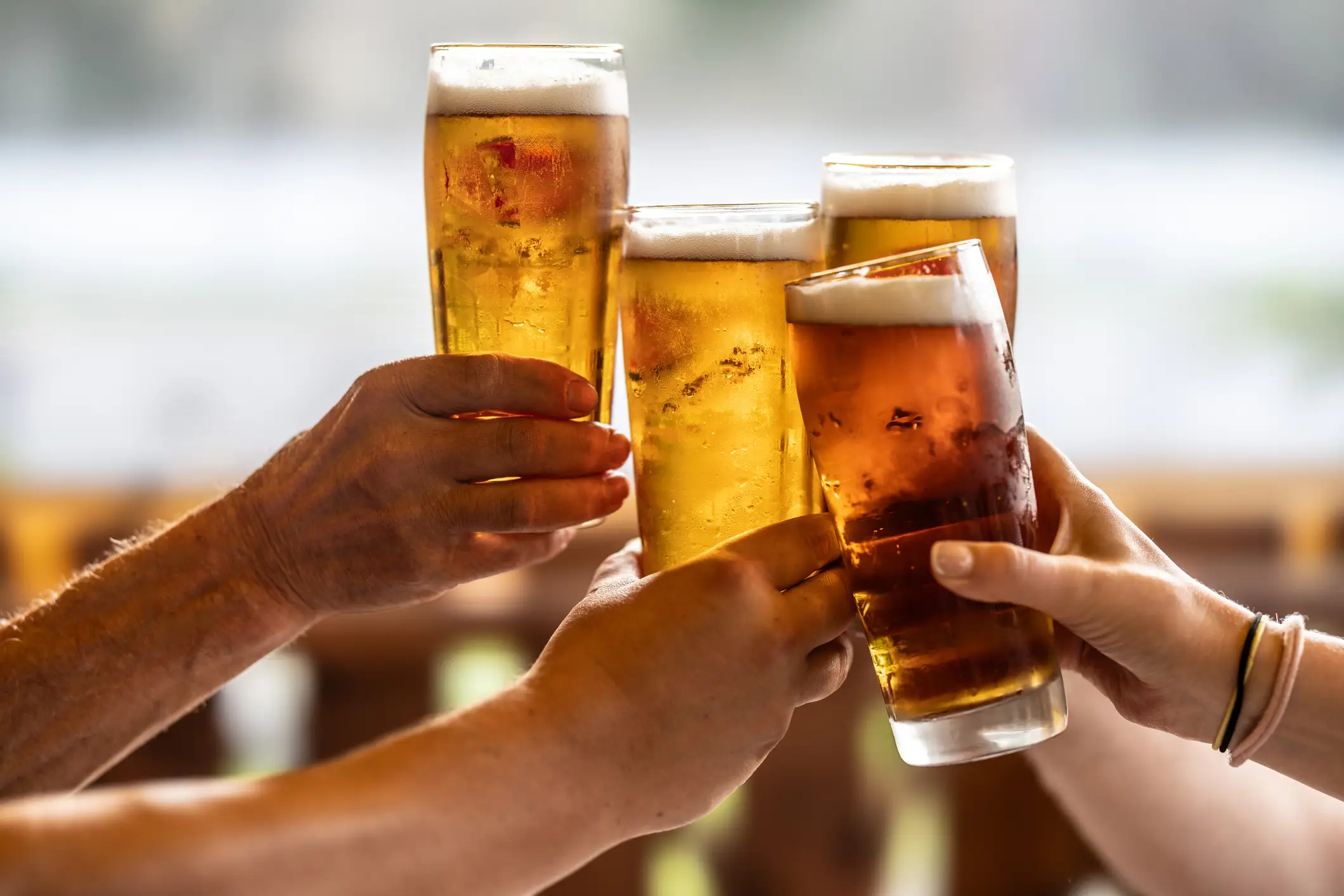
One of the dangers with alcohol is that as doses increase, the brain can actually lose the ability to form new memories altogether.
“This is what leads to blackouts where a person may be awake talking and interacting, but later has no memory of what happened,” Bennion says.
“THC doesn't shut memory formation down in the same way, but it does alter or interfere with how information is processed and organized.
“Alcohol can suppress memory formation, while THC tends to distort cognitive processing.”
Difference between alcohol’s cancer risk and weed’s long-term effects
Because Alcohol is classified as a carcinogen, the lead dissector explains that 'organizations like the World Health Organization emphasize that there is no completely risk-free level of alcohol consumption when it comes to long-term health and that even moderate intake can contribute to cancer risk over time'.
“When it comes to THC itself, particularly in non-smoked forms like edibles, there is currently no strong evidence showing that it directly causes cancer at typical levels of use,” Bennion adds.
“Alcohol has a well-established and dose dependent relationship with cancer risk. Whereas THC's relationship to cancer is less clear and depends more on how it's used.”
According to the IOHA, alcohol causes more direct physical harm overall, while THC mainly alters brain function and cognition, especially with heavy use.
Alcohol side effects
- Decreased judgment and impulse control
- Memory disruption and blackouts
- Poor coordination and balance
- Suppressed breathing and heart rate at high doses
- Alcohol poisoning risk
- Lower blood pressure due to dilated blood vessels
- Increased appetite from lowered inhibitions
Cannabis / THC side effects
- Anxiety and paranoia in some users
- Brain fog and distorted cognitive processing
- Difficulty focusing and following conversations
- Forgetfulness and losing train of thought
- Increased heart rate
- Red eyes from blood vessel dilation
- Dry mouth caused by reduced saliva production
- Increased hunger and “munchies”
- Long-term effects on memory, attention and learning
 Anish Vij