
Early signs of prostate cancer as Dermot Murnaghan dies one year after 'stealth' diagnosis

Dermot Murnaghan spent the final stages of his life campaigning to raise awareness of the lesser-known symptoms of prostate cancer.
The TV presenter, 68, died 'peacefully' on Saturday (11 July) surrounded by his family after battling the disease since late 2024.
Prior to his passing, he was a staunch advocate of prostate cancer screening being made routinely available for men in the UK, and he became an ambassador for the charity Prostate Cancer Research.
Murnaghan's death at his home in North London - which comes a year after he made his stage four diagnosis public - was announced by his loved ones on Saturday morning.
Advert
The news anchor, who worked for the BBC, ITV and Sky News during his illustrious career, was remembered as a 'broadcasting legend' by Liberal Democrats leader Sir Ed Davey, while former Prime Minister David Cameron hailed him for his 'tireless advocacy' which has 'no doubt saved lives'.

The statement announcing his passing added: "The family request that anyone wishing to remember him considers supporting Prostate Cancer UK, Prostate Cancer Research and North London Hospice so that others may benefit from the research and care he received."
Former Eggheads presenter Murnaghan told how his diagnosis came as a 'real bolt from the blue' while sitting down with Sky News presenter Anna Jones in August last year.
Pointing out how prostate cancer screening could save lives, he told the journalist: "In my own case, I fell through those gaps. I foolishly sat in your position for many many years speaking to people about this very issue and talking about men, particularly over the age of 50, men in high risk groups who may have a history of it in their family, to go and ask for this screening...
"And I kept thinking, you know, 'Once I got over that age I will go and do that'. I kept thinking, 'Okay well, know I'll get round to it' - life intervenes, jobs, children, holidays…all kinds of things, and I never did."
Murnaghan went on: "So what happened was, at the end of last year, I fell very ill on a foreign holiday and kind of rushed back here to get treated by a wonderful health service and was diagnosed. A real bolt from the blue."
More than 52,000 men are diagnosed with prostate cancer in the UK each year.
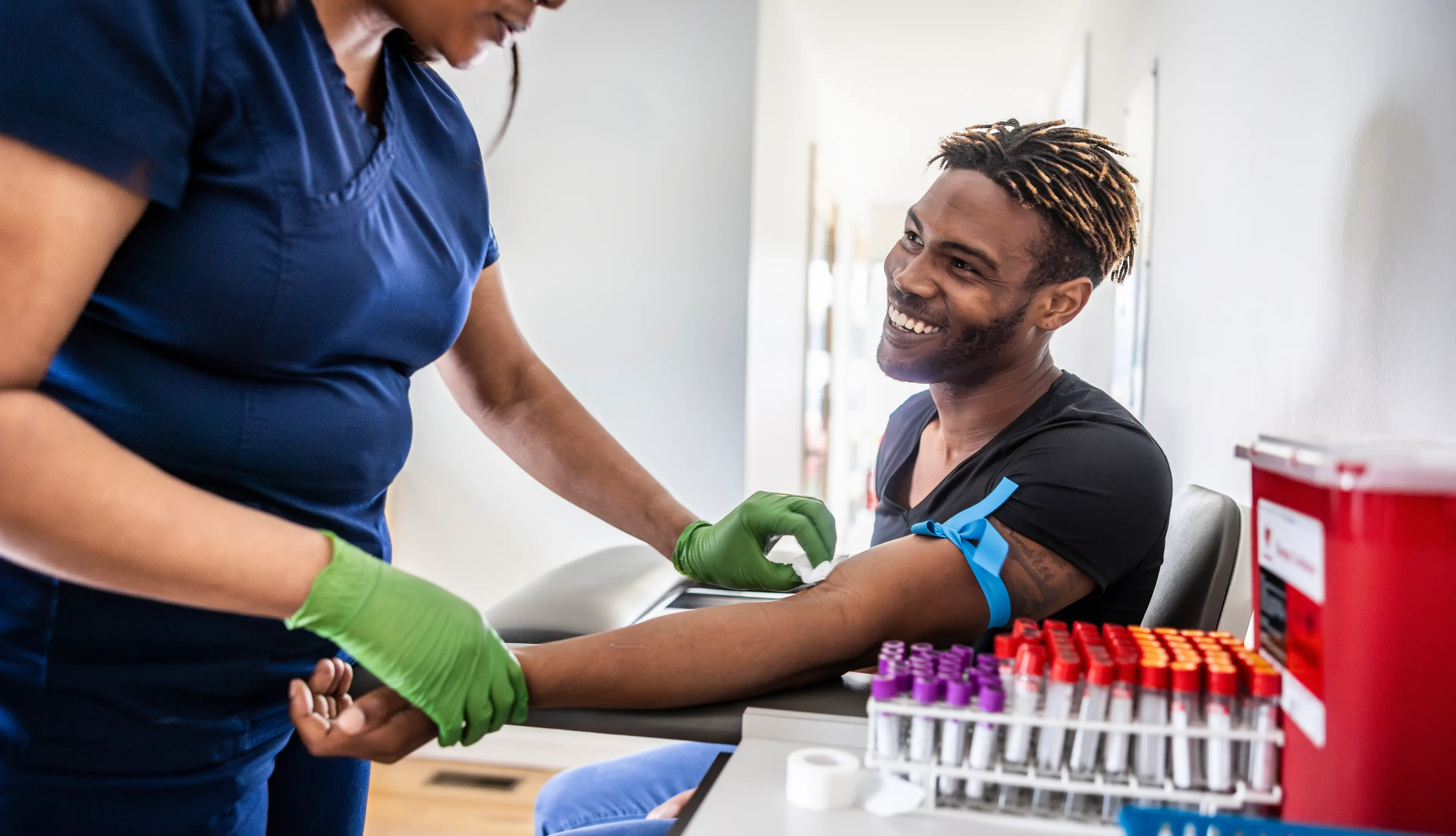
Undergoing a PSA test - which is a blood test which gives doctors a gauge of how your prostate is doing - can make treating the disease a hell of a lot easier. The sooner doctors catch it, the better.
However, it is not currently available on the NHS, unless genetic tests have shown that you have a faulty version of a gene called BRCA2, as this raises your risk of prostate cancer.
And that's why knowing about the early signs of it is so important.
According to boffins at the cancer treatment centre Proton International London (PIL), prostate cancer 'can have no noticeable symptoms' in the early stages and a lot of blokes feel well within themselves.
Symptoms 'aren't always obvious'
Typically, prostate cancer is detected via routine check-ups or blood tests - but as these aren't readily available for blokes in the UK, you need to be aware of the warning signs of it that 'are not always obvious'.
PIL explains that 'common' early signs include changes in your urinary habits and sexual health.
This includes: difficulty starting urination, a weak urine stream, pain or burning sensation during urination or ejaculation and the need to urinate more often.
Unexplained pain in the lower back, hips, or pelvis can indicate more advanced prostate cancer, PIL warns.
"Experiencing these symptoms does not automatically mean you have prostate cancer; they can be caused by benign conditions like an enlarged prostate," the experts said.
"However, it’s important to have symptoms checked, as generally, the earlier prostate cancer is diagnosed, the more effective the treatment options.

"Most prostate cancers grow slowly and may remain confined to the prostate without causing symptoms or health problems.
"It may not cause symptoms until the cells grow large enough to press on the urethra (the tube that carries urine from the bladder out of the body)."
PIL suggests checking in with your GP if you're a bloke who has been struggling with erectile dysfunction, unexplained weight loss or bone pain.
"You should speak to your GP if you notice persistent or worsening changes in urination, blood in urine or semen, ongoing erectile dysfunction, or unexplained pain in the lower back, hips, or pelvis," it adds.
"This is particularly important if you are over 50, especially if you have additional risk factors such as a history of prostate cancer, ovarian cancer or breast cancer in your family, or if you come from a Black ethnic background.
"Even if symptoms turn out to be benign, having them checked can be highly reassuring."
 Olivia Burke