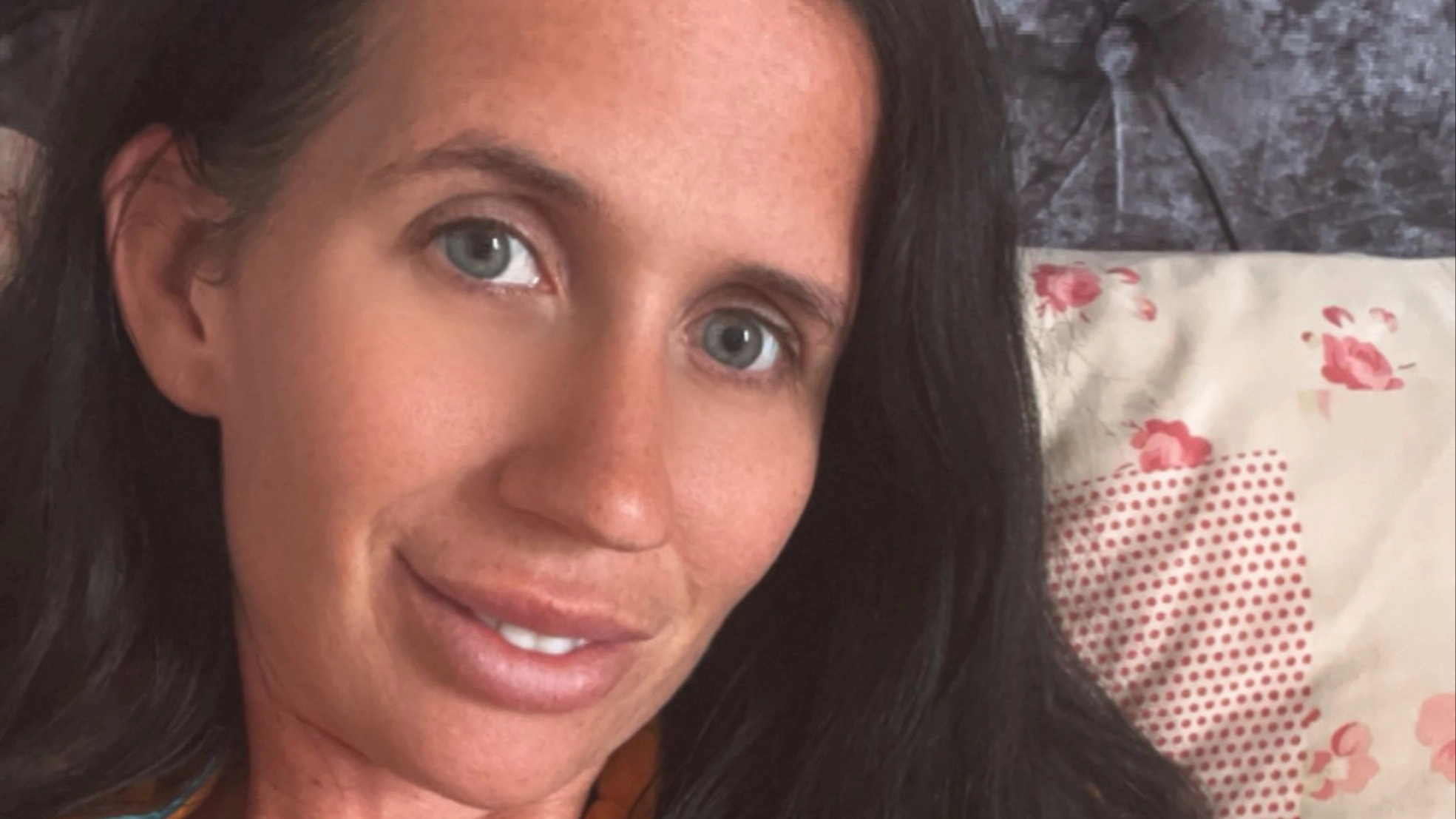
Mum was so scared she was a paedophile she considered turning herself into police

A woman who had panic attacks doing the school run because she thought she was a paedophile was actually suffering from a rare mental health condition.
In January 2024, weeks after giving birth to her daughter, Lauren Carrigher became convinced her TV was going to explode one night. She ended up being rushed to hospital, thinking she was having a heart attack.
The 35-year-old was diagnosed with postnatal depression and prescribed anti-depressants.
However, Lauren says that a month later, she started to experience intrusive sexual and violent thoughts.
Advert
The mum-of-three became so scared that she was a paedophile she believed she needed to go to jail. “I felt like I needed to call the police on myself,” Lauren explained.
The ‘peak’ of her extreme intrusive thoughts came in August 2024, when she thought about murdering a family member.
She went on to spend three months in a mental health unit before being diagnosed with postnatal obsessive compulsive disorder (OCD).

Lauren said she was ‘over the moon’ to get this diagnosis as it showed she wasn’t ‘broken or crazy’.
The mental health condition can include severe, intrusive thoughts and repetitive behaviours used to alleviate anxiety.
The Essex mum was prescribed anti-psychotic medication, but it wasn’t until she began therapy last April that she was able to ‘get her life back’. And now she is raising awareness of Paedophile OCD [P-OCD].
This is not paedophilia but a type of OCD in which someone has unwanted and distressing sexual thoughts or images about children.
“It is so intense and so awful, you don't know what to believe,” Lauren explained.
"Your brain is telling you you're this vile, nasty person, it's so debilitating. I honestly believed for about six months that I was a paedophile and that I needed to go to jail.”
Simple things like doing the school run was ‘extremely hard’ for her and she found herself having a ‘massive panic and anxiety attack’ as the kids came out of the school.
"It was awful, it's like a living hell every day. You're scared of yourself and your own thoughts,” Lauren added.

She says the thoughts weren’t just limited to children but also adults.
“I was sitting with all my family [one day] and I had thoughts that my [family member] and their partner had sex and I was picturing it. I was like 'why am I thinking that?',” she recalled.
"The whole time I'm sitting there having a normal conversation with them and in the back of my head I'm thinking [...] about them. It's absolutely horrendous.
"As the months went on I was scared to be on my own and my mum had to live with me because I was scared I was going to act on a thought.”
Lauren explained she had to ‘hide all the knives’ in her home and lock the windows as she had intrusive thoughts about jumping out.
“There was no point in any of my journey where I got pleasure out of it or wanted to do anything,” she clarified.
After losing 5st 7lbs due to severe anxiety about the intrusive thoughts and planning to kill a family member, Lauren went to hospital.

She says her diagnosis was 'a massive relief'.
She said: "I couldn't believe it after all those months of being at home in a terrible state and having all those intrusive thoughts.
"It was a relief to have something and know I wasn't broken and I wasn't crazy but I have OCD."
Thanks to exposure therapy, Lauren says she rarely experiences intrusive thoughts and says the anxiety and panic attacks have ‘completely stopped’.
Now, she lives her ‘best life’ and is trying to spread awareness so other sufferers know they are ‘not some horrible, vile person’.
"I was really ashamed and I'd rarely talk about any of my intrusive thoughts, I was disgusted with my own thoughts,” she added.
"It was only once I started doing exposure work that I realised they are just thoughts, it's not me as a person.”
What is P-OCD?
According to Sheppard Pratt, P-OCD (Paedophile-themed Obsessive-Compulsive Disorder) is a rare form of OCD in which a person exhibits an obsessive fear that they are or will become a paedophile.
Intrusive thoughts related to P-OCD can often include:
- Intrusive unwanted sexual thoughts about children
- Fear that positive emotions towards children is somehow sexual
- Fear that incidental contact with children is sexual
- Fear that noticing cuteness in a child could be perceived as sexual
The International OCD Foundation explained that some intrusive thoughts someone with P-OCD might have include: "Did I ever do anything inappropriately sexual when I was younger?”; “I should stand on the other side of the tube, away from this 6-year-old boy so that I don’t impulsively grope him"; “Will I be creepy or do something inappropriate when I have a baby?”
What is the difference between P-OCD and pedophilia disorder?
According to clinical psychologist Federico Ferrarese, pedophilic disorder, as defined by the DSM-5, is 'recurrent, intense sexually arousing fantasies, urges, or behaviours involving sexual activity with prepubescent children' that has lasted six months.
Whereas P-OCD is the exact opposite, as those with the condition are horrified by their thoughts and will actively go out of their way to avoid triggering them.
International OCD Foundation adds that P-OCD is a disorder of 'anxiety and uncertainty' and that a person with the condition is 'no more likely to be a paedophile than an individual who does not have P-OCD'.
If you're experiencing distressing thoughts and feelings, the Campaign Against Living Miserably (CALM) is there to support you. They're open from 5pm–midnight, 365 days a year. Their national number is 0800 58 58 58 and they also have a webchat service if you're not comfortable talking on the phone.
Topics: Mental Health
 Jess Battison