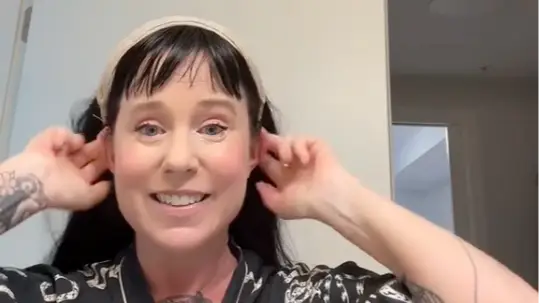
Woman who died by euthanasia a year after early-onset Alzheimer’s diagnosis shared her first warning signs

There were three incidents that alerted a woman who died by euthanasia that something was wrong, eventually leading to her early-onset Alzheimer's diagnosis.
Rebecca Luna, 49, ended her life through Medical Assistance in Dying on July 25, moving the date forward as the decline of her health came faster than anticipated and she wanted to have full capacity when she made the decision.
Rebecca's eldest daughter Maya, confirmed her death, as per the Toronto Sun, and she leaves behind two daughters.
TikToker Luna, from British Columbia, Canada, was diagnosed with young-onset Alzheimer’s at the age of 48 and documented her battle with the disease on social media.
Advert
That included sharing the first symptoms she noticed.
The first early-set Alzheimer's warning sign Rebecca Luna noticed
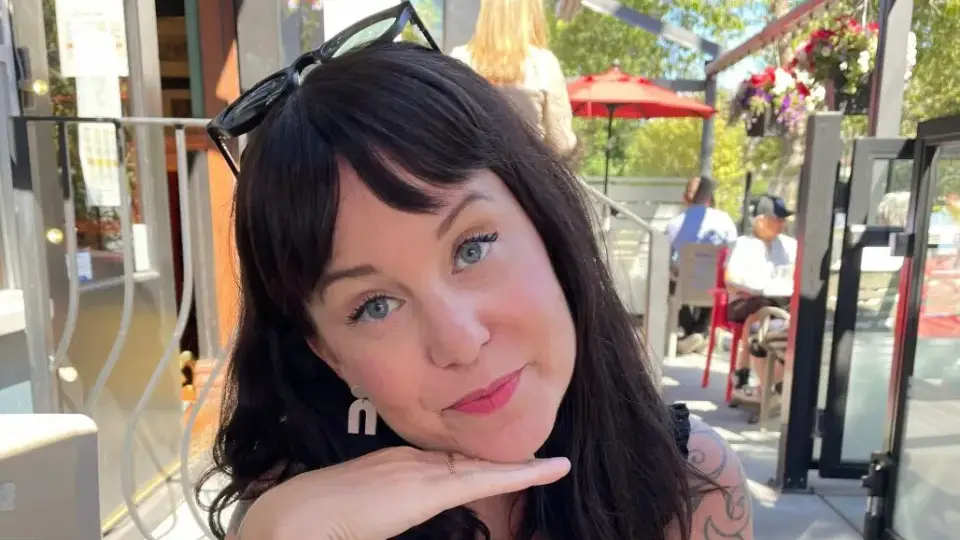
In a video Rebecca shared on December 1, 2025, she responded to one of her over 100k followers asking how she noticed that something was wrong.
She listed three incidents that troubled her and forced her to seek out psychiatric help, starting with a big problem at work.
Despite being in her job for years, Rebecca suddenly found herself completely unable to do it any more.
"I opened up my laptop and I could not figure out how to do the job," she said.
"I went to my training notes and I still couldn't do my job.
"It was blank. Like black. Take note of that, because that is what it feels like for me when I'm having a thing.
"It's black. It's blank. It's not foggy, brain fog, it is very different and it feels very different."
Rebecca took a year off work but due to her other 'mental health issues,' the problem was attributed to stress rather than a medical condition, despite not performing well on cognitive tests.
Two more incidents that told Rebecca something was wrong
The next worrying incident came when Rebecca drove to the gym one day.
She said: "I went back to my car to leave and I couldn't find my keys.
"I looked up and down, all around, everywhere. I'm not one of the people who loses their keys or purses or phone. I don't. So it was different."
After searching her car, she retraced her steps throughout the gym and its changing room to no avail. Returning to her car 'feeling very defeated.'
"And then I hear the car is running, so the key was in the ignition the whole time," she said.
"And I was losing my mind."
The third incident was the most troubling of all as Rebecca put some eggs in a pan of boiling water on the hob, but then left her home to go for a half an hour walk down town.
It was only when she got there that she realised her eggs were still bubbling away.
Rebecca said: "I was half an hour away, and I lived in an 1800's building, so there was definitely not fire proof stuff in that house.
"By the time I got home, the whole place was black, smoke everywhere. All the alarms. It was like that close to being very bad. Safety issues."
Even after all that and more worsening test results, Luna still didn't get a diagnosis for some time. She would have further issues with depth perception when driving and walking, as well as going 'blank' mid-sentence and forgetting things that happened the day before.
Finally, she learned her heartbreaking diagnosis.
Medical Assistance in Dying refers to the legal and medical framework where a clinician assists an eligible patient in ending their life through prescribed medication.
You can watch LADbible's documentary on assisted dying below:
What is young-onset Alzheimer’s?
According to Alzheimer's Research UK, people who experience dementia symptoms at a younger age may find it takes longer to get a diagnosis or referral because it is less common, and the symptoms can look different from those usually linked with dementia in older adults.
There are 71,000 people living with early onset dementia in the UK, who are under 65 years old at the time of diagnosis. The diseases that cause young onset dementia and dementia in later life are also similar.
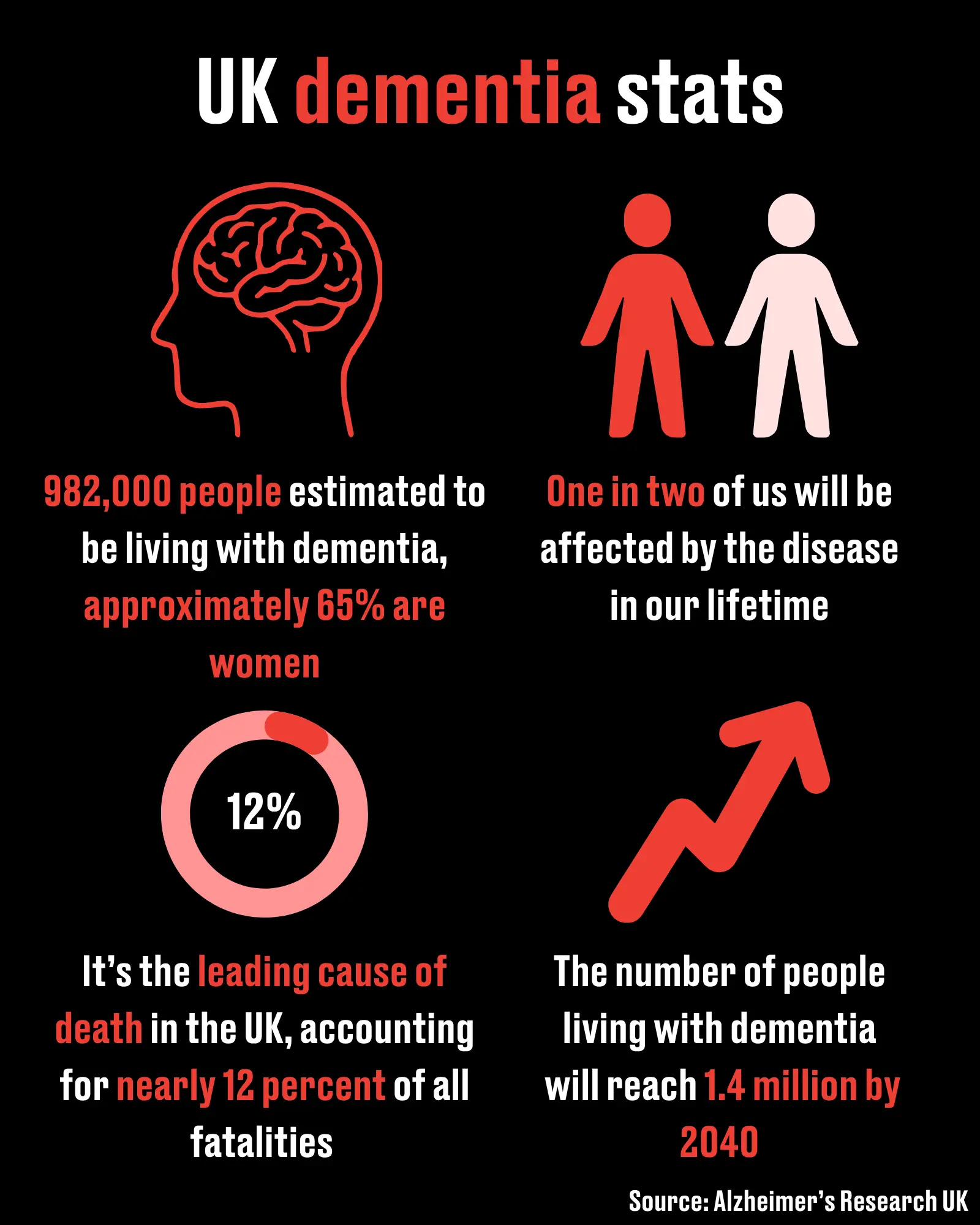
However, the impact of young onset dementia can be different because patients are often working, have financial commitments like a mortgage, and may have dependent children still living at home.
Symptoms of young onset Alzheimer’s usually start in people’s 40s, 50s or early 60s. While the symptoms of young onset Alzheimer’s disease are similar to those of late onset Alzheimer’s, they can be harder to recognise, mainly because memory loss is not always one of the first symptoms in younger people.
The main symptoms include trouble finding the right words and following conversations, changes in personality and behaviour including low mood, heightened irritation and lack of confidence and enjoyment, and becoming unsteady, struggling to move around or developing tremors or stiffness.
Topics: Health, TikTok, Social Media
 Daniel Murphy