
Four red flag signs you’re a functioning alcoholic

Warning: This article contains discussion of alcoholism which some readers may find distressing.
Although going sober is more popular than ever, there are still many who struggle with alcoholism behind the scenes.
A dependence on alcohol can present itself in many different ways, whether it's knocking back several beers a day, needing a glass of wine every night before you go to bed, or needing alcohol to socialise and 'have fun'.
Thankfully, we're living in a society where stigmas are being lifted, and people feel more confident to talk about their health issues online and offer advice to others.
Advert
While television shows and films might present an alcoholic as someone who spends all their time in the pub, the reality is that a lot of people will be functioning alcoholics.

How do functioning alcoholics usually appear?
Dr Iqbal Mohiuddi told Healthista: "They’re working in high-powered jobs, in the city or the media and drinking heavily is accepted, almost expected. They have carried on for years in this way but suddenly they’re getting physical symptoms such as feeling sick in the mornings and needing a drink and perhaps a partner has said they have had enough and it’s the drink or them.
"Conversely, as more companies become aware of drinking issues in the workplace, they may send people in for detox treatment to protect the health of their valued employee."
While another former alcoholic has opened up about the one key sign which he believes shows that your drinking is no longer casual, Dr Iqbal suggests that there are likely four red flags which shows someone might be functioning in society while suffering behind the scenes.
The four CAGE signs of being a functioning alcoholic
The doctor suggests that the four signs can be shorted to the acronym CAGE, which therapists use to assess if someone's drinking has become a problem.

C stands for Cutting Down, even if it's just thinking that you should maybe cut down on the amount you consume, while A stands for Annoyance, where you might become vexed if someone asks you about your drinking.
G stands for Guilt, where you might feel guilty about how your drinking is effecting your own life of that of other people, and finally E stands for Eye-opener, which is when you reach the point where you need a drink to feel better, especially so if it's in the morning.
'You don’t have to answer yes to all four to have a problem'
Speaking of those who function while living with alcoholism, Dr Iqbal said: "They may be functioning at home and maintaining their responsibilities whilst drinking excessively. There’s likely also to be denial about their alcohol intake, in spite of concerns raised by family and friends.
"Then of course, there’s the possibility of increased risk-taking associated with alcohol, such as drink-driving and sexual encounters, leading to further legal and social problems."
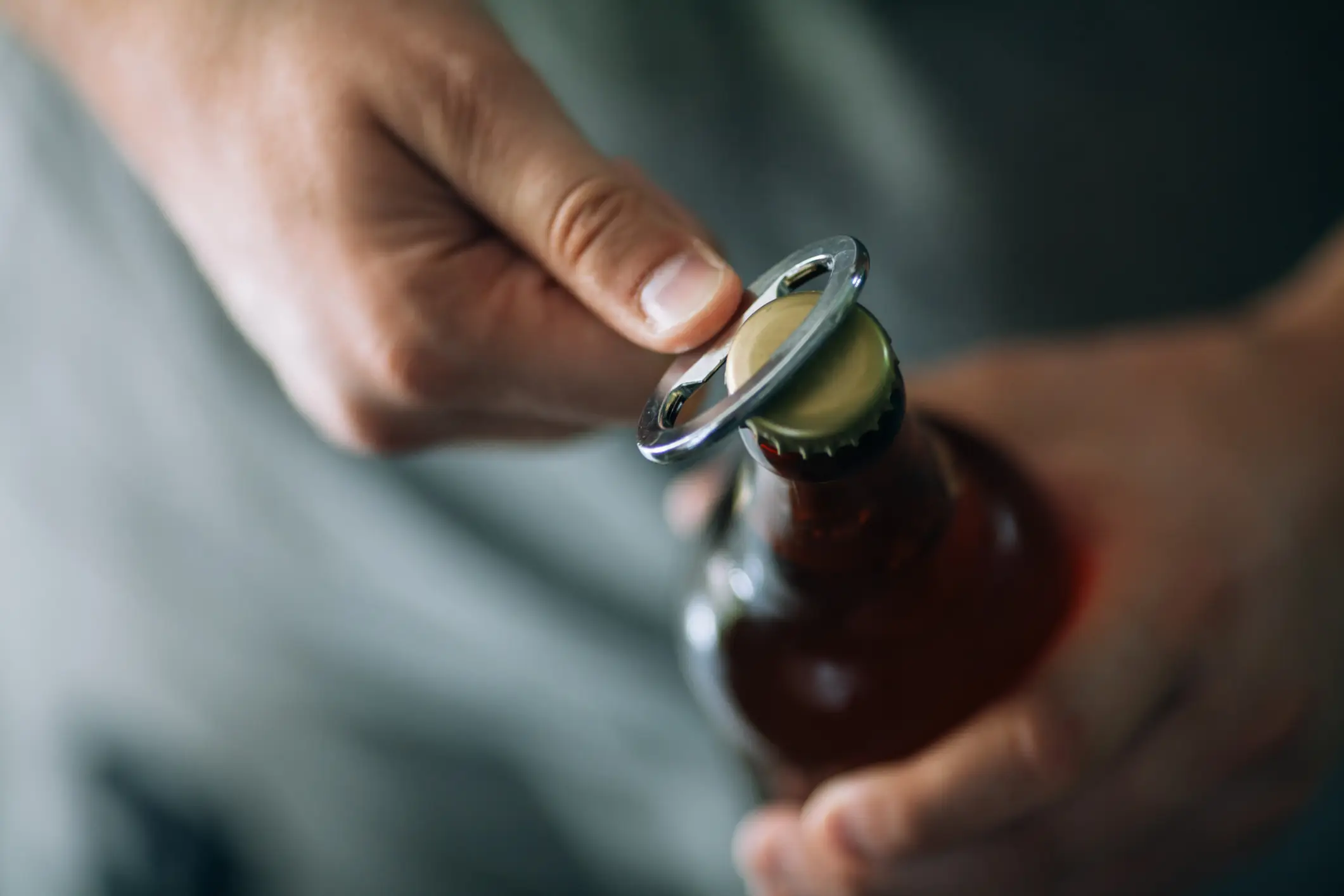
"You don’t have to answer yes to all four to have a problem," Dr Iqbal adds. "If one or two of those are answered positively, it’s highly suggestive you could have a problem with alcohol."
Dr Iqbal concludes: "The tipping point, he says, is usually when someone loses, or faces a very real fear of losing, someone they love because of their drinking. It’s almost always the thing that brings people to us."
So, it's worth remembering that even if someone appears to be completely healthy, they might well have something going on behind the scenes, so you should probably keep an eye out for any of these red flags.
Please drink responsibly. If you want to discuss any issues relating to alcohol in confidence, contact Drinkline on 0300 123 1110, 9am–8pm weekdays and 11am–4pm weekends for advice and support.
Topics: Mental Health
 James Moorhouse