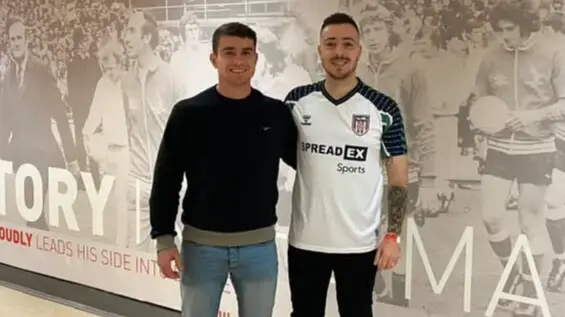
Twin brothers diagnosed with different forms of testicular cancer two weeks apart

Warning: This article contains discussion of cancer which some readers may find distressing.
After experiencing episodes where one side of his body would go 'completely numb' and passing out, Ryan Collard decided to head to his local GP for a check-up.
Aged just 23 at the time, Ryan was initially told his pain was likely 'muscular' while the loss of consciousness was investigated as potential epilepsy.
It wasn't until Ryan was rushed to hospital after passing out on the street that he recieved a thorough health check – which revealed a tumour was 'poking out' of his stomach.
Advert
He was then diagnosed with stage 3 non-seminoma, an aggressive form of testicular cancer which is more prevalent amongst younger patients.
"[It was] genuinely terrifying," Ryan tells LADbible of the diagnosis. "I had only really ever been exposed to cancer on the news or on TV soaps, etc and those are usually worst-case scenarios, so that’s all I knew. I was scared that this was the end for me."
However, the family's ordeal wouldn't be over there, as Ryan's twin Sean would begin to experience concerning health symptoms just two weeks later.
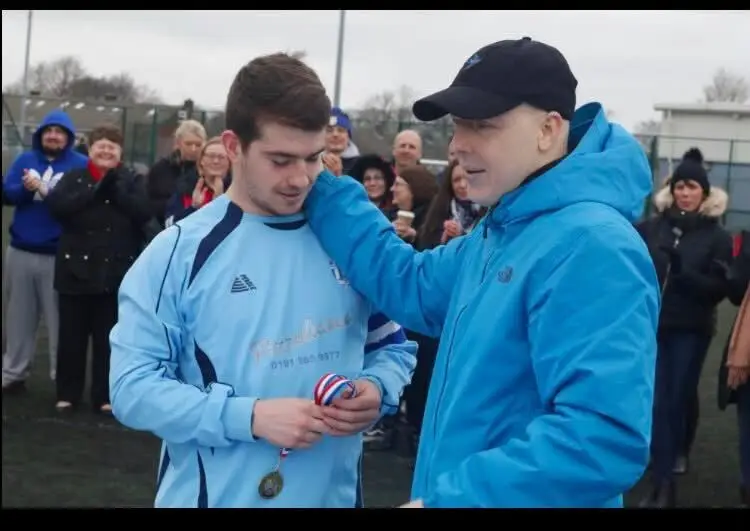
Unlike Ryan - a diagnosis which came as a shock to the primary school teacher, as he hadn't experienced any pain or swelling around his testicles - Sean's symptoms were more typical for testicular cancer, and he received a diagnosis weeks later.
"It was a strange situation," Sean recalled of his news. "I was still grieving what had happened to Ryan, so to hear it myself felt like a crazy nightmare."
"We had more chance at winning the lottery than being diagnosed within weeks of each other."
According to Cancer Research UK, men are at a higher risk of developing testicular cancer if their father or brother has been diagnosed with the disease, while a study published in The Harvard Gazette revealed that when one twin gets cancer, the other has a general increased risk of also being diagnosed.
In fraternal twins, which Sean and Ryan are, the risk of the co-twin developing cancer is 37 percent if the other sibling is diagnosed.
Despite the increased odds, though, doctors would ultimately conclude that Sean and Ryan's cancers were not linked, instead being an extremely rare coincidence.
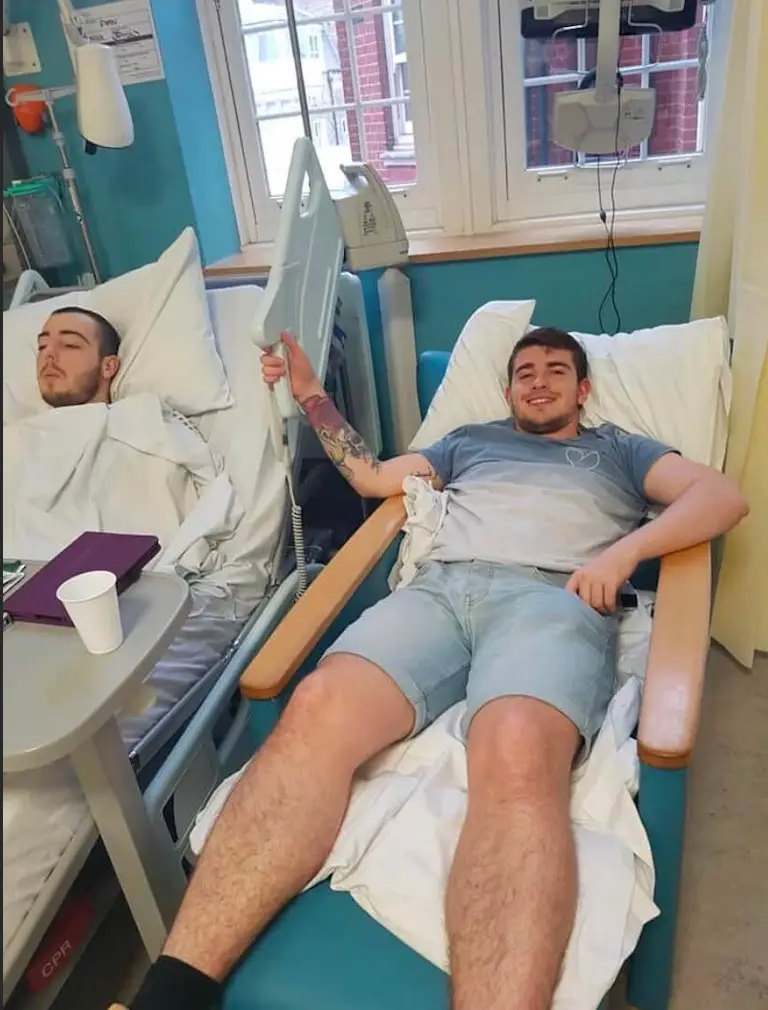
"We technically would have had more chance at winning the lottery than being diagnosed within weeks of each other, with two completely different types of testicular cancer and at opposite stages," Ryan explains.
The brothers' prognoses also differed massively. While Ryan's cancer was rare and fast-growing, Sean's tumour was graded at stage 1, meaning it was small and localised.
A week after his diagnosis, Sean underwent an orchiectomy operation (which removes either one or both of the testicles) followed by nine weeks of chemotherapy.
"I didn’t suffer with many side effects so I could return to playing football and running pretty soon after," Sean tells LADbible, revealing that he was able to train as a firefighter in the years after his diagnosis.
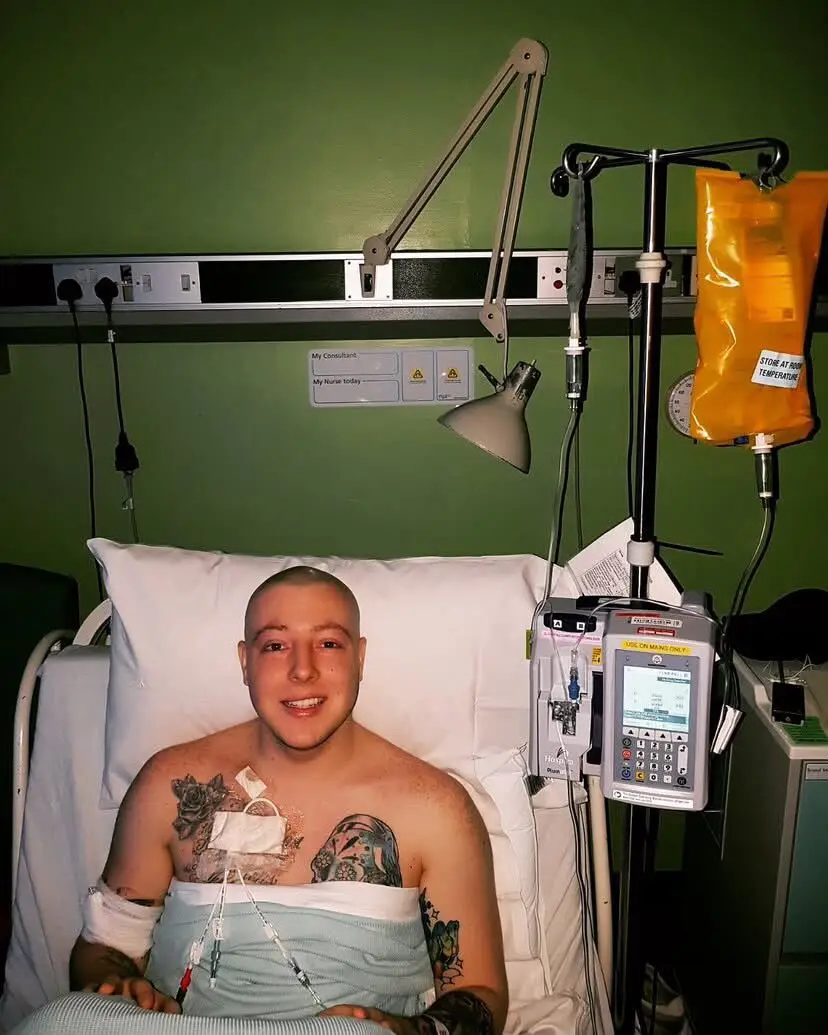
Meanwhile, Ryan's recovery would be much more complicated. The treatment required to eliminate the teacher's cancer left him requiring hearing aids, fatigue and neuropathy in the hands.
He was also left infertile, a complication which completely 'crushed' him.
"Thinking I’d never able to be able to be a dad crushed me and left me in the darkest place I’ve ever been and felt like a burden to everyone," he says. "I lost confidence in myself and everything I was doing and I just wasn’t the same person anymore, always downbeat and negative."
Ryan's infertility was also difficult for his brother to come to terms with.
"Watching him struggle with fertility issues was difficult to digest, especially with not having any issues myself," he says.
"Moments of joy falling pregnant were also met with guilt and the feeling of pain."
Ryan was eventually able to undergo fertility treatment and is now a father to a two-year-old boy, while Sean has two children of his own.
"Cancer doesn’t discriminate; it doesn’t care who you are."
Nine years on from diagnosis and Ryan has since been able to grow his platform, Cancer Lads, as a support network for other men battling cancer, as well as raising awareness for blokes who may not be clued up on cancer warning signs and symptoms.
"It has been therapy and understanding and connecting the dots but most of all not feeling alone and I feel like I must use our story to raise the ultimate awareness," Ryan says of the page.
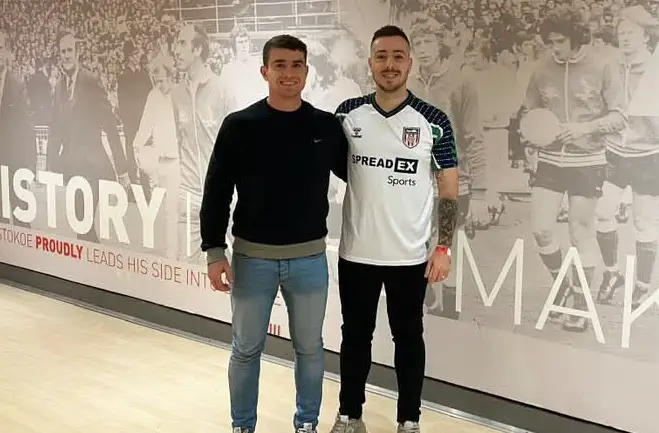
What message would the brothers like other young men to know? That cancer doesn't discriminate.
"One in two people are getting it in their lifetime now, so you’re either lucky or unlucky," Ryan said.
"Early diagnosis saves lives! Check yourself regularly so that you know your body, this will help you to recognise any changes promptly. If you feel any changes, lumps or bumps then go straight to the GP! Advocate for yourself, push for extra tests, especially specific blood tests and scans if you are really concerned!"
What are the symptoms of testicular cancer?
According to the NHS, common signs and symptoms of testicular cancer are:
- A lump or swelling in the testicle
- One testicle becoming bigger
- An ache or pain in the testicle or scrotum
- The scrotum becoming heavy, firm or hard
Other, more generalised, cancer symptoms include: breathlessness, losing weight
without trying, a cough, pain in the lower back and abdomen and a lump in the neck.
For more information and support regarding testicular cancer, check out Cancer Research UK here.
If you’ve been affected by any of these issues and want to speak to someone in confidence, contact Macmillan’s Cancer Support Line on 0808 808 00 00, 8am–8pm seven days a week.
 Brenna Cooper